Volunteering on a Translation Project

Recently my time has been divided a little more than normal. For over a month, I’ve been volunteering my service at “The Hidensho Project”, and helping with a Classical Japanese translation project that’ll sure to please those who have interest in historical military subjects of Japan.

The site “The Hidensho Project”, which is run by Randy McCall, is host to some ancient Japanese scrolls and documents that have been acquired over the years, each dealing with various topics. These are made public in their original form, alongside with Japanese-to-English translations by many translators all with the purpose to share the contents of these documents. The works done and the viewing of these documents are for non-profit, so anyone can visit the site.

Snapshot of the front page of “The Hidensho Project”.

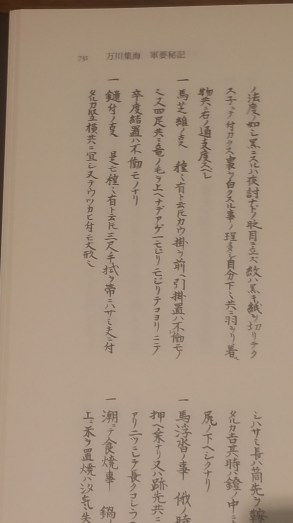
The project I’m currently working on is a section from the Heiho Yukan, a famous manual of strategy on different matters of warfare once used by the Tokugawa shogunate. It is challenging work, for it is handwritten in an old-fashioned Japanese, so not only is some research required to understand some terminologies not used today, but the handwritten isn’t the most neatest in certain areas, so some deciphering is required. It is an ongoing project I will continue to spend some time on even when it’s completed. I have a few more pages to work before it’s complete, although what’s presently done is already up for viewing.

Please show your support and head over to “The Hidensho Project” here:

http://hidensho.com/

To go directly to the section with Heiho Yukan (the one I am presently working on), you can access it here:

http://hidensho.com/1854-heiho-yukan-manuscript/1854-fortification-background/
I will get back to regularly updating my blog, the earliest by the start of this weekend.

Kuki Archives: Deciphering the Name ~ Part 2 ~

We continue with the discussion on the Kuki family’s name and how it came to be. In part 1 of this discussion, the original name “Kukami” is introduced, followed by an explanation about the “kami” kanji in this name. This post will continue this by touching on the sources behind the Kukami/Kuki name, which includes the beginnings of the Kuki family’s history1, their position as a wealthy & powerful family during Edo period, and how the standardization of the Japanese language affects their name. Before that, however, let’s take a few steps back and examine the kami kanji abit further, which should give better clarity in the relationship the Kuki clan has with it.

A pic of the sign board on Kishi Mojin Do, a Buddhist temple in Toshima District, Tokyo. It reads from right to left “Kishi Mojin”, with the kami (tsuno ga nai oni) kanji in use.

DEFINING THE ONIGAMI

The kami kanji, a derivative2 of the oni kanji (demon character), is commonly referred to as “tsuno ga nai oni” kanji (the hornless demon). This kanji is said to represent the “onigami”, which can be described as “a figure reaching a divine status despite being of demonic origin”. To better explain this, let’s look at an insert from a website called “Shinshizo Meguri”3, which includes discussions about the kami kanji in relations to specific temples and shrines, along with some lore, found in Japan. The insert states the following:

“仏に帰依して善神になった鬼や、人助けをしてくれた鬼を表現しているものとされます。”

My translation of the text below:

“This kanji expresses meanings such as a demon becoming a deity of good through the conversion of Buddhism, as well as a demon that helps people.”

This insert offers 2 definitions to the kami kanji, with the 1st covered in part 1 through the tale “Kishi Mojin”. Note that in this case, a demon turning good is not naturally willed, but a controlled phenomenon; Buddhism is used as a means to convince a demon of rather sinister nature to turn over a new leaf and do good for the sake of mankind. The means for making the conversion happen varies. For example, in an extreme case, the trickster monkey spirit Sun Wukong’s assistance in aiding a holy priest on a pilgrimage to retrieve Buddhist sutras is ensured through a powerful headband made by the Great Buddha in the Chinese literature “Journey to the West”4.

BELIEF OF GOOD DEMONS

For the 2nd definition, a demon doing good by helping people is an ancient interpretation imbedded in parts of Japan’s history and culture. The idea of an onigami doesn’t only exist in Buddhism, but is incorporated into Shinto, Doukyo, Shugendo, and the like. The roots for religious and esoteric groups to view certain demons akin to deities lie in the development of Japan itself, cultural beliefs, and certain isolated events5. Some are based on mythical figures from the Kojiki6. Others on stories to inspire the best qualities in people by relating it to the fierce powers demons possess7.

Let’s take a look at Aomori Prefecture in Japan, which is home to several temples and shrines that worship these good demons. This has helped to develop a culture in this area where townsfolk pray to these demons for protection and good fortune. Taking Oni Jinja (also pronounced Ki Jinja)8 as an example, this shrine tells a particular lore of how a demon is praised as a god. From the website “Shinshi no Yakata”9, a short summary of that lore goes as follows:

“昔、村の人々が干ばつで作物が出来ず苦しんでいると、鬼が山(岩木山)から下りてきて用水路を作って助けてくれた。それに感謝して村人が、農耕の神として、鬼を祀ったのがこの「鬼神社」だという。”

Following this text is my translation below:

“In the past, when the villagers faced hardship and couldn’t harvest crops due to a long drought, they were saved by a demon who climbed down from a mountain (Mt. Iwaki), and made an irrigation channel that delivered much needed water to them. To express their thanks, the villagers chose this demon as a god of agriculture and established the shrine “Oni Jinja” in order to give worship.”10

This demon is addressed as “Onigami-sama”11, which gives an indication that the villagers view it as a good and divine being, as well as a source of successful agriculture. On the torii (grand gate) of this shrine is a sign that reads “Oni Jinja”, but the kami (tsuno ga nai oni) kanji is used in place of the oni kanji. This is to express the belief that the demon of worship is in fact not a horrifying creature, but a deity that brings good fortune.

A page from the book “Shinden Bujutsu” written by Takatsuka Eichoku.

YAKUSHIMARU’S VISION

Now that certain key points regarding the kami kanji and its ties to religious cultural aspects have been covered, we can now turn our focus to how the Kukami/Kuki name came to be. The Kuki family are associated with Shinto practice and duties at the Kumano Hongu Taisha. However many learn about them through one of many budo schools that teach a version of the martial system originally devised by ancestors of the Kuki line. The history of this martial system, along with the family line, is said to begin with the originator named Kuki Yakushimaru Ryuushin12.

Yakushimaru’s story is said to be found in a record called “Kongou Hihouhen”13, which is part of the many documentations within the Kuki family’s collection. Below is a short summary of Yakushimaru’s story taken from the book “Shinden Bujutsu”, primarily with key points important to how both the “Kukami” and Kuki” names came to be. Snippets from this book will be used to support certain points, each followed by my own translations.

Yakushimaru was born in the year 1318. His family, of a prestige status due to being descendants of the Fujiwara clan, were well to do and provided him the essentials. This included being educated through literature, and trained in martial arts. Along with this, he received Shugendo training (mountain asceticism) through his father Douyuu, as well as studied Shingon Mikkyo (esoteric Buddhism of the Shingon sect) from the monk Joukai while staying at the Sanmakuin (Buddhist temple) in Kyoto. Yakushimaru was also versed in Kuji no Ho, and Ongyou no Jutsu. These esoteric practices involve praying to, and invoking power from, different types of deities and spirits.

At around age 18, Yakushimaru participated in assisting the Ashikaga army of the Northern Court defeat the Imperial forces of the Southern Court13. Emperor Godaigo, of the Southern Court, was captured and held in captivity under harsh conditions, while the 3 Sacred Treasures14 were taken as spoils of war. Learning of this, Yakushimaru made an unexpected move and went to rescue the fallen Emperor Godaigo, as well as retrieve these 3 treasures. With the assistance of close trustworthy warriors, Yakushimaru was successful in freeing the Emperor from the enemies’ clutches, and fighting off pursuers with a broken nagamaki15. He delivered the Emperor to safety in Yoshino, the area where the Imperial line of the Southern Court resides. Later, he managed to retrieve and return the 3 Sacred Treasures back to the Emperor.

After witnessing his prowess, Emperor Godaigo inquired Yakushimaru about his secret techniques. Upon hearing that it was through the use of Kuji no Ho, Emperor Godaigo responded with the following text, as written in “Shinden Bujutsu”16:

“汝の忠心、神の知ろしめすところなり。汝、今日より藤原 改め九鬼と改む可し”

Translation, “The gods know well your display of loyalty. From this day forward, your family name ‘Fujiwara’ can be changed to ‘Kukami’.”

The choice of kanji for the family name is not random; there are significant meanings in the name that indicate how he should be recognized. Starting with the ‘ku’ part of the name, this is the number ‘9’ in Japanese. Ku is significant to Kuji no Ho. This is integral to his family line, as it was considered a secret methodology. Not only was it used to invoke protection, Yakushimaru applied kuji with the shaft of his broken nagamaki during battle as stated in “Shinden Bujutsu”17:

“…そこで隆真は手に残った柄をもちいて戦い、近くの敵は打ち倒し遠巻く軍勢に対しては柄の先端で虚空に九字を斬って制した。”

Translation, “…Ryuushin fought wielding the remaining shaft (of his nagamaki), felling the opponent closest to him with a strike. In opposition to the swarming troops, he slashed Kuji in the air with the front end of his shaft.”

The “kami” part of the name means “onigami” (demon god). Some references state that this was chosen because it relates to how fiercely Yakushimaru fought for the sake of Emperor Godaigo, like a benevolent demon god18. It is also believed to be in reference to actual demon gods guiding Yakushimaru to take on this endeavor. In the “Ryuko no Maki”, it is said that Yakushimaru saw Bishamonten19 in his dream. It’s written as so in “Shinden Bujutsu”20:

“ある夜、隆真の夢に毘沙門天が現われて「汝、早く後醍醐天皇の難事を救ふ可し」と言ってので、喜んだ隆真は九拝してこれを受け、決起したという。”

Translation, “One night, Bishamonten appeared in Ryuushin’s dream and said, “You there, hurry and rescue Emperor Godaigo from his ordeal!”. Excited, Ryuushin bowed his head many times and rose to his feet, accepting the task at hand.”

A pic of my training naginata. This is an example of the polearm believed to have been used by Yakushimaru.

The name Kukami holds the tale of how Yakushimaru gained recognition through his vision of onigami and the power he attained through Kuji no Ho in order to save Godaigo. It is also the defining ideology behind him creating Kukishin ryu, which is deeply rooted in esoteric influences from Mikkyo Hihou in the techniques.

DUALITY OF KUKI AND KUKAMI

Today, the main Kuki line retains their martial tradition, without physically being involved, through “Kukishinden Tenshin Hyoho”. A system that utilizes the shihanke21 model, the current teacher overseeing the training both within Japan and overseas is Takatsuka Eichoku. However, over the years there is a growing push to acknowledge their original roots, and are using their original name more frequently. For example, their style of bujutsu is now identified as “Kukamishin ryu”.

Why not change their last name back? Why the change in the first place? There are 2 reasons for this, which are the registration as a daimyo under the shogunate, and the standardization of the Japanese language.

STATUS VS ROOTS

During the Edo period, this Kuki line in discussion was prestigious. Not only did they have strong ties with the Kumano Hongu Taisha, they also owned the Ayabe Domain in Tanba Province (present day Ayabe City in Kyoto Prefecture) and served in battle under the guise of the Kuki Suigun22, receiving merits for their efforts & contributions. In order to be recognized as a daimyo23 under the newly established Tokugawa shogunate, certain documentations had to be presented.

An important factor on how the Kuki approached this is based on particular historical data. For starters, the Tokugawa shogunate was established by Tokugawa Ieyasu, who managed to seize control of Japan after several battles with opposing forces. Claiming as a descendant of the Minamoto clan, Ieyasu and the Tokugawa shogunate were naturally affiliated with the Imperial line of the Northern Court. The Kuki line’s roots, on the other hand, is on the side of the opposing Southern Court, under the name ‘Kukami’. This can be found in older documentation within the Kuki household.

Not wanting to risk losing their status by having this info revealed, they changed their name to ‘Kuki’ (includes replacing the kami kanji with the oni kanji), and omitted much of their history in their presented documentations during registration. It was a necessary move to retain the lands, wealth, and status the Kuki family amassed. They still kept their family documentations, fortunately, so their roots weren’t forgotten.

LANGUAGE STANDARDIZATION

During the Meiji (1868-1912) and Taisho (1912-1926) periods, efforts were made to standardize the Japanese language in order to promote unification throughout Japan. This standardized form of Japanese, called Kokugo24, shaped a speaking, written, and reading form of the language the majority of the nation learns. In the case of kanji, there was a considerable reduction of derivatives each kanji possess, as well as reduction of kanji that had the same meaning as others but with slight difference in nuances. Kanji that are obscured, not adapted into the Japanese culture, or forgotten meaning were also excluded from standardized use.

This standardization became even more apparent as society moved towards the digital and electronic medium. In order for the Japanese language (includes kana and kanji) to display on interfaces such as computers, special coding types were developed, one being called JIS coding25. Just about all standardized kanji have been adapted into JIS coding, making them readily usable. Some older and out-of-use kanji also have been converted into JIS coding, and can be downloaded as packets from certain online kanji resource sites. While it is possible to find many kanji that are no longer in use on the same sites, they are only in picture form just for references, however.

The kami (tsuno ga nai oni) kanji is, unfortunately, one of those out-of-use kanji that are considered dated and out of use. There are no available JIS coding packets for it, thus it cannot be typed. The oni kanji has to be used in its place, with a note identifying it is actually the kami kanji in use. While not considered part of standard Japanese, this does not stop its use entirely; temples and shrines that have a history with the kami kanji still use it when applicable, whether by writing it or having it etched in metallic or wooden signs. Interestingly, the Kuki family use the kami kanji also in printed books. How they’ve managed to acquire the means to do this is unknown. This could be one of those rare cases where it was designed specifically for use by them.

2017-02-16-10.11.15.png.png

A screen capture of the different variants (異体字, itaiji) of the oni kanji. The kami kanji is circled in red. From the website “字形検索”, an educational resource and database on kanji (Chinese). It can be accessed here.

This concludes our discussion regarding the Kuki family’s name. I hope much has been put to light regarding the acquisition of the Kukami and Kuki names, along with the cultural overview of the kami kanji. A special “THANK YOU!” to those who helped guide me to useful resources and offered detailed explanations regarding the kami kanji. Thank you for reading this, and look forward to more posts concerning the Kuki family and their history.


1) The main line with direct connection to Kumano Hongu Taisha, one of the three grand shrines labeled “Kumano Sanzan”. For more information, visit an older post of mine here.

2) 異体字, pronounced ‘itaiji’ in Japanese.

3) Website can be accessed here.

4) “Journey to the West” is a famous fiction novel in China written in the 16th century. It is loosely based on the non-fictional journey by Chinese Buddhist monk named Xuanzang who, from mainland China through the Western regions of Central Asia, traveled to India to retrieve Buddhist sutras. In this novel, the Buddhist priest Tang Sanzang (same as Xuanzang) is accompanied by 4 demons (or demon spirits depending on how you interpret them) to retrieve the Buddhist sutras, each serving as his protector through reformation as Buddhist monks themselves: Sun Wukong (monkey spirit), Zu Bajie (pig spirit), Sha Wujing (sand creature spirit), and Yulong (dragon spirit in the guise of a horse).

Here’s a broader explanation how Buddhism subdued a potentially great but dangerous demon. Sun Wukong, originally imprisoned under a mountain by the Great Buddha, agreed to help the Buddhist priest Sanzang in his journey to India in exchange for freedom. However, understanding that Wukong, through his past crimes, is uncontrollable and unpredictable, a Bodhisattva named Guanyin gave Sanzang a gift in the form of a golden headband made by the Great Buddha, which would help keep Wukong in check. Tricked into wearing it, Wukong put it on his head, but couldn’t take it off. On top of this, Sanzang had only to chant a secret set of words and the band would tighten on Wukong’s head, causing great pain and immobilizing him. Through this, Sun Wukong was made, more or less, obedient to assist in the journey.

5) Japan’s history regarding openness to the idea of good/bad demons is very old in conception. This is apparent if you look into the different religions & esoteric practices, rituals, lore, literature, and artworks. One prevailing point concerning onigami that needs to be understood is they are viewed as not truly evil. This is because onigami are believed to serve specific purposes, sometimes beneficial to humans, and other times, not.

6)The book Kojiki, generally translated as “Records of Ancient Matters”, is a collection of recorded events in ancient Japan by Ou no Yasumaro in the 8th century. The Kojiki depicts the start of humanity, as well as early civilization in Japan. In its earlier chapters are many descriptions of god-like figures, demons, and spirit-like creatures, each interacting with people in Japan one way or another.

For example, Koutai Jinja (皇大神社) , which is located in Kyoto (western part of Japan), gives worship to Amaterasu Oomikami, who is the Sun Goddess as told in the Kojiki. This deity is very important in Shinto religion.

7) As an example, a temple called Kijin Jinja (鬼鎮神社) in Saitama Prefecture (eastern part of Japan) pays homage to red and blue skinned demons that wield kinbou (metal clubs). These kinbou represent absolute victory. So not only do townsfolk work hard in passing examination tests, sporting events, and the like with the vigor of an ‘oni’, but also visit Kijin Jinja to pray for added luck in succeeding in these tasks.

8) 鬼神社. Generally written with the kami (tsuno ga nai oni) kanji

9) Link is here.

10) This tale appears to have been devised to give some mystical flavor to what may have truly happened. Within the Oni Jinja there are many steel farming tools (such as sickles, spades, and hoes) that were given as a form of offerings. Some of these tools are said to be as old as 1000 years. It is believed that this is an indication that the knowledge to take care of their land was actually taught to them by foreigners possibly visiting Japan.

11) The word “sama” is an honorific label. Thus, much respect is given to this onigami.

12) 九鬼薬師丸隆真

13) 金剛秘宝遍

14) In the Nanboku era during the 13th century, the power to rule Japan was left in the hands of the 2 sons of the dying Emperor Gosaga. Both in disagreement in how and when each would hold the power to rule, soon a division spurred, which created 2 factions. One faction, called the Northern Court, resided in Kyoto (northern part of Japan geographically). The other faction, called the Southern Court, stayed in Yoshino (southern part of Japan geographically). Both sides struggled for power during the 14th century, with 6 Emperors from the Northern Court seizing power at one point, while 5 Emperors from the Southern Court claimed power at another point.

14) The 3 Sacred Treasures, also known as the Imperial Regalia of Japan, believed to be handed down by the gods. These treasures are the following: Kusanagi no Tsurugi (草薙劍, The Grass-Cutting Sword), Yata no Kagami (八咫鏡,the 8-Span Mirror), and Yasakani no Magatama (八尺瓊勾玉, Long [approx. 8 ft] string of Curved Jewels).

15) There are conflicting views when describing the weapon Yakushimaru wielded. In “Shinden Bujutsu”, it is mentioned to be a nagamaki. However, in the once available website “Kuki-Shinden”, (a site to help promote the Kuki family’s Kukishinden Tenshin Hyoho martial system, having both an English and Japanese section) in the English section where they described the same story of Yakushimaru, the info about the polearm differs slightly. For starters, it is mentioned that the weapon was a naginata. Secondly, in note 4 for the story, it is mentioned that, in the Kongou Hihouhen and Ryuko no Maki documents, the weapon was a yari (spear). The polearm being a naginata is mentioned in a document called “Kuki Bojutsu Hihouhen no Maki,” which comes from the Chosui line. Furthermore, in the book “Shinden Bujutsu”, it is written that based on the time period when Yakushimaru was alive, it would’ve been “correct” for it to have been a nagamaki.

The naginata-nagamaki reference appears to be interchangeable, for certain details may warrant either weapon to be called one or another. This is dependent on such details like the style of the blade, size of shaft, fittings, and the like. Since there are numerous documents within the Kuki family’s collections that say one way or another, there is no way to get a definitive confirmation.

Whichever weapon it was, what can be agreed on is that Yakushimaru’s weapon was indeed a polearm with a blade at the end.

16) Page 25, line 5-6

17) Page 23, line 10-12

18) It is said to be mentioned in “Kuki Bojutsu Hihouhen no Maki”, for example. This document is part of the Chosui line of Kukishin ryu. It is also mentioned here that the “ku” of Kukami is in reference to how Yakushimaru utilized his broken weapon with ever-changing responses against the opposing forces. This ability is described using the number 9 in Japanese.

19) Vaisravana in Sanskrit. He is one of the Heavenly Four Kings in Buddhism, as well as a guardian deity of Buddhism in Japan. Also one of the Seven Lucky Gods in Japanese folklore.

20) Page 24, note #2

21) A system where a teacher reaching a master level of proficiency heads the training of a martial arts school, or branches out to start a new line. This does not mean, however, inheritance of the entire system is granted to those who reach this level.

22) 九鬼水軍, Kuki Naval Force

23)大名, recognized lord who could privately own their land. Rulers of their territories, they only answer to the shogun.

24) 国語, national-standard language

25) There are other coding types, such as Shift-JIS, EUC, and Unicode.

Kuki Archives: Deciphering the Name ~Part 1~

In today’s post, we set our focus on the Kuki family’s name and it’s background story. The kanji (Chinese written characters) in their name is “九鬼”, which few locations in Japan and different branches of martial systems with certain relations also share in their titles1. Primarily read as “kuki”, the general translation of this is “9 Demons”. However, statements from the Kuki family, who are the main stem for the aforementioned name, claim that the original pronunciation of this was not only “kukami”, but that the 2nd kanji in the name was actually a slightly altered version with a different meaning. A topic I’ve been invested in for some time, I will share some of my findings in relations to this from 2 viewpoints. This post will cover the 1st viewpoint, which looks at that one kanji in question, covering abit of its history and ties to religious matters.

Japanese character oni
A hand painting of the oni (demon) kanji. Notice the small line on top of this kanji. This line is often viewed as the “horn” (tsuno in Japanese). By Yoko A.

LOOKING AT THE ONI KANJI

In the Chinese and Japanese language, there were periods where a specific kanji had a few different ways to be written depending on usage, which in those cases gave it an altered meaning. The kanji “鬼“ is no different. Normally pronounced as “oni” or “ki”2 in Japanese, it generally possesses the following meanings: demon, (evil) spirit, ghost, fierce, violent, dead body, and death. As expected, this has a negative, demonic connotation. Normally, images associated with the oni kanji in ancient times (whether on its own or in conjunction with other kanji) is ominous, frightful, and/or dreadful. Especially in ancient times of Japan, where superstitions and stories of demons had a big impact on the culture. The general image of an oni in Japan is a being with a large frame, skin that is dark red or dark blue toned, unkempt hair, wearing tiger skin loincloth, talons for fingernails, a large mouth with 2 fangs protruding out, and 1~2 horns on the head. While in popular children’s tales of old, such as “Momotaro”, the depiction of the oni may appear whimsical, the features remain the same, and the overall negative undertone of the oni persists. With such an ominous makeup, would the Kuki family, devoted followers of the religion Nakatomi Shinto, want their name associated with a word that would demonify them?

Two pictures featuring oni characters. Click on each one for more info.

THE HORNLESS DEMON

In various publications and mediums, the Kuki family and associates of them have expressed many times that the Kuki name was not originally read as it is commonly so now. From their public website “Kuki-shinden” (which is no longer available), to the most recent published book under their authorization called “Shinden Bujutsu” (written by Takatsuka Eichoku), it has been explained that the correct pronunciation is “Kukami”, which actually means “9 Gods”. This is due in part that the oni kanji wasn’t used in their name in conception, but instead another version of this kanji. This kanji is often dubbed “tsuno ga nai oni”3, or the hornless demon.

The “tsuno ga nai oni ” kanji has its history begin first in China, with use primarily by religious sects and groups. With usage mainly in religious practices, it is rarely seen in standard writings or general use, thus quite uncommon even in the general public. The same with Japan as this kanji made its way to this island country possibly through the spread of Buddhism. In Japanese, this kanji has a few pronunciations4 which includes “ki” and “kami”. The meaning of this kanji is stated4 as “onigami”, which is a combination of oni (demon) and kami (god)5. Take note of this meaning, for it is a special terminology that has a deep and unique implication of its usage, which some light will be shed on through the following story below.

Japanese characters oni and kami
A hand painting of both the oni kanji (left), and “kami” kanji (right). By Yoko A.

KISHI MOJIN & CORRECTIVE WRITING

As mentioned above, the oni kanji has a small line on top that is viewed as a horn. Well, with that small line removed, this oni is now “dehorned”, and the threat is gone. What we now have is a divine being on the side of good despite retaining its demonic looks.  This seems to be what the term “onigami” entails. There is an interesting tale that further supports this notion, as the “tsuno ga nai oni” kanji often compared to an old story called Kishi Mojin6.

Kishi Mojin
An artwork of Kishi Mojin. From Sacchin san’s website on Buddhist figures and stories here .

Within Buddhist lore7 in Japan, Kishi Mojin is a tale about a raksasi (a female mythological demon) who goes by the name of Kariteimo8 (Hariti Ma in Sanskrit). Kariteimo resided in Rajgir9, at the same time when the Guatama Buddha known as Shakyamuni was living there. Being the wife of Pancika10, they beared hundreds of children together. To feed her children, Kariteimo would capture humans (primarily human children)  and feed to her children their flesh. Many parents, particularly mothers, lamented to Buddha to save them from this ordeal.

Heeding their pleas, Shakyamuni made a plan to not only to bring salvation to the human race, but to also save Kariteimo in the process. For this, Shakyamuni hid Ainuru, her youngest and most dearest of her children. When she discovered her child was missing, the wife searched around the world for many days half-crazed. With no luck tracking her child, she sought help and guidance from Shakyamuni. When approached by this matter, Shakyamuni asked her if she could compare the lost of one of her hundreds of kids to the hundreds of mothers who lost all their kids due to her savage habits. In response, Kariteimo agreed that their loss is much greater than hers.

Now that she understood the pains of others due experiencing the pain of losing her own child, Kariteimo devoted herself to the ways of Buddhism, through the direction of Shakyamuni, and vowed to protect children. She became enlightened11, and, as a guardian deity of Buddhism, is a patron that represents ease of child birth, safety of children, and mercy & happiness.

Hand paint of name Kishi Mojin
A hand painting of Kishi Mojin. This is the correct way it is written, but cannot be done so in computers and other electronic devices. By Yoko A.

There are various shrines and temples in Japan that honor Kariteimo and the story of Kishi Mojin. There, you will usually see artworks and statues of Kariteimo that depict her as having a womanly appearance dressed in fine robes and holding a child. Despite being a raksasi, sometimes she is depicted as not having horns12. What is also important to note is that in signs and writings of the word Kishi Mojin outside of typed text uses the “tsuno ga nai oni” kanji. This is important to remember, and directly relates to the Kuki family’s claims regarding the correct writing of their name.

This concludes the 1st part on the Kuki family’s name. Stay tuned for the 2nd part, which will focus on the Kuki clan’s definition of their name along with the unintentional change to as we know it now. Also, the reasoning behind the use of “tsuno ga nai oni” kanji outside of electronic devices will be covered as well.


1) Some martial arts systems having a form of relation to the Kuki family bearing the “Kuki” name are the following:

  • Kukishinden Tenshin Hyoho (Takatsuka Eichoku)
  • Kukishin ryu Bojutsu (Tanaka Fumon)
  • Kukishinden Happou Bikenjutsu (Masaaki Hatsumi)
  • Tenshin Hyoho Kukishin ryu (Tanemura Shoto)

2) One of the main reasons for a kanji to have numerous pronunciations in Japan is based on if it is used based on Onyomi (音読み, China-originated reading) or Kunyomi (訓読み, Japanese reading). For examples, words that are directly borrowed from, or influenced by the manner of literacy of China, are pronounce with a Chinese-influenced phonetic (Onyomi), whereas others that are developed and used in accordance to Japanese standards are pronounced under Japanese phonetics (Kunyomi). Depending on    if the Onyomi or Kunyomi of a kanji is used can change the meaning of a word.

In the case of the demon character, “ki” is onyomi, and “oni” is kunyomi.

3) 角が無い鬼. Also called “tsuno no nai oni” (角の無い鬼), with pretty much the same meaning.

4) Based on proclamation by religious groups in Japan, including the Kuki family.

5) The term onigami is written as 鬼神, with “kami” (神, gami in its conjugated form) meaning (but not limited to) the following: god, deity, divine, spirit, and amazing.

6) 鬼子母神. Also pronounced as the following: Kishi Boushin, Kishi Boujin.

7)  There are, like many stories of old, different versions of the Kishi Mojin story. The roots of this tale is Hindu, and was later adapted by other countries and religions, with changes made to fit with the culture of those countries. Even in Japan there are several varying points concerning this story depending on if told from the viewpoint of Nichiren Buddhism or Shingon Buddhism. For example, in a particular version Kariteimo is not married to Pancika, while in another she is assisted by Ten Raksasi Women (Ju Rasetsunyo十羅刹女 in  Japanese) in capturing human children.

9) A city in Nalanda district of Bihar, in the eastern part of India.

8) Also referred to as Karitei (Hariti in Sanskrit) depending on the Buddhist sect.

10) Pancika is a rakshasa (male mythological demon) who was one of the 8 commanders in the yaksha army of the deity Vaisravana (Bishamonten in Japanese).

11) This process of enlightenment is called “Bohdi”.

12) Raksasi that have humanly appearances are called “Manushya-Raksasi”.

Kuki Archives: Family Line Expansion

Kukishinden ryu is a martial system from Japan that has connections to the Kuki family. This family, who are still active today, have a long, and often considered complicated, history. The Kuki family are very invested in religious practices, but not much in martial arts. Along with training in the martial system that bears their name, I’ve spent some personal time putting in research about the Kuki family, primarily because I find their story (and some of the odd and hard-to-explain points in the Kuki history) intriguing.

There is website called “Sengoku Busho no Kamon”1 which has a good amount of background information about this family’s beginnings, history, and events representatives of the Kuki family were involved in. Below is an insert from this site in Japanese, followed by my own English translation.

Picture of Kumano Hongu Taisha, one of the three grand shrines in Kumano, Wakayama Prefecture. From the book “Shinden Bujutsu” (神伝武術) written by Takatsuka Eichoku.

“くき”という字は、元来、峰とか崖の意で、岩山・谷などを指すという。また”くき”のきは、柵の意で、城戸構えのあったところからきたともいわれる。

九鬼氏というのは、熊野本宮大社の神官の子孫で、紀伊の名族として知られている。それとは別に、熊野別当の九鬼隆真が紀伊牟婁郡九鬼浦に拠って、子孫が繁栄して一族をなしたものがある。さらにこの九鬼隆真の子の隆良が志摩国波切村に移住して、志摩の九鬼氏ができた。

九鬼氏は熊野八庄司の一つといわれ、八庄司のひとつ新宮氏であろうとされるが、熊野三山の別当家のどれかの支族であろう。”

“The characters used in the name “Kuki” originally stood for cliffs or peaks. Thus, this name made reference to cliffs, mountains, and valleys. On a different note, it is stated that the ki of “Kuki” had the meaning of  fortification (柵2), with roots stemming from where fortresses were built upon.

The Kuki family is known as a reputable clan from Kii Province, as descendants of Shinto priests from the Kumano Hongu Taisha (one of three grand shrines in the mountain region in Kumano). From a different angle of their story, Kuki Takazane, the Kumano Betto (head priest) of Kumano Hongu Taisha, was able to expand his family line successfully through Kuki Ura3, located in Muro Valley, Kii Province. Along with this, Takayoshi, the son of Takazane, set his residence in Shima Province and was able to expand the Kuki line to this area.

In the Kuki records, it is mentioned that the Shingu family, who were one of eight manor owners that made up Kumano Hasshouji, are a branch of Betto Takazane’s Kuki line that belongs to the “Kumano Sanzan” (3 grand shrines in the mountains of Kumano)”.

Key points to take from this:

① The “Kuki” name has, possibly, been changed several times. There are indications that the Kuki name once referred to the type of area they lived at, such as around cliffs and mountains.

② As history goes, they have roots deep in religious practices. Part of their line does get into military/martial/piracy practices, but in the end religion is an integral part within the Kuki lineage.

③ Kuki Ura is a location on the eastern shores of Owase city in Mie Prefecture. Along with Kuki Ura, other areas such as Kuki Mura (Kuki Village), Kuki Zaki (Kuki Peninsula), and Kuki Jinja (Kuki Shrine) were established. What is interesting about these areas is that their Kuki name was also written as “九木” (9 Trees) at some time.

④ There was once an influential family in Kii Province who had control over an area called Shingu on the eastern edge of Kumano Wakayama prefecture (not to be confused with Shingu City) from Nanbokucho period to Sengoku period (between 1300s to ending of 1500s/early 1600s). This family took the name “Shingu”. What was their original name, and how they are connected to the Kuki line needs some further verification.

⑤ The Kumano Hasshouji is a collection of fairly large land areas called manors that were once owned by retired imperial and aristocratic families. These manors help those in their religious studies and pilgrimages to the many shrines around the Kumano area. While some had other several usages over the course of history (i.e. supporting military causes), today they serve to promote tourism.

⑥ Kumano Sanzan refers to the 3 grand shrines found along the mountainous region of Kumano in Wakayama Prefecture. These are the following: Kumano Hongu Taisha, Kumano Hayatama Taisha, and Kumano Nachi Taisha.

This is first of several posts that are geared towards topics concerning Kuki history not normally touched upon. On another note, those interested in more about the Kuki family, especially related to their religious practices, check out “The Spiritual Influence of Ninjutsu”, written by Don Roley. You can find this, and more of his works, under “Books for Sale” at the link below:


1) Site can be accessed here

2) The character “柵” has the “ki” pronunciation.

3) The “Kuki” of Kuki Ura was written as “九木” (9 Trees).

Trials of Translating Old Texts

Today I present a topic concerning translating old Japanese text. For those who can read Japanese or have a knack for historical information may find this blog especially useful, for there will be a good amount of notes and references. I will be using a famous transcript concerning ninjutsu and military affairs known by the title “Bansenshukai”1, originally compiled by Fujibayashi Samuji Yasutake in 1676.

Bearing a title meaning “many rivers that join together expand into an ocean”, the Bansenshukai is a collection of many secrets and trades from multiple families of the Iga and Koga regions involved in shinobi2 activities during times of conflict & war, ranging from philosophy, astrology, tools & weapons, medicine & poisons, and rations. A work done before the modernization of Japan, it is written in an archaic style filled with many specialized terms not used today.

There have been few versions in Japan of the Bansenshukai that where attempts to give modernized commentary to help the general public understand the contents. The version in my possession is the latest one entitled “Kanpon Bansenshukai”3, which was produced by Nakajima Atsumi. A historian on koryu bujutsu (traditional martial arts) and ninjutsu, Mr. Nakajima’s book is an example of years of pure dedication, for he not only has scans of the original text, but also has the same text typed for easier reading, as well as a “modernized” interpretation of the original text with notes to make it more comprehensive for today’s generation.

To produce an English translation of such an old text on the same caliber would be a tremendous task, for not only does the translator need to be proficient in reading the text (the original writing + a modernized interpretation would be essential), but countless of hours of research to understand the culture and way of life of Mid-century Japan. On top of that, many resources would be needed in deciphering outdated and coded terminologies–many which can be foreign to the Japanese language itself. Using Mr. Nakajima’s version makes the task easier, but not entirely stress-free.

While I’m not attempting to produce a full translation of the Bansenshukai (I will leave it in the hands of those far more capable with full resources at hand), I do want to share some of the work needed in order to attempt translating old text into your native language, from the viewpoint of a translator myself. Let’s take a small snippet about horses from one of the chapters in Bansenshukai called “Gunyo Hiki”, a section that instructs on conduct, activities, preparation, and other activities while serving in the military. Below is the original text from the Bansenshukai, which is written in Kanji4 and Katakana5:

一 馬芝維ノ事

種々有卜云モカウ掛ヲ前へ引掛置ハ不動モノ。又四足共二竜ノ毛ヲ上へナデアゲ一モジリモジリテコヨリニテ卒度結置ハ不動モノナリ

Next is an easier-to-read version of the original text from Mr. Nakajima’s book. It is still written in a kind of old Japanese fashion, but with Hiragana6 in places where one gets a better idea about how the words should be read.

一、馬芝維の事

種々有りと云えども、こう掛を前へ引掛け置かば、動かざるもののなり。又四足共に竜の毛を上へなで上げ、一もじりもじりて、こよりにてそっと結び置かば動かざるものなり。

Now, here it is written, phonetically, in the English alphabet:

Uma Shibai no Koto

Shushu ari to iedomo, kougake (w)o mae (h)e hikkake okaba, ugokazaru mono no nari. Mata shisoku tomo ni ryu no ke (w)o ue (h)e nade ni age, ichi mojiri mojirite, koyori nite sotto musubi okaba ugokazaru mono nari.

Before doing a thorough translation, let’s focus on the actual text. Giving a very rough and literal description, this text talks about tying a horse in place using a rope or cord by “something”, and then brushing up and twisting repeatedly the “dragon’s hair” of a four-legged creature, and tying it to also keep a horse from moving. Certain points are vague in description, while others use words that make it very difficult to know what is being reference. To fill in the gaps, it is important to learn the nuances and contents of what’s being discussed. Research on the topic of cavalry during the history of Japan, for example, is essential so to understand the topic at hand and get an idea of what’s missing in those gaps. Having access to books when looking up archaic words not in use is also a must, such as a specialized Japanese dictionary. The internet is also a good resource, as there is a vast amount of information at one’s fingertips, especially if you research in the native language, in this case being Japanese. However, you need to know how to narrow your searches down to queries most close to what you’re researching on, as well as decipher true information from false. When you have an idea of specific sources, libraries (both physical locations and online) can be a translators’ best friend.

Kura-no-baju_(Japanese_saddle_and_related_parts)
An example of basou, or riding equipment for a horse. Photo taken by Alun Salt. From Wikipedia.

Here are some areas of interest from the text above that need to be addressed:

- Uma Shibai: The kanji used for this is unconventional. It is a combination of 芝(shiba; grass, or turf) +維(i; rope or cord). It may very well be a play on words to indicate its true meanings, such as 芝居 (shibai, to tie) and 仕場 (shiba, activities done on the battlefield). Since the information in the original text is geared towards those working in the military, we get an understanding that the horse will be tied and secured outside in the field.

– Kougake:  In the text the word “something” is written as こう掛. Pronounced as “kougake”, “kou” is written in Kana7. Since the topic deals with tying a rope or cord to the horse, we can deduce that “gake” refers to something that is worn or hung on the horse. But where? Kou, as it is written, is vague and tells us nothing we can work with. If one studies the basou(riding equipment used on horses) used in times of war in Japan, you’ll find that in the head gear called omogai9, there is a leather strap that wraps from the top of the horse’s neck down across the horse’s face. This leather strap, which happens to be called “kougake”, is written as “首掛”. The kanji  for kou should be “首”, which stands for neck. Nowadays it is pronounced as “kubikake”, and is used not only for horses, but for various accessories people use that can be slung from the neck, such as a pouch or guitar strap. Getting back on topic, we have clarification that kougake in the Japanese text refers to a leather neck strap.

– Shisoku: when one first reads it, it’s easy to assume this is in reference to the four legs of a horse. It sorta does, but not in the literal sense. Short for “shisoku dobutsu”10, shisoku basically stands for a four-legged animal. Thus, a shorthand for horse in the text. Simple as that.

– Ryu no ke: This translates to “dragon’s hair”. What does that have to do with a horse? Well, one thing to understand is that there are many types of labeling in reference to dragons in Asia since dragons are seen as wise and calm, full of wisdom, and good fortune. Originating in China, the concepts of dragons, as well as many references to them, also trickled down into Japanese culture. For example, “dragon’s beard”11 is a common word used in Chinese society for things that resembled the whiskers of dragons depicted in artworks, such as a type of snack12, and a flexible weapon with 2 hooked blades13. The same “dragon’s beard”14 is also used in Japan, for it is a nickname for a type of plant15, as well as when a long silver strand(s) of hair grows on the back of one’s neck16. Hair that is let down to flow wildly is also described to be like a dragon. This is where a horse comes into the picture. Horses in Chinese history have been compared and associated with dragons, from being called a dragon based on Chinese measurements17, to being combined with one another18.  Furthermore, a horse’s mane, as well as other animals with long fur, are compared to that of the hairs of a dragon. Thus, “ryu no ke” is a reference to a horse’s mane.

– Ichi mojiri mojirite: There is no kanji in the text for “mojiri mojirite”, but there is a reason. Not a conventional use, this is a case of a verb being repeated twice, which is “mojiru”. The kanji normally associated with this is 捩. The verb has several meanings based how it is used, such as to twist something, to make a parody of something, or to make something excruciating. So which meaning is the correct one? When it is written in Kana form, the sound of the word indicates a physical action, which is a twisting motion. Since it is repeated twice, this motion is emphasized even more. So, in the case of the horse’s hair, we understand it is being twisted, or braided, together.

20160813_130442.jpg
A picture of the original text of the Bansenshukai, scanned in the back of Nakajima Atsumi’s book. The text featured in this blog is the middle on the top row.

With those areas now made clear, below is a proper translation by me of the text from the Bansenshukai:

Matters Concerning the Tying of Horses on the (Battle)field

There are numerous ways to do this. One way is to bring the “kougake” (leather neck strap part of its head gear) forward and tether from there so to keep the horse in place. Another way is to brush up the horse’s mane, twist it into a braid, tie it with a koyori (a type of paper string), and tether from there to secure the horse so that it will not move.

This here concludes this topic on translating old documents in Japanese. I aim to do more entries like this on other Japanese documents and manuals in the near future. Possibly a few more entries from the Bansenshukai will make their way on my blog again.


1) 万川集海, also written as 萬川集海 in earlier times. While most commonly pronounced as Bansenshukai, it is also read as “Mansenshukai”.  To which is the proper pronunciation has not been agreed on, and tends to be debated by linguists and ninjutsu historians. For example, Nakajima Atsumi primarily uses “Mansenshukai”. For the sake of consistancy, however, I will use “Bansenshukai” when addressing this work.

2) Shinobi (忍び) is one of older titles used in reference to those who took part in covert activities and specialized in unconventional tactics. More specifically, a specialist in this field would be called a shinobi no mono (忍びの者), while the skills they used was called shinobi no jutsu (忍びの術).

3) “Bansenshukai – The Complete Edition”.

4) Chinese-originated characters used for writing, adopted by Japan. One of the main writing systems. A little over 10,000 kanji are in use today, but the total count of Kanji used throughout Japan’s history is around 50,000.

5) A type of phonetic script made up of 48 characters derived from Kanji in Japan, it is one half of the Kana system that is a major component of Japan’s writing system. In modern times, some of its uses include representing foreign-based words, accented speech (different from Japanese), emphasizing movements and actions, and scientific words.

6) The other half of the Kana system, Hiragana is a type phonetic script made up of 46 characters. Primarily used, alongside with Kanji, to write Japanese native words, as well as a substitute for Kanji in specific cases.

7) The phonetic writing system made up of both Hiragana and Katakana.

8) 馬装. This is regular gear for the horse. This is different from uma yoroi (馬鎧), where the horse gains a layer of light armor.

9) 面繋. The omogai is one of the three major components of a horse’s equipment, the other two being the munagai (胸繋, chest gear), and shirigai (尻繋, rear gear).

10) 四足動物

11) Written as 龍鬚 (lóng xū) in Chinese (Mandarin).

12) 龍鬚糖 (lóng xū táng)

13) 龍鬚鉤 (lóng xū gou)

14) 龍の髭 (ryu no hige)

15) Dwarf Lily turf (Ophiopogon japonicus) in English. Along with Dragon’s Beard, it is also referred to as Snake’s beard (蛇の髭, ja no hige).

16) Superstitiously believed to be a sign of good luck and fortune. Generally called Takara ke (宝毛)  or Fuku ke (福毛).

17) Found in an old bureaucratic writing on duties and organization of officers called “Rites of Zhou” (周禮, Zhouli) dating back as far as 2nd Century BC in China. Broken into 6 parts, the measurements are located in line 126 the 4th part called  “Offices of Summer” (夏官司馬, Xiaguan Sima). This can be found in the “Chinese Text Project” under “The Rites of Zhou” here.

18) 龍馬 (longma)