Kuki Archives: Deciphering the Name ~Part 1~

In today’s post, we set our focus on the Kuki family’s name and it’s background story. The kanji (Chinese written characters) in their name is “九鬼”, which few locations in Japan and different branches of martial systems with certain relations also share in their titles1. Primarily read as “kuki”, the general translation of this is “9 Demons”. However, statements from the Kuki family, who are the main stem for the aforementioned name, claim that the original pronunciation of this was not only “kukami”, but that the 2nd kanji in the name was actually a slightly altered version with a different meaning. A topic I’ve been invested in for some time, I will share some of my findings in relations to this from 2 viewpoints. This post will cover the 1st viewpoint, which looks at that one kanji in question, covering abit of its history and ties to religious matters.

Japanese character oni
A hand painting of the oni (demon) kanji. Notice the small line on top of this kanji. This line is often viewed as the “horn” (tsuno in Japanese). By Yoko A.

LOOKING AT THE ONI KANJI

In the Chinese and Japanese language, there were periods where a specific kanji had a few different ways to be written depending on usage, which in those cases gave it an altered meaning. The kanji “鬼“ is no different. Normally pronounced as “oni” or “ki”2 in Japanese, it generally possesses the following meanings: demon, (evil) spirit, ghost, fierce, violent, dead body, and death. As expected, this has a negative, demonic connotation. Normally, images associated with the oni kanji in ancient times (whether on its own or in conjunction with other kanji) is ominous, frightful, and/or dreadful. Especially in ancient times of Japan, where superstitions and stories of demons had a big impact on the culture. The general image of an oni in Japan is a being with a large frame, skin that is dark red or dark blue toned, unkempt hair, wearing tiger skin loincloth, talons for fingernails, a large mouth with 2 fangs protruding out, and 1~2 horns on the head. While in popular children’s tales of old, such as “Momotaro”, the depiction of the oni may appear whimsical, the features remain the same, and the overall negative undertone of the oni persists. With such an ominous makeup, would the Kuki family, devoted followers of the religion Nakatomi Shinto, want their name associated with a word that would demonify them?

Two pictures featuring oni characters. Click on each one for more info.

THE HORNLESS DEMON

In various publications and mediums, the Kuki family and associates of them have expressed many times that the Kuki name was not originally read as it is commonly so now. From their public website “Kuki-shinden” (which is no longer available), to the most recent published book under their authorization called “Shinden Bujutsu” (written by Takatsuka Eichoku), it has been explained that the correct pronunciation is “Kukami”, which actually means “9 Gods”. This is due in part that the oni kanji wasn’t used in their name in conception, but instead another version of this kanji. This kanji is often dubbed “tsuno ga nai oni”3, or the hornless demon.

The “tsuno ga nai oni ” kanji has its history begin first in China, with use primarily by religious sects and groups. With usage mainly in religious practices, it is rarely seen in standard writings or general use, thus quite uncommon even in the general public. The same with Japan as this kanji made its way to this island country possibly through the spread of Buddhism. In Japanese, this kanji has a few pronunciations4 which includes “ki” and “kami”. The meaning of this kanji is stated4 as “onigami”, which is a combination of oni (demon) and kami (god)5. Take note of this meaning, for it is a special terminology that has a deep and unique implication of its usage, which some light will be shed on through the following story below.

Japanese characters oni and kami
A hand painting of both the oni kanji (left), and “kami” kanji (right). By Yoko A.

KISHI MOJIN & CORRECTIVE WRITING

As mentioned above, the oni kanji has a small line on top that is viewed as a horn. Well, with that small line removed, this oni is now “dehorned”, and the threat is gone. What we now have is a divine being on the side of good despite retaining its demonic looks.  This seems to be what the term “onigami” entails. There is an interesting tale that further supports this notion, as the “tsuno ga nai oni” kanji often compared to an old story called Kishi Mojin6.

Kishi Mojin
An artwork of Kishi Mojin. From Sacchin san’s website on Buddhist figures and stories here .

Within Buddhist lore7 in Japan, Kishi Mojin is a tale about a raksasi (a female mythological demon) who goes by the name of Kariteimo8 (Hariti Ma in Sanskrit). Kariteimo resided in Rajgir9, at the same time when the Guatama Buddha known as Shakyamuni was living there. Being the wife of Pancika10, they beared hundreds of children together. To feed her children, Kariteimo would capture humans (primarily human children)  and feed to her children their flesh. Many parents, particularly mothers, lamented to Buddha to save them from this ordeal.

Heeding their pleas, Shakyamuni made a plan to not only to bring salvation to the human race, but to also save Kariteimo in the process. For this, Shakyamuni hid Ainuru, her youngest and most dearest of her children. When she discovered her child was missing, the wife searched around the world for many days half-crazed. With no luck tracking her child, she sought help and guidance from Shakyamuni. When approached by this matter, Shakyamuni asked her if she could compare the lost of one of her hundreds of kids to the hundreds of mothers who lost all their kids due to her savage habits. In response, Kariteimo agreed that their loss is much greater than hers.

Now that she understood the pains of others due experiencing the pain of losing her own child, Kariteimo devoted herself to the ways of Buddhism, through the direction of Shakyamuni, and vowed to protect children. She became enlightened11, and, as a guardian deity of Buddhism, is a patron that represents ease of child birth, safety of children, and mercy & happiness.

Hand paint of name Kishi Mojin
A hand painting of Kishi Mojin. This is the correct way it is written, but cannot be done so in computers and other electronic devices. By Yoko A.

There are various shrines and temples in Japan that honor Kariteimo and the story of Kishi Mojin. There, you will usually see artworks and statues of Kariteimo that depict her as having a womanly appearance dressed in fine robes and holding a child. Despite being a raksasi, sometimes she is depicted as not having horns12. What is also important to note is that in signs and writings of the word Kishi Mojin outside of typed text uses the “tsuno ga nai oni” kanji. This is important to remember, and directly relates to the Kuki family’s claims regarding the correct writing of their name.

This concludes the 1st part on the Kuki family’s name. Stay tuned for the 2nd part, which will focus on the Kuki clan’s definition of their name along with the unintentional change to as we know it now. Also, the reasoning behind the use of “tsuno ga nai oni” kanji outside of electronic devices will be covered as well.


1) Some martial arts systems having a form of relation to the Kuki family bearing the “Kuki” name are the following:

  • Kukishinden Tenshin Hyoho (Takatsuka Eichoku)
  • Kukishin ryu Bojutsu (Tanaka Fumon)
  • Kukishinden Happou Bikenjutsu (Masaaki Hatsumi)
  • Tenshin Hyoho Kukishin ryu (Tanemura Shoto)

2) One of the main reasons for a kanji to have numerous pronunciations in Japan is based on if it is used based on Onyomi (音読み, China-originated reading) or Kunyomi (訓読み, Japanese reading). For examples, words that are directly borrowed from, or influenced by the manner of literacy of China, are pronounce with a Chinese-influenced phonetic (Onyomi), whereas others that are developed and used in accordance to Japanese standards are pronounced under Japanese phonetics (Kunyomi). Depending on    if the Onyomi or Kunyomi of a kanji is used can change the meaning of a word.

In the case of the demon character, “ki” is onyomi, and “oni” is kunyomi.

3) 角が無い鬼. Also called “tsuno no nai oni” (角の無い鬼), with pretty much the same meaning.

4) Based on proclamation by religious groups in Japan, including the Kuki family.

5) The term onigami is written as 鬼神, with “kami” (神, gami in its conjugated form) meaning (but not limited to) the following: god, deity, divine, spirit, and amazing.

6) 鬼子母神. Also pronounced as the following: Kishi Boushin, Kishi Boujin.

7)  There are, like many stories of old, different versions of the Kishi Mojin story. The roots of this tale is Hindu, and was later adapted by other countries and religions, with changes made to fit with the culture of those countries. Even in Japan there are several varying points concerning this story depending on if told from the viewpoint of Nichiren Buddhism or Shingon Buddhism. For example, in a particular version Kariteimo is not married to Pancika, while in another she is assisted by Ten Raksasi Women (Ju Rasetsunyo十羅刹女 in  Japanese) in capturing human children.

9) A city in Nalanda district of Bihar, in the eastern part of India.

8) Also referred to as Karitei (Hariti in Sanskrit) depending on the Buddhist sect.

10) Pancika is a rakshasa (male mythological demon) who was one of the 8 commanders in the yaksha army of the deity Vaisravana (Bishamonten in Japanese).

11) This process of enlightenment is called “Bohdi”.

12) Raksasi that have humanly appearances are called “Manushya-Raksasi”.

2017, Zodiac Calendars, and Roosters

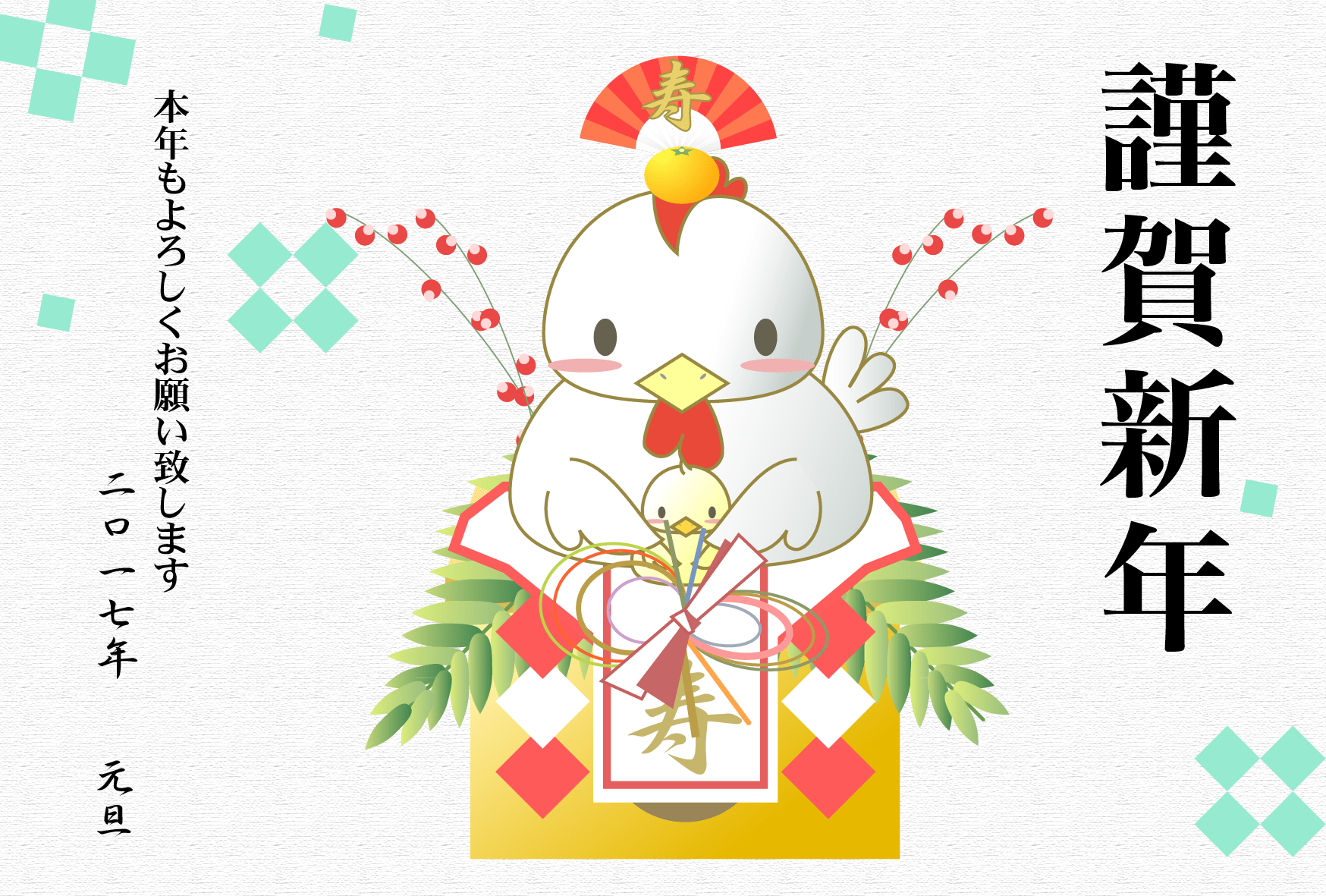
Illustration for 2017 being the “Year of the Rooster”.

We are here in the New Year and it’s time for a fresh start.  For those who follow the Chinese Zodiac calendar are aware that 2017 is the “Year of the Rooster”. The Chinese Zodiac calendar is part of a pretty ancient astrological system, where its role in this case is keeping track of the years and predicting how each would unfold. Japan and other Asian countries adopted this system hundreds of years ago, while other countries in the West have familiarized with it as well. What does this mean for this year, and why is it significant? Let’s take a look at some points regarding this Chinese Zodiac Calendar, the rooster, and the projection for 2017.

CHINESE ZODIAC CALENDAR FUN FACTS

A stone carving of the 12 Animals used in the Chinese Zodiac calendar. Photo taken by Felix Andrews. From Wikipedia.
  • Dates back to the Shang (Yin) Dynasty¹ in ancient China around 1700 b.c., based on written records from that time.
  • The Chinese Zodiac Calendar incorporates a 12-year cycle, which then resets after the cycle finishes in accordance to the complete solar orbit of Jupiter.
  •  Each year in this 12-year cycle is made up of 1 of 12 Zodiac signs, written as “十二支” in Chinese (pronounced “Juunishi” in Japanese). These 12 signs are labeled as “Earthly Branches”, due to their connection to human traits.
  • These 12 Zodiac signs are each represented by an animal. Collectively, these 12 Animals are written as “十二生肖” in Chinese (pronounced “Juuniseisho” in Japanese). These 12 Animals are the following in order according to the zodiac calendar used in China²: rat, ox, rabbit, tiger, dragon, snake, horse, goat, monkey, rooster, dog, pig.
  •  Each of these animals bear their own personalities, traits, and qualities, which not only identify people who are born in one of these animal years, but determine fortune and daily perspectives people should follow.
  • Along with the 12 Animals, there are 5 Elements used in this calendar. Written as “五行” (pronounced “Gogyo” in Japanese), these 5 elements are the following: fire, water, wood, metal, and earth.
  • Each of the 12 Animals are naturally associated with one of these 5 elements, which further affect each animal’s given traits.
  • Each single 12-year cycle also has the 5 Elements tied to each animal year in a particular pattern, creating a single elemental type of each animal. What this means is that there are 5 elemental types of each animal sign.
  • All 5 Elements will play out completely when each animal sign has had all 5 elemental types appear in 5 12-year cycles. The elements + animals combined makes the Chinese Zodiac calendar a full 60-years cycle before it resets completely, just to repeat the cycle again.
  • The Chinese Zodiac system, including the use of the calendar, made its way to Japan and believed to have been in use as early as Yayoi period³ (300 bce – 300 ce).
  • In Japan the term for observing each year is called “Eto” (干支), which is a combination of the 12 Earthly Branches (十二支), the 5 Elements (五行), and 10 Calendar Signs also referred to as “10 Heavenly Stems” (十干, which is pronounced “Jikkan”).
  • The use of the Chinese Zodiac calendar in Japan is very old and intricate as its use in China, for it is also used to tell the time of the day (時刻 jikoku), the Lunar month (陰暦 inreki), direction (方角 houkaku), and season (季節 kisetsu)⁴.

ROOSTER ANIMAL SIGN FUN FACTS

Artistic work featuring a rooster and a hen. Art piece is entitled “紫陽花双鶏図 (Rooster and Hen with Hydrangeas)”. Produced by Ito Jakuchu in the 18th century. From Wikipedia.
  • In accordance to the Lunar New Year (based on the rotation of the Moon), the rooster year begins from January 28 of 2017 and ends in February 15th of 2018.
  • The rooster is the 10th sign in the Chinese Zodiac calendar. In according to this sign (as how the calendar is used in Japan) are the following: The Lunar month is August, time of day is between 5 pm to 7 pm, direction is West, and season is Fall.
  • This year in Japanese is read as “Hinoto Tori” (丁酉), for both the rooster sign (酉) and the “Fire” element (丁) are next in the zodiac calendar. Together they indicate that 2017 is the “Fire Rooster” year, as well as being the 34th year in the 60-year cycle of the Chinese Zodiac calendar before it starts over completely.
  • The animal zodiac sign for the rooster is written as “酉” in Chinese. This same written style is used in Japan.
  • This zodiac character “酉” in Japanese is pronounced “tori”, which is the same phonetic sound for another Chinese character that stands for bird (鳥). While it does refer to birds, this zodiac character for the calendar actually represents the rooster (鶏), which is pronounced “niwatori”.
  • Originally the zodiac character “酉” didn’t stand for rooster. In fact, the 12 zodiac signs never had any relations to animals in its conception!
  • The zodiac signs were originally standard labels representing people’s predetermined personalities and traits. For example, “酉” is the radical used with the water (水) radical to make up the word for alcohol (酒).
  • The inclusion of 12 animals representing a zodiac sign came much later in China’s history, as a means to help people remember the signs much easier5. To determine which sign got which animal was based on the pronunciation of the sign and which animal was closest to the sound.
  • The rooster is a symbol for hard work, trustworthy, and dedication, due to the rooster’s nature of waking early and crowing at day’s break almost everyday. Also, the pronunciation of rooster (鶏) in standard Chinese6 is the same as fortune (吉), which is “ji”, making it a favorable sign to the masses.

Now, for some projections made for 2017:

  • The rooster represents hardwork, honesty, and doing one’s best. So, we should incorporate these traits along with the traits of our own personal animal sign.
  •  It is advised that we put our best foot forward and focus on our dreams and goals with no hesitation. It is important to seize the opportunity to “take” good fortune and success7.
  • 1st impression matters in having a successful year, so give it your 100%
  • This year is especially profitable for business owners of all kind. How one markets and advertises their products and services can win over customers very easily.
  • People under the rooster sign beware! Things will not look good for you if you don’t tread carefully!8
Another illustration for 2017.

Here’s looking forward to a prosperous 2017 for all!


1) 殷代

2) Depending on the habitat, culture, and story used, the animals vary in different cultures. For example, in Japan the pig is replaced by a boar, while in Vietnam the cat replaces the rabbit.

3) 弥生時代

4) The Chinese Zodiac is a very intricate, and rather complex system that, in ancient times, played a huge role in determining one’s day, activities, luck, and so on. Based on astrological factors and imagery, it has a multitude of uses. Along with the 12 Animals (Earthly Branches), 5 Elements, and 10 Calendar Signs (Heavenly Stems), the Chinese Zodiac is also made up of, or works in conjunction with, many more subsystems that can be daunting. All in all, it has a pretty straight forward pattern in whatever field of interest is used, it just takes some familiarity and practice.

For this post, its use in a calendar system (along with small hints in its usage regarding time, direction, etc.) is presented. To cover the other uses along with the other subsystems would have to be done in a separate post.

5) One of popular folktales state that the Jade Emperor (ruler of heaven in Chinese lore) wished to appoint 12 animals to one of the 12 zodiac signs. He set up a foot race between all(?) of the earthly animals, stating that the 1st 12 will be chosen, and appointed according to which place they came in. The race had different outcomes for each of the animals, where it either brought out their best qualities (i.e. the ox waking very early in attempt to beat the faster animals and come in first, which sorta worked…), defined their personality in accordance to the sign it represents (i.e. the rat being cunning & resourceful by hanging onto the ox’s horn during the race to *officially* be 1st), to defining animals’ relationship with one another (i.e. cats hating rats due to the rat breaking a promise prior to the race, dogs hating roosters due to the rooster cheating by flying at the last moment to beat the dog).

Note that this is not *the* official version of the story. Actually, there may be no official version due to how old it was when incorporated into the Chinese Zodiac and how certain details may have been changed due to the times. There are other versions of the tale that paints the story with variations in regards to how the animals were chosen, from where the race involved crossing a stream, being a swimming race, a selection of animals to be guardians of heaven, down to a festival where only 12 animals were invited.

6) Pinyin

7)  In Japanese the pronunciation of the zodiac sign “酉” also has the same sound as the word “take” (取り). As a play on words, it is advised to “take in” (取り込み) as much good you can out of the year.

8) Actually, this is said for every zodiac sign, when one’s animal sign matches the the animal for the New Year. On a fantastical level, it is the way for the Jade Emperor to punish each animal when their year comes up due to doing such a poor job. On a more theoretical level, it is sometimes explained that the year that matches one’s animal sign brings out the best in us, which in turn can backfire tremendously. Thus it is advised that we be careful when our animal year comes around, and take certain steps to avoid misfortune, such as avoiding certain colors.