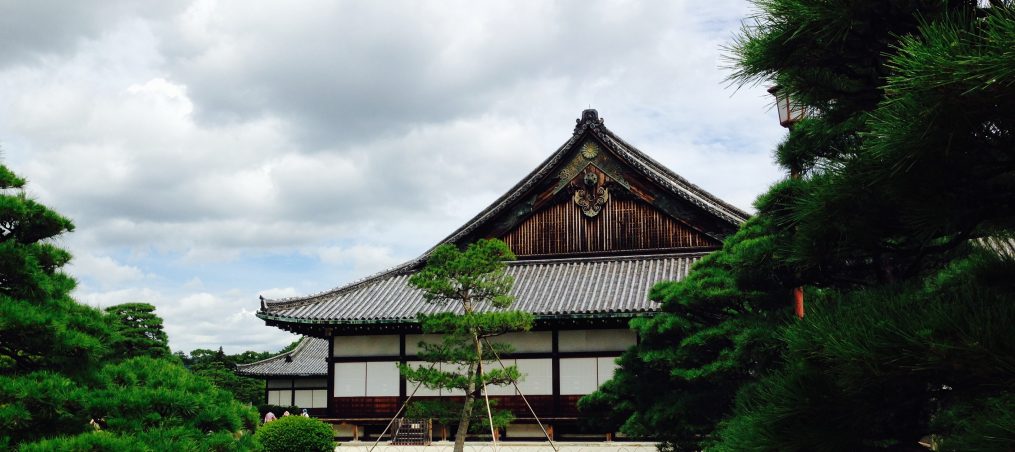
It’s 2024! Happy new year! What better way to start than with a post about what Zodiac year is upon us? As stated in early reports, the next sign is the dragon, making 2024 the year of the dragon (辰年, tatsudoshi in Japanese). A mythical creature from lore, it is extremely popular in pop culture due to its strong symbolism of power. Let’s take a look at the dragon sign’s specifics, and how it was used in the past:
Zodiac number: 5th sign
Zodiac character: 辰
Pronunciation: tatsu
Animal/creature: dragon (竜/龍, ryū in Japanese)
Direction: around south-east
Time: Around 8 am / within the 2 hour period 7 am ~ 9 am
Month: 3nd (based on the old calendar)
Ying/Yang: yang (positive or light)
Element: Wood (木)
The dragon is the 5th creature of the 12 Zodiac animals, and falls on the 5th year of the current Zodiac cycle (十二支, Jūnishi in Japanese). The Zodiac system played a significant role in Japan’s society in the past, both symbolically, systematically, and in practical applications. Today, this dependency is not as pronounced due to the modern direction driven by technology society is headed. However, classical rituals & practices such as the Zodiac calendar help keep these ancient lessons alive.
WHAT THE DRAGON SIGN REPRESENTS
Most people who are familiar with Chinese characters would write “龍” or “竜” to represent the dragon sign. However, in reality the character “辰” is the correct sign used in the Zodiac calendar. As mentioned in the other articles that are on the same topic here on Light in the Clouds, the only connection the Zodiac sign has with dragon is pronunciation; when the idea to make it more accessible to the common folks by having a particular creature represent each sign is when the dragon image started to be used.
A creative design of this year’s sign, “tatsu”. From illustAC.
So what is the actual meaning of this year’s sign? Let’s look at what the Chinese character “辰” actually means. The pronunciation of this sign is generally “tatsu” when related to the Zodiac, and its meaning is defined as something shaking or waving¹. This understanding comes from research from classical documents such as “Kansho Ritsurekishi” (漢書 律暦志), an ancient manuscript on Chinese Astrology. This connects with the overall theme of the Zodiac system and its imagery of the cycle of plants growing, where this sign represents a bud that is extending upward from its seed out through the ground, vibrating with life as it takes the shape of a plant.
A popular phrase describing this year used on Japanese sites is ”陽気が動いて、万物が振動しながら活力旺盛になって大きく成長する年”, which translates as “a year to grow healthy & prosper with vitality, as everything in life is blanketed in the flow of positive energy”². This goes hand-in-hand with what the tatsu character expresses for the new year.
FORTUNE FORECAST FOR 2024
Out of the 12 Zodiac animals, the dragon is a mythical creature that has abilities that are far more extraordinary. This plays a part in the type of energy forecast that goes into each dragon year. For this year, the energy of the dragon is positive. Due to this, it is predicted that good fortune awaits everyone in every endeavor they uptake, with positive results being evident with each step in the process.
Those of the dragon sign are viewed as energetic, powerful, and have great vitality³. These individuals are viewed to be destined to achieve great things, including being competent leaders. However, it is also stated that they have a short temper, and to cross individuals like these can bring unwanted trouble. A phrase that best describe this personality is “gekirin ni fureru” (逆鱗に触れる). Full interpretation is “do not touch the scales under the dragon’s throat, lest you want to face its wrath”. We can relate this to angering one’s boss, or a dangerous individual like a gangster, or even our parents. However, this year is viewed as an especially good year, so people of the dragon sign will be less prone to throwing fits.
ADDITIONAL SIDE TO THE ZODIAC YEAR
As mentioned in other articles, the Zodiac calendar isn’t only made up by the 12 Zodiac signs. Now let’s turn to the 10 Stems (十干, Jikkan in Japanese), which also plays a role in the Zodiac calendar. This time around we get “ki-no-e” (甲), which is a character that stands for “shell” or “hard covering”. A commonly used character, it’s usually associated with words that describe something hard and gives fortified protection, such as armor. For a seed, this fits perfectly as well.
There is another meaning for ki-no-e in relations to the auspicious nature of the Zodiac system. Here, it represents a seed, but not interpreted in its physical appearance. Instead, the idea of the seed represents growth, which perfectly aligns with the forecast of this year.
OLD DRAGON SAYINGS
The dragon symbolism is very strong in Asia. On a cultural level, its influence can be seen in almost all walks of life in the past, especially in conversations. It is not unusual to hear phrases and expressions of all types that make reference to this creature to communicate a concept. As one can imagine, there are plenty of interesting old sayings using the dragon in Japanese.
A woodblock print entitled, “Bunji sannen Ōshū Takadachi Gassen Koromogawa yori hakuryū ten e noboru” (文治三年奥州高館合戦自衣川白竜昇天). An auspicious depiction of a white dragon rising up from the Koromo river during the Battle of Takadachi in 1187. By Utagawa Yoshitsuya. From the digital archive of the Shizuoka Prefectural Central Library.
The following are a few examples of dragon-inspired old sayings. I will include the Japanese text and its literal description, followed by its interpreted meaning and further explanation.
・Ryū no hige wo naderu (龍の鬚を撫でる, stroke a dragon’s whiskers) MEANING: Don’t awaken the beast! Don’t go looking for trouble there.
Dragons are known as wise and powerful creatures. At the same time, they can easily come to a wrathful behavior if bothered. Touching their sacred hairs (to steal) is considered suicide; even just coming face to face is risky, as it’s advised to leave asap if possible. This old saying is to caution a person to refrain from doing something that will get them into trouble.
・Ryū no hige wo ari ga nerau (龍の鬚を蟻が狙う, an ant will seek the whiskers of a dragon) MEANING: Those in a weaker position will take the risk to rise to a greater status
This phrase refers to when you want greater power to achieve a goal. It uses the idea of a dragon’s whiskers being special, and that anyone would seek it to gain great fortune, including a tiny ant. As an example, when an inferior person seeks to surpass a superior person.
・Ryū no agito no tama wo toru (龍の頷の珠を取る, steal the jeweled orb from the dragon’s territory) MEANING: Getting involved in something very difficult
This is a phrase used when someone’s embarking on a risky/dangerous task. It’s similar to the first old phrase mentioned above, where one risks their life to obtain a valuable jeweled orb dragons are rumored to possess by trespassing into their lair. You can say it has the same usage as another popular phrase that incorporates the tiger⁴, the sworn rival of the dragon.
・Ryū gin sureba kumo okoru (龍吟ずれば雲起こる, when the dragon bellows, clouds stir up) MEANING: When in need, you will attract the right people
An interesting one, this has a meaning of meeting the right people who will be beneficial to you. In a folklore-type example, it is like when a hero sets out on a journey, they have the tendency to run into like-minded people that will eventually join them. This is applicable to almost any type of scenarios, such as when starting a new business.
・Ryū no mizu wo euru gotoshi (龍の水を得る如し, like a dragon in water) MEANING: Gaining more resources to accomplish greater things
Dragons are said to have a natural connection with water and its many forms in nature. This includes clouds, rivers, rain, and waterfalls. When a dragon is in its element, so to speak, it can demonstrate its power at greater folds. This phrase plays on the idea of gaining something to do even better. It can be anything that can grant an individual more success.
CONCLUSION
We end this article with a look at the start of the year. Here’s hoping that the 2024 forecast comes to fruition. There’s much history behind the lore of dragons, most of which couldn’t make it into this article. At a later date, there are plans to publish a few more articles related to the dragon theme, so look out for them.
1) Some things to point out is that this character is pretty old, and isn’t formally used that much outside of ancient practices like the Zodiac. While in older documentations, the idea of its meaning to shake or wave is evident, but nowadays this character is outdated and is not used in this manner. In modern dictionaries it is not unusual to see “dragon” as one of its meanings, which is based on its (limited) usage in present day.
On another note, “tatsu” is more of a Japanese phonetic. The Chinese phonetic is “shin” (chén in Pinyin), and is another way of reading this character. Since “tatsu” is another phonetic for “dragon” for both the more familiar Chinese characters “竜” and “龍”, this just makes it easier to connect this to the Zodiac character “辰”…at least in Japanese.
2) It must be stated again that this is just a prediction, one made a few months in advance before the New Year. In reality, we hope for a healthy and positive year, but we must also accept that there as already been fatal tragedies all around the world, where in some cases happened on New Years day.
3) There are more traits, but for this article I will focus on the ones that come up the most in relations to the Zodiac sign.
As we come to a close of the year, people in the US look back at impactful moments, whether it be positive or negative. This is probably true for other countries as well. There is an interesting practice in Japan called “kotoshi no kanji” (今年の漢字), where a single kanji is selected by the Japan Kanji Aptitude Testing Foundation that represents the overall impression of the year by the general public. For 2023, the kanji “zei” (税) was chosen, which stands for “taxes”.
Kanji meaning taxes
The reason for the choice is because of Japan’s financial burdens due to increase in taxes in essentials such as gas and food, as well as budget cuts by policymakers. These topics are covered through news outlets on a daily basis, and can weigh greatly on people’s minds. This is relatable, for in the US we hear lots of talk regard inflation impacting prices of everyday goods, as well as the pending recession.
Taking a page from the kotoshi no kanji idea, I can summarize the year of 2023 for myself on a personal level. Looking back at how the year played out, I would choose the kanji “iku” (育), which means “growth” or “raise up”. Common words in Japanese that uses this kanji include sodatsu (育つ, to raise), and kyōiku (教育, education or culture), this is a general kanji that is used in conversations that bear the general topic of growth. The reasons for choosing this kanji to summarize 2023 the following: career, and martial arts.
First, let me talk a little about my career. This being the 2nd year after switching career paths to the Tech field, I’ve been given the opportunity for personal growth at my new company. I’ve been allowed to take numerous courses to further my knowledge, and gain licenses as proof of my advancement. This is greatly encouraged by my manager not just to me, but to my team mates as well. For the majority of the year, I’ve done just that, alongside participating in projects that open the door to new tools to learn, as well as responsibilities. I am grateful for the opportunity to work in a company that is supportive of their employees’ career growth. While all positives, the only negative is losing a lot of time for working on this blog, doing Japanese research, and finishing up translation projects.
Kanji meaning growth
Fear not, for since my Japanese research and translation projects have no deadlines, I work on them whenever free time is at hand. These also correlate with Light in the Clouds blog, so content will always be present (albeit slower than intended). I’ve had to streamline my list of planned content to write about, so for this year it’s mainly been on the White Rabbit of Inaba (from the Kojiki), and the Tenga Goken series. For 2024 I should have more available time to write more, for I intend to slow down abit with further career learning, as I actually need to put into practice what I’ve been studying through personal projects.
As for martial arts, Along with running my group’s training curriculum, I’ve spent this year improving my jujutsu by studying a different style from what I’ve learned over the years. I welcome the chance to learn something new, as I enjoy martial arts as a whole, and have gotten to a level where self expression goes being just sticking to one style. It’s important to always strive to learn new skills and improve, for being a teacher/instructor doesn’t mean one’s journey is over. My personal growth in jujutsu has been fulfilling, as what I’m studying is supplementing my overall knowledge greatly, especially since I have others tow work with and put it to the test.
This is my overall experience in 2023, which leads to my summary of the year as a time of growth. Coincidentally, it matches up with the yearly theme based on the Zodiac sign, which I spoke about here. I hope the same can be said for everyone as well. Best wishes that you all end the year on a good note, and prepare to start the new year giving your all!
The next sword from the Tenga Goken will be the Juzumaru Tsunesugu (数珠恒次). This time around, we go in a different direction in terms of how Japanese swords are viewed both physically and in application. Going the opposite direction of them being used for killing by warriors, we will explore the idea of how a sword like the Juzumaru Tsunesugu played a symbolic role in Buddhist practices. Before going over its history, let’s first review its specifications.
A snapshot of Juzumaru Tsunetsugu without any fittings or handle, from the site “Touken World“.
Status: valuable cultural asset
Blade length: 82.1 cm
Curvature: 3.0 cm
Width (base): 4.0 cm
Width (tip): 2.0 cm
Maker: Aoe Tsunetsugu
An interesting point worth taking note of is that the Juzumaru Tsunetsugu’s status is that of a cultural piece, as opposed to a national treasure. This is because, while being an intangible piece of history with traceable history, it is neither in the possession of a national establishment nor part of an Imperial collection. Due to this, proper validation cannot be done on its authenticity. Still, its stated existence is accepted as being important on a cultural level, which isn’t an unusual thing as many historical items around Japan can be deemed as invaluable objects, yet stay in the hands of those outside of government-funded organizations and Imperial property.
Juzumaru Tsunetsugu exists today as part of the collection of artifacts at the temple Honkōji, where it can be viewed by visitors around the world.
BEGINNINGS
The Juzumaru Tsunetsugu was crafted by a swordsmith who’s addressed as “Aoe Tsunetsugu” (青江常次). Like many others in the same profession, Tsunetsugu’s surname is unknown. Instead, he is identified by where he comes from, which was Aoe in Bitchu Province (present day Kurashiki City, Okayama Prefecture). He was a member of the Aoe group of swordsmiths, which was started by his father, Aoe Moritsugu. Taking a quick look at the Aoe group timeline, Moritsugu and his group were active from the ending of Heian period to the early term of Kamakura period (1100s ~ 1200s), where Tsunetsugu, being the 2nd son out of 3 children, took over after his father at some point. To further bolster up his resume, Tsunetsugu was commissioned as the sole blacksmith by the Imperial palace to craft swords during 82nd Imperial successor Emperor Gotoba’s reign…but this should be taken with a grain of salt, as there were other blacksmiths who were utilized by the Imperial court as well.
After being brought to life by Tsunetsugu, the Juzumaru Tsunetsugu, or Juzumaru for short, was the property of the Buddhist temple Kuonji throughout most of its documented history. Its tie-in with Buddhism is key to the name “Juzumaru”, which there are are 2 symbolic meanings behind this. The first is the idea that “juzumaru” stands for the salvation of people from suffering, which is connected to the practice of the Buddhist sect Nichiren. The 2nd deals with the sword’s design, as at one point its handle was adorned with jewels in the likeliness of prayer beads, which are called “juzu” in Japanese¹.
ORIGINS THROUGH NICHIREN
Sources regarding the Juzumaru vary abit, but lead to the same point as to being part of the Tenga Goken due its splendor in craftsmanship. One particular source, known as “Shōchuu Tōken Meibutsuchō” (詳註刀剣名物帳), recounts its origin through the life of Nichiren, which goes as follow:
To the left, a statue honoring Nichiren, while to the right is “Founder’s Hall” (祖師堂, Soshidō), one of the buildings of Kuonji where Nichiren is worshiped.
In the past, many travelers feared traversing the paths that lead through the woods and mountains, as it was common knowledge that bandits laid in wait around those areas. Despite this, the saint Nichiren² planned to set off by himself to explore Mt. Minobu in Kai Country (present day Yamanashi Prefecture) during the early 13th century. Despite arguments from loyalists to dissuade such a dangerous journey, Nichiren would not listen. In order to ensure his safety, a sword from a country warrior living around the southern part at the base of the mountain was given to him. Nichiren accepted the sword and, before ascending Mt. Minobu, wrapped prayer beads around the sword handle, symbolically to ward off ill fortune.
Like a miracle, Nichiren was able to climb up and explore the mountain danger-free. Furthermore, it is said that there was enough supplies within the surroundings on the mountain where he could devise a thatch hut as a place for slumber and to protect him from the elements. After some time, the temple Kuonji, which would become the grounds of the Nichiren sect, was established on Mt. Minobu. It is also written that the sword Nichiren brought with him during his journey was later examined by Honami Kōhō, one of the descendants of the family-run sword evaluation who was also a devout of Nichiren teachings. He was able to identify it as the product of Aoe Tsunetsugu, a renown swordsmith. With that, this sword gained the name “Juzumaru”, and became a symbolic, treasured item of Kuonji temple and an asset to Buddhism.
More or less, this tale summarizes Juzumaru and its ties to Nichiren’s establishment of his own Buddhist sect. It is considered to be one of 3 keepsake relics of Nichiren after his death, with the other 2 being a his robe and a ceremonial folding fan. Being a Buddhist sword, it’s no surprise that it was not used for physical combat. Further evidence of this is the sword wasn’t even sharpened, but instead it’s edge was dull. This does open up some questions, such as the original purpose of the sword itself. Was it meant for self defense through fighting off bandits in the mountain through mortal combat? Since Nichiren wasn’t a warrior himself, it would go against the social caste during those times to arm a priest with a live sword. Maybe the idea of “self defense” was more of a sword that acted like a ward against ill fortune, thus the reason why the Juzumaru wasn’t sharpened.
Still, let it be known that an unsharpened sword is not unusual. In the past, along with arming warriors with sharp swords, it was not uncommon for swordsmiths to also make ceremonial swords that were unsharpened for non-combative purposes. Symbolically they “eliminated” ill fortune or evil spirits by “cutting” them down in order to ensure life proceeds correctly in the name of justice. Such a concept stems from Buddhism, which is defined by the phrase “hajakenshō” (破邪顕正).
BENEFACTOR OF THE JEWELED HILT #1
As mentioned before, “juzu” means prayer beads. It can also stand for jeweled beads, for beads made out of fine jewel stones represented great value and status in Japanese culture of old. Outside of the abridged “base” story of how Nichiren obtained the sword Juzumaru, there are other sources that can fill the blanks regarding Nichiren’s life up until the establishment of Kuonji temple. However, when it comes to this sword with its unique jeweled hilt, there are fewer sources to turn to. To be specific, there are 2 different versions that give their own take on who contributed to Juzumaru earning its name through the adornment of jewels on the handle. Here’s the 1st version.
There was a supporter, a benefactor of sorts who was Hakii Saburo Sanenaga (波木井三郎実長)³, a notable nobleman of the Imperial Court. A land owner within Kai Country, he became a follower of Buddhist teachings through Nichiren’s preaching around Kamakura. He was a strong supporter of his Buddhist teacher, from the start of his ascent up Mt. Minobu, to the establishment of Kuonji temple. Sanenaga continued to contribute to Kuonji temple after Nichiren’s death, which includes having the Juzumaru adorned with jeweled beads on the hilt.
A example of prayer beads, which is the likeliness the jewels fitted on Juzumaru’s sword handle was described to be. From Photo-AC.
Sanenaga appears to have been greatly involved in both Buddhism and the development of Kuonji temple per what is mentioned in remaining documentations. Thus, this version is considered factual for the most part. One can look at his involvement in having jewels adorned on Juzumaru’s sword handle a parallel to when Nichiren wrapped prayer beads around the sword handle during his journey. Along with it having an unsharpened edge, this majestic look of jewels in the form of prayer beads fit with the ideologies of Buddhism, thus adding to Juzumaru’s supernatural status, as well as netting it the nickname “Hajakenshō no ken” (破邪顕正の剣).
BENEFACTOR OF THE JEWELED HILT #2
There’s another take on a different individual who may have contributed to Juzumaru’s jeweled hilt it’s famous for. This second claim is through Hōjō Yagenta (北条弥源太), a warrior from a related branch of the Hōjō clan. The source of this information comes from personal writings by Yagenta known as ”Zenaku Nitō Gosho” (善悪二刀御書).
Living in Kamakura, he was one of many followers of the Buddhism teachings of Nichiren. When Nichiren declared his departure from Kamakura and going into isolation, Yagenta provided him with a daisho (大小), which is a long sword & short sword set, 3 months before his journey up Mt. Minobu. These swords were no simple items for mere self-defense, but were specially crafted to aid Nichiren in warding evil spirits which were to be (ritually) slain by these blessed blades. As one would guess, the long sword is said to be Juzumaru.
There is a little more to this version, which comes in the form of details pertaining to sword descriptions of this long-short sword pair. This description is taken from a documentation called “Fuji Daisekiji Meishoshi” (富士大石寺明細誌), which pertains records from a Buddhist temple Daisekiji in Shizuoka Prefecture. The sword descriptions (both original Japanese and my English transliteration) go as follow:
A digital version of ”Fuji Daisekiji Meishoshi”, with the sword descriptions presented in the red box. This can be viewed on the following website here.
JAPANESE ① 太刀 三条小鍛冶宗近作 二尺一寸 一腰 蓮祖の所持諸弘通の節之レを帯す、北条弥源太殿より之レを献ず
② 劔 久国作 九寸五分 一口 蓮祖弘通の節笈中に入る
ENGLISH 1) Long sword / Crafted by Sanjō Kokaji Munechika / 2 shaku 1 sun / single sword⁴ From Hōjō Yagenta, this was given to the saintly Nichiren, who wore this at his hip during his journey to where he would find his new home
2) Sword (short) / Crafted by Hisaku / 9 sun 5bu / single blade⁵ A sword part of the sacred items carried during Nichiren’s journey
There are a few points to unravel to get a clearer narrative. The 1st description is interpreted as Juzumaru being crafted by the famous Sanjō Munechika, while 2nd description speaks of the paired short sword being crafted by Hisaku from the Awataguchi clan. Hisaku was of a line of swordsmiths that predates Munechika, but they were apparently good friends⁶. On top of that, it is said that they were commissioned as official blacksmiths by Emperor Gotoba during his reign. Hōjō Yagenta, being a supporter of Nichiren, was made aware of his Buddhist teacher’s intended journey, and supposedly made preparations by commissioning a long sword be made for him by Munechika. As an extra, Hisaku also crafted a short sword, most likely from the same material. Yagenta was able to present this long and short sword set to Nichiren 3 months before the journey.
It’s safe to say that this story varies differently from the first version mentioned earlier, which raises many puzzling questions. The 1st point of concern is by whom hands Juzumaru was created by. Most sources state that Aoe Tsunetsugu is recorded as swordsmith who crafted Juzumaru, as his name can be verified to be on the tang of this same sword. Why the inconsistency here? Sanjō Munechika can be considered to have more claim to his name than Tsunetsugu, so attaching Juzumaru to him would play into the splendor of this sword. Could it be that in documenting the sword descriptions that the smith’s name was interpreted incorrectly? Or, if a sword by Munechika commissioned by Yagenta truly did exist⁷, it is possible that it was completely different from that made by Tsunetsugu. Maybe this “other” sword is mistakenly thought to be the Juzumaru. It is also a possibility for someone like Nichiren to have had several swords made for him as a form of protection on his journey up Mt. Minobu. The question here is would he have carried with him this multitude of swords? Most likely not, unless he had company to assist with such load.
The 2nd point of concern is Juzumaru being part of a long & short sword set, with a short sword crafted in the same liking as it. There are no records or surviving evidence that it was accompanied by a shorter sword…at least one by Tsunetsugu. While the idea of another great swordsmith like Hisaku crafting a pairing short sword to the Juzumaru does sound cool, it literally gets no mention outside of this version of the story. On top of this, there are no traces of this short sword, for it has yet to have been discovered.
Taking all of these aforementioned points into consideration, the consensus is that this long-short sword pair from Yagenta does not fit with the general take on Juzumaru’s origin, if the details themselves are factual at all. On one hand, this long & short sword set may have been completely different, but mistaken to be that of the legendary sword. It’s also possible that Nichiren was gifted with these swords, but didn’t take it with him on his journey? On the other hand, the entry about the sword details in the aforementioned documentation from Daisekiji temple doesn’t mention the name of the long sword, so blame should not be shifted here, but from any other sources that points to it being the one & only Juzumaru.
OTHER ADORNMENTS
Along with the jeweled hilt that resembles prayer beads, Juzumaru is described to have also been decorated with quality fittings. Early in this article, it was mentioned that the sword evaluator Honami Kōhō had examined this sword and judged its value. There is a document called “Kyōhō Meibutsucho” (享保名物帳), a record of antiquated swords, that mentions Kōhō also donated fine quality sword fittings, which were labeled as “Kōhō monozuki no koshirae” (光甫物数寄の拵). Apparently, these consisted of metallic components with a motif of renge (蓮華, lotus flowers) etched on them. The choice of renge, or lotus flowers, is most likely due to the deep connection this flower has with Buddhism, as well as the Lotus sutra recited in the Nichiren sect. It is also noted that Kōhō had donated these sword fittings sometime in the 1600s of early Edo period, which was centuries after the Juzumaru was crafted.
The section from the 1857 edition of “Kyōhō Meibutsucho”. The words “Juzumaru” and “Kōhō monozuki no koshirae” are highlighed by red lines as reference.
While Juzumaru is described as a well-adorned sword, these descriptions are only found on paper. Unfortunately, much of the adornment that were claimed to once have decorated this sword are currently not on the actual sword. This includes the prayer beads and the jewels fitted on the sword handle. The reasoning can be viewed from a couple of angles, the most suitable one is that these adornments were stolen. It’s highly possible that they were removed from Juzumaru for personal gain, which could include netting a high price to those who would buy them. Why would anyone want to purchase adornments that belong to a legendary sword like the Juzumaru? The simplest answer is that most people never heard of this sword, let alone have seen it unless they’ve made a trip to Kuonji temple, so any prospective buyer wouldn’t know the source of the fittings.
Another question would be as to when and how these adornments were removed from Juzumaru. While there are no solid answers to this, the following below will put this all into perspective.
FATE OF THE JUZUMARU
Stories about this legendary sword indicate that it’s synonymous with the Kuonji temple for centuries since Nichiren set out on his journey. However, an unusual incident happened where the Juzumaru was nowhere to be found sometime in the early 1700s; at a time, scholars and researchers alike could only go based on the writings about it, which painted a picture that it once existed. Why was it no longer at Kuonji temple? Was it stolen, or sold to support the temple? This point is still unknown⁸.
In 1919, a notable sword researcher named Sugihara Shōzō (杉原祥造) from Amagasaki city in Hyōgo prefecture, traveled around Japan studying the many swords that have survived, as well a purchasing those that were of antiquated value. One day, he discovered the Juzumaru at an auction house in his hometown, where items of aristocratic and nobility were sold to the highest bidder. Shōzō bought it and put notice to this discovery, as it was then reported in newspapers. What happens next is quite interesting, for he headed to Honkōji, the nearest Nichiren-sect temple in his hometown, and donated the sword there for safe keeping.
A picture of Juzumaru present-day, with no sword fittings, on display at Honkōji temple. This is from Amagasaki City website.
Why not return the Juzumaru to its original home at Kuonji? Speculations include that Shōzō had conflicting thoughts regarding Kuonji actually having possession of this particular sword in the first place, or if it was a fabrication all along. What was most important to him was to return this sacred relic to the rightful environment it belonged to, which was that of a Buddhist temple.
About a year later, Juzumaru was declared a former national treasure by Japan’s Ministry of Education and Culture under the following description:
Japanese
丙種 刀劍 太刀 銘恒次(数珠丸) 一口 兵庫県尼崎市別所村 本興寺
English
3rd class / sword Long sword / sword name Tsunetsugu (Juzumaru) / single blade Honkōji / located in a forest in Amagasaki city, Hyōgo Prefecture
in 1950, it would once again be re-evaluated by the Agency of Cultural Affairs, and be declared its new status as it now viewed as an important cultural property⁹.
ENDING
We come to a close on this treasured sword called Juzumaru Tsunetsugu. While it may never had tasted the impact of another sword on any of Japan’s numerous battlefields, the tales of it protecting a saint as a ward on his journey to establish his own Buddhist temple, as well as symbolically aided in the rituals performed there is the support that elevates this sword to the high recognition it holds now. Stay tuned for part five of the Tenga Goken series, which will feature the next sword known as Dōjigiri Yasutsuna.
1) While a minor topic, there has been a small debate in regards to this sword’s naming convention. While popular choice of kanji combination found in documents is “数珠”, there appears to be some that use “球数” instead. While both essentially mean the same thing, which is prayer beads, the former is the proper name, while the latter usually relates to the number count of the beads. It’s also not certain if the pronunciation would stay the same or switch to “suju” if the latter was the proper name. At the end of the day, the former, along with “juzu” is what sticks.
2) Saint Nichiren (日蓮上人, Nichiren Jōnin) can also be read as “priest Nichiren”, as he was a Buddhist priest. He was an actual person who was a scholar of Mahayana Buddhism, then declared his own version based on the same teachings, especially on the Lotus sutra. His climb up Mt. Minobu was actually due to self exile, for Nichiren faced many hardships (including imprisonments and banishment) for the sake of spreading Buddhist teachings, followed by depreciation by the government even after proving his teachings are of great value to the whole of Japan due to coincidental predictions of foreign invasion.
3) Also known by the saint name “Hakii Nanbu” (波木井南部).
4) The term “hitokoshi” (一腰) is another counter used for swords. This one is unique, as it identifies a sword that is slung at the hip, which is normal practice by warriors alike. Since this is a specialized counter, note that any swords not slung at the hip would most likely be identified by a different counter.
5) Just like hitokoshi, the term “hitokuchi” (一口) is another unique term not just for swords, but for bladed objects as a whole. In this case, a sword with a particular pattern along the blade near the edge identified as a kiriguchi (切り口) are referenced by this counter.
6) The two swordsmiths had a good relationship probably because they come from the same area in Japan, which was Yamashiro Country at the time. This area is now presently known as the southern area in Kyōto.
7) There was a police report of this “other” sword being stolen at night from a storage house (guessing at Kuonji temple?) in June of 1940. Apparently the lock was smashed and various valuable items, including this sword, were taken. However, there are some oddities to this claim, the main one being it was disclosed later to the police that this sword, along with other like items, was noticed to have been missing since April of the same year. Not much is known with this case afterwards.
8) Interestingly, there are a couple of documentations that mention the Juzumaru being relocated outside Kuonji temple for safe keeping at a time. However, in these cases this supposedly happened much earlier before the sword’s inevitable disappearance in the early 1700s. On top of this, those documentations are considered to be like diary entries, so they cannot be viewed as factual, especially since such records are also not found in Kuonji temple.
9) The page where the Juzumaru is listed on the Agency of Cultural Affairs can be found here.
There is something that many martial arts have in common. This similarity deals with the fundamental structures we assume with our bodies during combat, and how it can dictate our positioning against an opponent. From my own experience, along with cross-training with and conversing with others, I’ve learn that this fundamental structure is very basic in nature, but is a root support even for advanced instructions. While the approach may differ from one martial art system to another, the end result is generally the same.
This article will discuss this from a kobudō point of view, although I’m sure those from different systems will be able to relate. 2 fundamental body structures that are prominent are “ichimonji” and “hira ichimonji”.
Ichimonji (一文字) in Japanese means “straight line”. While the attitude of the body depicts this, the underline principles speak on it much more. In kobudō, kamae, or postures, that use this body structure generally have one leg forward, and the other leg behind. The front leg’s toes are usually facing forward, while the back leg’s toes are pointing outward, almost 90 degrees. Examples of kamae that are used that greatly represent this linear body structure are Ichimonji no kamae, Katate Seigan no kamae, and Kōsei no kamae.
Here’s a representation of ichimonji, viewed from a bird’s eye perspective. In terms of application, we imagine our body turned to the side while facing forward (up).
The strength of this ichimonji, or “straight line” body structure is that it dictates moving forward linearly in a slimmer profile. In application, one can punch or block on a linear path, and have a longer reach because the upper body turns to the side. The slimmer profile makes it easier to be a smaller target, with the ability to slip by and evade oncoming attacks.
Ichimonji no kamae (left) and Kōsei no kamae (right)
The next fundamental body structure, hira ichimonji (平一文字), describe objects that are straight laterally and appear “flat”. In combative scenarios, this shape can be referred to as “squaring up”. In kobudō, postures that use this body structure have us facing forward with our shoulders and hips aligned, and our feet pointing forward at an angle. Examples of kamae with this body structure include Hira Ichimonji no kamae and Hoko no kamae.
Here’s an example of hira ichimonji. From a bird’s eye perspective, this represents facing forward (up) with our body aligned straight with no twists.
Since we are wider with a Hira Ichimonji body structure, there is more rooted stability. It is easier to impose strength, such as during grappling, or show a lack of strength with one’s arms down. It is a more natural body form, meaning movements of all types can be done as well.
Hira Ichimonji no kamae (left) and Hira no kamae (right)
Here is an example of how these fundamental structures determine mechanical movement. There is a unique method of movement called shikkō (膝行), which involves walking while kneeling down. We start off in a kneeling position called seiza (正座), with both palms placed on top of the thighs near the hips. Next, we raise our right leg up and put our right foot forward while turning our upper body to the left through our hips. from there, we bring our right knee down to the ground as our entire body slides forward. Lastly, we return back to seiza by pulling our left leg forward next to our right leg, all the while turning our hips to face forward. We repeat this by alternating to our left leg by raising it up & forward in the same fashion. In seiza we have a hira ichimonji structure, but whenever we step forward our body shifts into an ichimonji structure. This is the proper way to do it, for trying to maintain only hira ichimonji structure is unnatural and very difficult. This demonstration of shifting our body into an ichimonji structure is also key for many other skills while in seiza, which includes punching and grappling.
The natural flow of the body while performing shikkō.
Earlier it was mentioned that each fundamental structure represents a posture. While this is truth for the most part, it is not entirely written in stone, especially since postures are not static poses. In fact, it is not unusual for a posture to have both an ichimonji structure and a hira ichimonji structure. Let’s take Hassō no kamae from Kukishinden ryu Naginatajutsu. When we assume Hassō no kamae with our naginata in hand to our right side, it is not wrong to stand with our left foot forward and upper body turned to the right, or with both feet roughly lined up together while facing forward with our chest. Each variation of this kamae have their advantages, especially when analyzed from a battlefield perspective.
Hasso no kamae performed with the naginata. To the left it is done with ichimonji body structure, while to the right is with hira ichimonji body structure.
If we look at the ichimonji structure of this kamae, not only does it allow the user to evade an incoming strike from an enemy while setting up for a counterattack, it also makes a person a smaller target while wearing armor, along with using the oosode (大袖, plates of woven armor draped beside the shoulder) as a shield. On the other hand, hira ichimonji structure is beneficial in group formation, for if a group of warriors are wielding naginata, they create a natural barricade against incoming enemies, all the while having the ability to push back with the shaft and quickly delivering a kesa giri (袈裟斬り, diagonal cut) through small motions. There is great versatility with these 2 fundamental body structures in the techniques of kobudō, offering infinite possibilities once well versed in adapting them in our movements.
In closing, these two fundamental body structures are linear, making the concept of them representing a lateral and horizontal line simple to grasp. As many things that are simple in nature, they hold an abundance of value when applied to strategic lessons. This holds true for kobudō, as well as other martial arts.
The second sword we are looking at from the famed Tenga Goken is the Mikazuki Munechika (三日月宗近). This sword has a history of passing through the hands of elite families, all the way up to modern times. Let’s take a look at the specifics:
Images of the Mikazuki Munechika (blade only, top) and its saya (scabbard, bottom). From Wikipedia.
Status: national treasure
Blade length: around 78.2 cm
Curvature: 2.7 cm
Width: 2.9 cm
Wrapping: tachi-style with (silk?) thread-wrapped handle, paired with a scabbard
Maker: Sanjō Munechika
Unlike the Onimaru Kunitsuna, there is more info on the Mikazuki’s construction, from the number of mekugiana (holes for rivets on a sword hilt) in its tang, to the type of threads and brass that adorns its handle. Due to how detailed the descriptions are about its features, the Mikazuki Munechika is considered the most lavishly adorned out of the Tenga Goken. As a national treasure, it is currently being kept at the Tokyo Kokuritsu Senbutsukan (Tokyo National Museum).
Specific info regarding the origins of the Mikazuki Munechika come from a 1488 old record called “Chōkyō Meizukuri” (長享銘尽). As an example, it is though to have been made sometime in the 10th century of the Heian era, during the reign of the Emperor Tenjō. There are also info about it bearing the signature “Sanjō” on its tang, and is made by “Sanjō Kokaji Munechika” (三条小鍛冶宗近)¹ of the Sanjō craftsman group, are listed. This sword’s name being “Mikazuki” is also stated here. The following line from the “Kyōhō Meibutsucho” (享保名物帳) hints on how this name came to be. The original Japanese is presented, followed by my transliteration.
JAPANESE:「三ヶ月と申す仔細は三ヶ月形の打のけ数々有之依て名付たる由」
TRANS: “The reason behind it getting the name “Mikazuki” is based on the client’s request, where, under specific instructions, the blade was struck repeatedly during the crafting process into a thin blade bearing the shape of a 3rd-day moon (crescent moon)”
While there is an “accepted” history, the list of owners of the Mikazuki Munechika is not definitively confirmed, as there seems to be varying sources. We’ll begin with the 1st theory, which begins with Hino Uchimitsu.
THEORY #1: ORIGIN THROUGH UCHIMITSU
Hino Uchimitsu (日野 内光) was the 2nd son of Tokudaiji Saneatsu, a senior court official in the Imperial Court during the Muromachi period. Born in 1489, he was a high-ranking noble who held different ranks in the Imperial court. It’s not stated how Uchimitsu acquired the Mikazuki, but most accepted sources say that its history starts with him.
Uchimitsu took part in the conflicts that erupted between Hosokawa Takakuni and the loyal followers of Kozai Motomori, Hatano Motokiyo and Yanagimoto Kataharu. When Takakuni had Motomori commit suicide, the two brothers revolted against him, raising a force to attack his castles. Different influential individuals were called to assist from both sides, with Uchimitsu siding with the brothers.
In the 2nd month of 1527 Uchimitsu took part in one of the battles, which occurred within the region of Katsurakawara in Kyoto prefecture. He led his force and faced off against Hosokawa Takakuni’s army, wielding the Mikazuki. However, Uchimitsu was killed during the course of the battle. It is said that to this day, you can see a chip in the sword, being proof of him using this sword in battle.
The faith of Uchimitsu and the Mikazuki was not left unchecked. It is said that Hatake Bokuzan, a fellow companion and feudal lord from the East, had given this fallen warrior a funeral, and offered the Mikazuki to a temple called Kōyasan (高野山) located in Wakayama prefecture. Bokuzan did so as a means to wish him good fortune in the afterlife.
While it may be so that the Mikazuki was once kept in Kōyasan, there seems to be doubt as to who actually brought it there. You see, Bokuzan actually passed away in 1522, 5 years before Uchimitsu’s death in battle. Was there a miscalculation in the dates? Probably not. Is it possible that another member of the Hatake did this? Currently there is no evidence on other Hatake members being involved with this matter. What is accepted, however, is that this fine sword was later taken from Kōyasan by Toyotomi Hideyoshi, one of the few successful rulers to unify Japan during its warring period.
FROM ONE OWNER TO ANOTHER
From records found in the collection of Hideyoshi’s wife, Kōdaiin (高台院)², is a written account about the Mikazuki. It is listed as a memento, as it appears she kept the Mikazuki, even after Hideyoshi’s death. She even kept it after power of rule was taken by Tokugawa Ieyasu in the early 1600s, who established the centuries-long Tokugawa Shogunate. Kōdaiin lived until the age 78, and passed away in 1624.
Artwork of Kodaiin during her period as a Buddhist nun.
In the same year of Kodaiin’s death, this memento was inherited by Tokugawa Hidetada, the third son of Ieyasu who became the 2nd shogun in 1605. From here on, the Mikazuki is recorded as a sword part of the Tokugawa family’s collection. Talk about it can be found in the “Onkoshimono Motocho” (御腰物元帳), a document written in 1868 about swords collected and owned by the many Tokugawa shoguns. There are other documents that give details of how it was passed down within the Tokugawa family as a family heirloom.
The Mikazuki would remain in the Tokugawa family for many generations, even after the Tokugawa Shogunate was dissolved. The last member of this illustrious family to hold onto it was Tokugawa Iesato, who was a prince/duke at the time. In 1929, Iesato brought attention to this old relic when he had it put up for display at the Japan Renown Treasure Exhibition (日本名宝展覧会).
With attention brought back to the Mikazuki, people seek out to learn more about it. One of these happened to be Honma Junji, a respected researcher on ancient swords, was given the chance to inspect it sometime between 1930 and 1931. He He then wrote about it in a publication called “Kenzan Tōwa” (薫山刀話), giving the sword high praise in regards to its craftsmanship. In time, the Mikazuki was given a grade as an antique, being categorized as an ancient national treasure.
In 1945, the Mikazuki will leave the centuries-long possession of the Tokugawa family, and be passed around a few times in the hands of avid antique collectors. In 1992, it would make its new home at the Japan National Museum, where it is part of its vast collections of ancient and modern works of art. This is where the Mikazuki can be found today.
THEORY #2: ORIGIN THROUGH YAMANAKA YUKIMORI
The other supposed origin of the Mikazuki comes from the Chōkyō Meizukushi (長享銘尽), a document about particular swords that is estimated to have been written around 1488. In this, it is mentioned that a Yamanaka Yukimori (山中幸盛), a warrior from Sanin area of Central Japan, had initially possessed the Mikazuki. At this time, this sword had a mikazuki (crescent moon) motif, thus how it got its namesake.
Artwork of Yamanaka Yukimori from the ukiyoe series “One-Hundred Aspects of the Moon” (月百姿), entitled “Crescent Moon of Faith – Yukimori” (信仰の三日月 幸盛). By Tsukioka Yoshitoshi.
The issue with this theory is in regards to when Yukimori was alive. Records show that he was born in 1545, which is almost 60 years after the Chōkyō Meizukushi was written. Unless this said document was updated to include his data, this is a discrepancy which can debunk this theory. With this being said, it is not impossible for this to be the case; as with anything that is a form of records, it is not unusual for documents to get added information over the years, in order to keep it up-to-date for the times. Speaking of records, Yukimori is quite a famous figure, as there are many tales and paintings that hail him with praise & merit. In fact, he is glorified based on a particular courageous last stand in Harima Province’s Kozuki castle against the mighty force of the invading Mōri clan in 1578, where he worked hard in assisting in the revival of his benefactor, the once-elite Amago clan. Before his inevitable fall, it is said that Yukimori went to Kōyasan, prayed before the Mikazuki that was kept there as he put his faith in the strength of the sword, then proceeded to take it with him³.
Was it truly the same “Mikazuki” in which this article is about? There is a possibility it is not, as it conflicts greatly with other official documents that state it was in the safekeeping of the Toyotomi family. On another note, “Mikazuki” is not an unusual title, so there is a high possibility that there were other swords that bore the same namesake, which could be the case for Yukimori.
Here’s some other key points regarding this version of the Mikazuki:
Measures at 2 shaku 2 sun 8 bu (about 60 cm)
It was nicknamed “Hangetsumaru” due to the unique hamon (pattern created along the blade) visible on it.
Part of its fittings included a handle wrap that had an elite family emblem called “kikukiri”
There are accounts of other swords that were owned by him, all about the size of a wakizashi. This includes one that had the length of 64 cm⁴, was crafted by Sukesada, a famous swordsmith⁵, and had a record of it being kept in the possession of Namazue Sakyou-no-suke.
An image of the kikukiri emblem.
With this, along with some other info related to Yamanaka Yukimori, the consensus about this version of the Mikazuki is that it most likely is not the same as the one that had its start with Hino Uchimitsu, if this one actually did exist.
ENDING
This article on Mikazuki comes to a close. A work of fine details and appealing design, the Mikazuki was not a weapon used on the battlefield, or much for combat for that matter. Instead, it was held as a trophy, and an item of status that significant individuals took pride in acquiring. Stay tuned for the next part of this series, which will feature the Juzumaru Tsunetsugu as the next sword from the Tenga Goken.
1) What is actually written is “Sanjō Kokaji”, but this is historically known to be tied to Munechika.
2) “Kōdaiin” is her Buddhist name, which was taken up after Hideyoshi passed away, and she established the temple Kōdaiji. Her other names prior to this included “Nene”, and “Toyotomi Yoshiko”.
3) This scene is often depicted as poetic, where Yukimori declares his faith to the moon in the sky. At this time, the phase of the moon is said to be that of a crescent moon. There are other artworks that show him doing so under the moon. However, it seems that him actually taking the Mikazuki Munechika from the temple at Kōyasan while performing this could have been an add-on to strengthen his connection with this sword.
4) In Japanese old measurements, 2 shaku 1 sun 2 bu
5) As a quick background reference, Sukesada is said to have come from Bizen no kuni (Bizen country), and learned to be a swordsmith under the Osafune. He made a name for himself as being very talented. However, there are many swords that have “Sukesada” engraved on the sword tang, indicating the name itself became a brand that others used. Due to this, it is tricky to credit him for all the swords that bear his signature.
The first sword we will cover in depth is the Onimaru Kunitsuna (鬼丸国綱). This sword was actually introduced in another article, entitled “Unique Swords with the Finest Edge“. Wielded by those of nobility and military status, it is portrayed as a mystical sword able to dispatch evil spirits, thus protecting its owner. Bearing such an illustrious profile, one would imagine it’s a true treasure with such power anyone would never bear to part from it. To be honest, this perception is not 100% accurate, for at a time the Onimaru Kunitsuna had a very negative reputation. Before we go into its rather rocky history, let’s examine this sword’s specifications.
Images of the blade of the Onimaru Kunitsuna. From Wikipedia.
Status: Imperial treasure
Blade length: 78.2 cm
Curvature: 3.2 cm
Maker: Kunitsuna
Out of the 5 swords, the Onimaru Kunitsuna is deemed a treasure of the Imperial Palace. This, however, does not mean it’s a national treasure, for it is rarely on display for public viewing, while few publishing have pictures of it. This may have to do with its rather complex history, and how it came to be included in the safekeeping of the Imperial Palace. Much of its extra-ordinary status comes from documents considered recordings of actual past events, like the novel-styled historical writings from the “Taiheiki” (太平記), and the Imperial logs of legendary and political matters from the “Gobutsu Chōsho” (御物調書). When reviewing the actual documents or sites that reference these same sources that pertain to the Onimaru Kunitsuna, you notice that much of it is unusually detailed dialogues and labeling just for a sword, which can range from its passing from one owner to another as a spoils of war, to reference during a simple evaluation by order of a government official. While I can’t say that all that’s written about the Onimaru Kunitsuna is factual or not, I will say that some of the info is a little over the top, and should be taken with a grain of salt.
BELOVED SWORD OF THE HŌJŌ CLAN
The origins of this sword is traced to around mid 1200s, during the Kamakura period. Hōjō Tokimasa, the 5th Regent who was in control of the government body known as Kamakura Bakufu, commissioned the swordsmith Awataguchi Kunitsuna to craft him a special sword. This was fulfilled, with the sword being called “Kunitsuna” based on the name signed on it.
An ukiyoe of Hōjō Tokimasa. From Wikipedia.
This sword would also gain an addition to its name, “Onimaru”¹, a little later. This came about when Tokimasa was tormented by nightmares caused by a demon while sleeping. As if willed by an unknown power from his keepsake sword, Tokimasa drew Kunitsuna out of its sheath and swung it down, cleaving off a part of the leg of his light stand that had the mark of a demon on it. From this, Tokimasa would give his sword the full title “Onimaru Kunitsuna”, as he believed it was good luck against mystical danger. Thus, it was a treasure of the Hōjō family for several generations.
However, this “good luck” of the Onimaru (title choice for remainder of article) was not witnessed again outside of the Hōjō household. This beloved sword was safely in the possession of this family up until the 14th successor Hōjō Takatoki, and after his passing, would later fall into the possession of Nagoe Takaie, who was the son of Hōjō Tokiie². It is said that in 1333, as many groups rose to oppose the Kamakura Bakufu rule controlled by the Hōjō clan, a particular rivalry between the Nagoe (Hōjō) clan and Akamatsu clan erupted, leading to skirmishes between both sides. The Hojo clan made an attempt to claim Yamazaki (present-day Ōyamazaki Town, Kyoto) from the Akamatsu clan. Takaie took part in this as he rode into the fray with the Onimaru at his side at Koganawate (present day Fushimi Ward, Kyoto City)³. However, he suffered the ill fate of being shot between the eyebrows by an arrow, dropping him dead in battle. Due to this tragedy, the Onimaru would later be returned back to his father Takatoki.
MISFORTUNES AS AN IMPLEMENT FOR WAR
A war commander by the name of Nitta Yoshisada would be next to gain possession of the Onimaru. This happened during an assault on Kamakura later in the same year, where it became evident that the might of the Hōjō clan was waning. Hōjō Kunitoki made an attempt to repel the assault, but things were looking grim on his side. At this time, he would have in his possession the Onimaru, and attempted to escape. However, he was caught by a subordinate of Nitta Yoshisada, assembled with other family members at a temple called Tōshōji, and was forced to commit suicide. Here is where the beloved sword would switch to the hands of Yoshisada. To claim such a treasure from a powerful family such as the Hōjō would mean good things to come…or so that was the thought.
An artwork entitled, “Nitta Yoshisada Ikuta no Mori no tatakai ni oite Koyamada Takaie Yoshisada no migawari to naru” (新田義貞生田林の戦に於て小山田高家義貞の身代りとなる). Depicted here is Nitta Yoshisada who is wielding the Onimaru Kunitsuna in a difficult battle. Created by Tsuchiya Koitsu.From Wikipedia.
We turn to the Ashikaga clan, who originally were supporters of the Hōjō clan, and rose in power by establishing their own military government in Kamakura by the new shogun Ashikaga Takauji. Not in agreement of the sudden change of power, Nitta Yoshisada opposed Ashikaga Takauji, resulting in them going to war. At first nothing impactful took place between the two sides, but soon Takauji would start to get the upper hand. In 1338, during the battle at Fujishima in Echizen Province, Yoshisada rode out into battle with the Onimaru and another sword known as the “Onikiri” (鬼切), attempting to prevail through his 2 auspicious swords. However, being caught by a rain of arrows from the enemy, he was shot dead as one of the arrows pierced between his eyebrows. Yet again, another display of the Onimaru providing no protection to those who attempt to wield it in physical battle
As the spoils of war, the Onimaru, along with the Onikiri, were taken by Shiba Takatsune, a commander who was in the service of the new shogun. Learning of the successful victory over Nitta Yoshisada and his army, Takauji sent a messenger to learn the whereabouts of the swords. When questioned by the messenger, Takatsune lied that both swords were kept in a training center, but was lost in a fire that erupted inside, destroying the building and everything inside. It would later be discovered that this was a lie, which Takauji lamented over this fact. Eventually, Takauji managed to secure the auspicious sword in his possession.
An interesting observation worth noting is that from this point on, the Onimaru will not be taken to the battlefield again, due to the misfortune of defeat and death that befell those thinking its surreal spiritual power would transfer to victorious physical strength⁴. Instead, it stayed as one of many valuable treasures within the position of the Ashikaga clan.
THE VALUABLE TREASURE MANY REFUSED TO TAKE IN
From here on forward, the Onimaru will pass through the hands of other prominent figures in Japan outside of being a spoils of war. This first takes place sometime around the late 1560s to early 1570s, when the 15th Ashikaga shogun Ashikaga Yoshiaki gave potential rival Oda Nobunaga the sword as a peace offering. In turn, Nobunaga gave it years later to his vassal, Toyotomi Hideyoshi⁵. By now, the Onimaru had a reputation of being a mystical blade that can eradicate evil spirits, but bearing the potential of bringing ill luck to those who wield it out on the battlefield. Taking an interesting turn by believing in the tales of its ability to ward away evil spirits, Hideyoshi had it evaluated by the Honami clan, and lent it to Honami Kōtoku for safe keeping.
The Onimaru stayed as part of the Toyotomi family’s collection for a few decades. However, this would change after their demise when they lost during a war on their home, Ōsaka castle, by Tokugawa Ieyasu and supporters from eastern Japan in mid 1615⁶. Ieyasu would seize control over Japan as the new shogun, and establish the Tokugawa Shogunate. As if following protocol, Kōtoku would give the sword to the new Shogun, as it now has a new owner. Despite receiving this great sword, Ieyasu decided to follow suite and pass it back to Kōtoku for continued safe keeping…possible due to suspicion of its “unlucky” reputation.
Artwork of Tokugawa Ieyasu, from the series “Mikawa Eiyuden” (三河英雄伝). By Utagawa Yoshitora. From Wikipedia.
In 1626, Ieyasu’s granddaughter, Tokugawa Masako, gave birth to the 2nd prince of the Imperial family, whose name was Sukehitoshinō. As she was be-wedded to Emperor Gomizunō and tied the Tokugawa family’s lineage to the Imperial line, this was an honorable occasion. As an offering, the Tokugawa family had the Onimaru delivered to the Imperial family, as a sign of their connecting with the newborn prince. Unfortunately, Sukehitoshinō would suddenly pass away in 1628, after his 3rd birthday⁷. The cause of death was thought to have been due to the “unlucky” sword, thus having it returned back to The Honami clan for safe keeping yet again.
The Onimaru remained in the care of the Honami clan for some time. They were also rewarded for their dedicated service at some point, as the sword was maintained in exceptional condition. However, after being unclaimed for a few centuries, the faith of the Onimaru would finally be decided in 1867, with rule over Japan being restored to the Imperial line after the fall of the Tokugawa Shogunate. With this change in power, the sword was no longer an item of the Tokugawa family, but instead recognized as an Imperial treasure. It would then be added into the collection of the Emperor and the Imperial Palace in 1881, after the Honami clan fell into a decline in a successor to properly fulfill the job of sword care & evaluations. This is how the extraordinary sword known as Onimaru Kunitsuna would find its last home, and remain as part of the Imperial collection to this day.
ENDING
We close this article on the 1st sword out of the Tenga Goken, Onimaru Kunitsuna. Bearing the reputation of its spiritual powers to eradicate evil spirits, it received quite a reputation during a time where many were superstitious. On the flip side, it was also deemed bad luck, which stemmed from providing no protection against physical dangers, to bringing untimely death. Are all these tales about the Onimaru Kunitsuna warrant? It’s impossible to get full clarity, but it does indeed make for an interesting tale. Stay tuned part 3, which will cover the the next sword known as Juzumaru Tsunesugu.
1) This is also the shorthand name for the sword
2) The Nagoe clan was a related branch of the Hōjō line
3) This particular clash is properly know as Koganawate no Gassen (Battle at Koganawate)
4) It is rumored that the 13th shogun Ashikaga Yoshiteru (1536~1565), a skilled swordsman, wielded the Onimaru against overwhelming odds at Nijō Gojo in Kyoto. This is a statement without a reliable source, so can’t say that this is true.
5) Toyotomi Hideyoshi is the name he’s most recognized by after he became shogun of Japan in late 1500s. While he was serving under Oda Nobunaga, he went by a different name, which was Hashiba Hideyoshi.
6) This war is known as “Ōsaka no Jin” (Siege of Ōsaka), which was a 2-part assault with the 1st taking place in the winter of 1614, then the 2nd in the summer of 1615.
7) This is based on the traditional age calculating method primarily used in Eastern Asian, where a newborn baby is considered one year old, then gets one more year added after the New Year.
There are several icons related to Japan stand out. One of them being the katana. Both historically and culturally, there was a strong viewpoint regarding the importance of swords, way back when the warrior class still existed. In fact, there is the famous saying that “the sword is the soul of the warrior”¹. Although it was not the strongest weapon used during wars, it was nonetheless held at a high value, as a sword also represented status.
There are many stories about amazing swords coming from Japan, especially in fiction. Usually these stories are based on real versions crafted generations ago, which, in themselves, come with their own rumors and tales about being extra ordinary. Interestingly, there is one group of swords that are considered the best of their kind, known as “Tenga Goken” (天下五剣)², which can be read as “5 Great Swords of Japan” in English.
An auspicious example where tales paint a picture of a fine sword blade being enhanced through mystic means. Artwork entitled “Gekkō Zuihitsu Inabayama Kokaji”, a swordsmith by the name of Sanjō Munechika is helped by his family patreon deity Inari-myojin, who appears in child form. By Ogata Gekkō.
What could be so special about these swords that grant them such a title? What’s their origin? Who were the owners of each these five swords? Which ones were deemed supernatural? All of this will be covered in a multi-part series. Today’s article will be part 1 of this series, which will cover the origins of this claim. This will include the individuals who were experts in evaluating swords, along with recordings in the form of official documents that determine the quality level of these unique swords.
A WORD OF CAUTION
Before we proceed, let’s cover some notes that will give a broader view on this topic. While there are fairly aged books that have information regarding the Tenga Goken, it should be understood that a definitive name, along with cohesive details, were not nicely written in one go. On the contrary, it’s taken many generations, along with slightly varying descriptions, before we have an actual picture of said 5 great swords. However, is this picture real and accurate?
For starters, it is said that the following 5 swords make up the Tenga Goken:
Mikazuki Munechika (日月宗近)
Onimaru Kunitsuna (鬼丸国綱)
Dōjigiri Yasutsuna (童子切安綱)
Juzumaru Tsunetsugu (数珠丸恒次)
Odenta Mitsuyo (大典太光世)
These are judged as 5 exemplary swords, and were supposedly chosen sometime during the Muromachi period³. However, the individual(s) who made this assessment is unknown. On top of this, the label used to group these swords, Tenga Goken, was not originally as a headline for some listing. Instead, this was derived from descriptions regarding the 5 swords from said older documents. If anything, the name and the determination of the five swords grouped as Tenga Goken was something that came into play later in the Edo period. So, while this claim of 5 great swords may have been something finalized at a much later date, what we do know is that they do exist, and some documentation about them did take place. For what it’s worth, all 5 swords are said to still exist present day, and are in safe keeping as antiques. More about this in the upcoming articles.
ORIGINS WITH THEHONAMI CLAN
We get the 1st documentation that speaks on the Tenga Goken, which is called “Meikenden” (名劔伝)⁴. Part of the collection of the Tokyo National Museum, the Meikenden was compiled in 1769 in a document entitled, “Honnami-ke no Meibutsu Hikae-cho” (本阿彌家の名物扣帳). This is a listing of established blacksmiths around Japan, and swords that are their prized works. In listings like this, each sword is judged by certain traits, which will then put each into varying categories such as their grade of quality, being a visually fine piece of work, to having a unique story in its creation.
Here is the cover of the Meikenden (left), and the page that mentions the 5 swords that make up Tenga Goken (right). The swords are identified by a red mark above them.
So, who were the Honami clan and what was so special about them? They had a long history of being recognized as sword polishers, and later as experts in evaluating sword. In surviving records, the 1st head of this clan, Honami Myōhon, established his clan’s rise during the early Nanbokucho period (1337-1392) by being employed under Ashikaga Takauji, a war commander who would later establish the 1st shogunate under the Ashikaga rule and start the Muromachi bakufu around 1338. With Myōhon establishing this connection, the Honami clan became a dōboūshū (同朋衆) to the Ashikaga clan, which means they were personal artisans of whom were considered the most powerful at the time. Although being known to have such a prestigious relationship, the Honami clan didn’t just stay idle; they also took up the occupation as merchants and traveled abit throughout Japan over the centuries. Another point to take note is that, as their clan expanded, they also branched into other arts, such as calligraphy (書道, shodō), lacquer decorations using metal powder (蒔絵, makie), pottery (陶芸, tōgei) and tea ceremony (茶道, chadō).
OFFICIAL SWORD EVALUATIONS
It wasn’t until Honami Kōtoku, 9th successor, was recognized as an expert in sword evaluation, from where his clan was permitted in establishing methods for sword polishing, as well as determining the quality and style of swords being crafted. In due time, Honami Kōshitsu (本阿弥光室), the 10th successor, created a log in the form of an orihon (折本) that list detailed analysis on different swords of the time sometime between the late 1500s to early 1600s. While the Honami clan were famous due to their start by serving the Ashikaga shogunate, over the generations they also provided service to those who seeked their expertise. This includes Toyotomi Hideyoshi in the 1500s. Lastly, in 1719, when Tokugawa Yoshimune, 8th shogun of the Tokugawa shogunate, had the 13th successor Honami Kōchū commissioned to document the know-how about his clan’s lifework as sword polishers, Kōchū created a catalog called “Kyōhō Meibutsucho” (享保名物帳). It’s highly probable that this was used as one of the bases for in the aforementioned book, “Meikenden”.
DESCRIPTIONS OF 5 GREAT SWORDS
The next book of interest is “Shoka Meikenshu” (諸家名剣集), which was compiled in 1828. What’s interesting here is that this is a copy of the older book Kyōhō Meibutsucho, which is coupled with descriptions about each of the 5 swords. This is where we get many references that lead to the label “Tenga Goken”. Below are the pages from this book where each of these 5 swords are mentioned. The name of the sword and the particular phrase are indicated by a red line. (this is placed to the right of the text in the image) This will also be accompanied by the typed Japanese text, followed by my English transliteration.
三日月宗近 「右五振ノ内也」
Mikazuki Munechika “To the right,one of the 5 swords“
Note that this sword and its descriptions are mentioned on a previous page (left), while the phrase above continues onto the following page (right)
鬼丸国綱 「右五振之内随一と申也」
Onimaru Kunitsuna “To the right, this is said to be #1 out of the 5 swords”
Note that descriptions for this sword spans around 8 pages, and the phrase mentioned above appears on the 7th page (right)
童子切安綱 「誠ニ天下出群之名刀ニ而右五振之内也」
Dōjigiri Yasutsuna “One of the 5 renown swords, This sword to the right is famous as being “truly unrivaled” in excellence“
数珠丸恒次 「天下出群之名劒にて右五振ノ内也」
Juzumaru Tsunetsugu “To the right,one of the 5 swords due to it being a famous sword unrivaled in excellence“
大典太光世 「 是又天下出群之名剣五振之内也」
Odenta Mitsuyo “To the right,this is also among the 5 swords due to it being a famous sword unrivaled in excellence“
Key words to take away here are “5 swords” (五振)⁵ and “unrivaled” (天下). Although the word “unrivaled” appears for 3 out of the 5 swords, it’s most likely assumed that the other 2 swords should be of the same caliber if grouped in the same category.
ENDING
This concludes our look at the origins to the categorizing of the Tenga Goken. In the following articles more details will cover each sword, from the swordsmiths who made each one, to how they made their marks in history.
1) In Japanese, it is “katana wa bushi no tamashii” (刀は武士の魂).
2) Can also be pronounced “Tenka Goken”.
3) Note that the term for these swords used is “tachi” (太刀). In the past, swords were classified as a tachi based on having a bigger curve in the blade, meeting the standard length of a battlefield sword, and used while riding horseback. This is different from swords that were made for fighting on foot, such as the katana. On another note, the Tenga Goken were also praised as being works of art based on the craftsmanship that made them look magically appealing.
4) Note that there is 1 extra sword mentioned on the same page as the Tenga Goken in the book Meikenden, which is “Kanze Masamune” (観世正宗). This sword was made by the renown blacksmith group Masamune. While swords by Masamune are considered works of art in their own rights, they are not categorized along with the previous 5 swords, as the Tenga Goken were held in a class of their own years before this book was written.
5) This is read as go-furi (5 swords) in Japanese, whereas furi is a counter for swords as an object that is swung. Even though the word “sword” is not present, the counter itself lets the reader know what is being referenced here.
There are many interesting documents of old that describe all sorts of trades, practices, cultural topics from pre-modern Japan. This is especially true for those who are enthusiasts of Japanese martial/military history, for there are many resources on said topic. Some famous documents are usually easy to obtain as great strides are taken to make these more readily available to the public. Then there are those rare gems that are part of individuals’ personal collection or found in second-hand bookstores, which, if lucky, may be shared either through exclusive meetings, events based on invitations, or even online. While it’s tempting to take all martial/military-related documents at face-value and view them as windows into the past, it’s also important to discern genuine from fabrication.
There is a term for documents that we must be wary about, which is “gisaku” (偽作). While it’s simple to translate this term as “forgery” or “fake”, this term actually has more layers to its use. There are reasons to labeling an old document gisaku, which could range from, but not limited to, the following:
A document having reputable information, but is a direct copy (i.e. Chinese war strategies that were copied for use in Japan, but this fact is not stated)
A particular family or group claiming genuine tactics, but in reality they were copied & altered to appear “genuine” (i.e. clandestine tactics that were copied from another reputable source, but arranged to fit a specific narrative unique to the individuals in question)
A document containing unusual/suspicious practices that may be made up (i.e. ritual practices said to be done before setting out to the battlefield, which in truth seems out of place compared to other historical recordings)
Stories & notes in the form of a war journal, which may be exaggerated (i.e. A family journal claiming great exploits in certain events, but unverifiable in legitimate historical records)
In the following text below, certain excerpts from a source entitled, “Buke Kojitsu Gunrei bassho” (武家故実軍令抜書, Excerpts of Customary Practices and Rules of the Samurai) will be used to illustrate this point about war documents that could be labeled as gisaku. Unfortunately, the author of this is not mentioned, which leans it closer to not the most trust-worthy of documents as there’s no way to verify the information.
KŌGAI, THE MULTI-PURPOSE TOOL
Before we look at these excerpts, I will explain some background pointers. The topic of this document is a small, sharp implement called a “kōgai” (笄). While normally labeled as a hairpin primarily used by women in the past, there was a similar version synonymous to warriors during the Sengoku Period all the way to mid/late Edo period. The kōgai used by warriors was a key component found inserted into the opening of their sword’s scabbard. Its’ usage varied slightly throughout the ages in Japan, as it went through some alterations from having specific functions to becoming a decorative standard accessory on the scabbard. The kōgai is regarded as one of the “mitokoromono” (三所物), which were 3 essential items that accompanied one’s sword (high-ranking or lower-ranking alike) , which included the menuki (目貫) and kozuka (小柄).
Take note that a word of caution comes with the contents of this document; while there is evidence regarding the importance of the kōgai and the mitokoromono, it has not been verified that its usage as a multi-purpose tool as mentioned here to be true. It is also highly possible that this was written during Edo period, way after Japan was moving towards an era of peace, being that there may be some romanticizing ideas here at play that glorify things that never was practiced by warriors of old.
EVALUATING OLD PRACTICES WITH THE KŌGAI
Below are seven excerpts from Buke Kojitsu Gunrei bassho. Note that while the title for each excerpt will be translated from Japanese to English, the explanation for each will not be a direct translation, but instead will be more of a description. Also, without being too opinionated, I added a comment below for each one, mainly based on similar practices to each one.
#1: Using a kōgai to insert a head-trophy marker during a battle (軍場の首札としての使い方) Warriors get rewarded for the number of enemy soldiers they slay on the battlefield. There are several ways of claiming one’s “head-trophy” during battle, which will then be evaluated later. One of the ways is to put a form of marker in their hair. For this document, it is said that for slain enemies who have no hair (such as a warrior monk), to pierce one’s kōgai into their ear to create a hole, in which then a head trophy marker can be inserted.
COMMENT: In my limited research, this is reminiscent of other methods of leaving a marker on a slain opponent that will be used as your prize. This one is unique for bald soldier, which is new to me.
#2: Using a kōgai when your horse is tired while in battle(軍場で馬が疲労した時の使い方) When riding an exhausted horse on the battlefield, there should be someone, such as a stable boy, to assist with resolving the situation. When found alone and no one to help, you would use your kōgai to pierce into the lower part of its leg to perform phlebotomy.
COMMENT: Since high-ranking warriors were privileged to riding on horseback, attendants tend to be close by to assist in various ways. While some details are missing, this sounds like a method to spur on your horse to be reinvigorated by inflicting pain to it.
#3: When the Commander gives a retainer his kōgai(大将が臣下に笄をお渡しになる場合があること) In this case, a retainer is used as a spy and sent out by his Commander to handle certain tasks in enemy territory. The commander will give the retainer a specific kōgai, which allows the retainer to be recognized during meetups upon his return.
COMMENT: While this sounds like something from a spy thriller, this is highly possible. Whether or not this method was truly used is a different story.
#4: Using the kōgai to scale a castle wall(塀越の時の使い方) In the event where a castle wall needs to be scaled, one’s kōgai can be used by inserting it into the gap of the stone foundation. This way, you step on the kōgai to propel you up in order to reach the top of the castle wall. If in a group, the person most skilled at this will perform this task. When there is doubt amongst your group about how to scale the wall, suggest using the kōgai will help for reinsurance.
COMMENT: I’ve heard of steel pegs and the like being inserted into the crevice of a stone wall in order to climb up a castle back during Japan’s warring times. I wouldn’t rule out the effectiveness of a kōgai being used for such a task, although it is a pretty short implement.
#5: Using a kōgai during a night raid (戦場で夜討する時の使い方) Your group has taken down the enemy’s fort at night, but you do not have time to claim the heads of your slain opponents. In the case where the enemy commander, or any other high-ranking warrior, was slain by your hands, then you should stab your kōgai into the eye or ear of your victim. This way, it can be verified later.
COMMENT: This is possible, as I’ve heard other examples of leaving a form of mark on slain soldiers that can later be identified as being that from a specific individual. It is also said that if the kōgai is part of your mitokoromono that has a unique motif, then there won’t be any dispute as it being yours.
#6: Using kōgai-gakure while at an inn when traveling about (旅の宿における笄隠れ) When there is a concern about being watched while in your room at an inn, you are advised to make your room dark without actually quenching the flame from the andō (行燈), which is a paper-encased oil lantern. The trick is as followed: pass a wooden skewer stick over the flame in the lamp, while vertically placing you kōgai in front of the flame. Forming a cross formation, the light from the lamp will be blocked, giving the impression that you are going to sleep. This is the method for “kōgai-gakure”.
If your suspicions are correct, and thieves and the like sneak into your room, you can pull your kōgai away to light up the room in an instance, exposing your perpetrators.
COMMENT: Interesting tricks like this can be found in some war documents. While they sound pretty cool, in many cases they are very situational, and tend to be missing additional information.
#7: Using a kōgai as chopsticks (箸に用いる使い方) When your group has set up camp and are about to eat, you can use your kōgai as chopsticks when proper ones are not available. You can also use the kōgai to skewer pickled items.
COMMENT: While a kōgai was generally a solid, singular metallic object, there was another version where it was 2, detachable pieces, which could then double as chopsticks. However, this 2-piece kōgai was devised, from my understanding, much later during Edo period, so it’s abit skeptical that such a version was made beforehand.
CONCLUSION
Researching old documentations on martial/military contents can be both fun and informative. However, it’s best to take the information you read with a grain of salt. Some contents are easier to verify than others, while finding unique/obscure documents doesn’t mean you’ve found a treasure trove. At the end of the day, documents like the one mentioned above make for an interesting read that can be further researched on for further verification, but nothing to announce to the world as top secret strategies you’ve miraculously discovered.
Staying true to the rabbit theme for 2023, here’s another article that is related to the story “White Rabbit of Inaba Country”. The original story, along with analytical tidbits, have been covered already. Now, let’s take a turn in a different direction with it.
As mentioned in a previous article, there are speculations that tales like “The White Rabbit of Inaba Country” are more of a fantastical re-write of true events. I’ve come across a couple of discussions about what those true events could be, but the one that caught my attention the most is one that is fitting of an action film.
Snapshot of the origin story behind the folklore “White Rabbit of Inaba Country”, as it appears on the Hakuto Shrine’s website.
While visiting the website for Hakuto Shrine (the shrine located in Tottori Prefecture where the god that is revered there is indeed the White Rabbit) and viewing the mythology page¹, one can find the story about the White Rabbit that fits the same narrative that most are familiar with straight from the historical source called the Kojiki. However, there is another story below it that is claimed to be a true event that took place centuries ago in Japan.
THE NAVAL BATTLE BETWEEN SHIRO-USAGI AND WANI
This story below was passed down for generations by the chief priests, as they would be the ones to refer to in regards to the real meaning behind the popular folklore. I’ve included the original Japanese text, and beside it my English transliteration.
It is said that the name “shiro usagi” (white rabbit) from the famous book Kojiki was related to a highly prestigious clan that controlled a particular area during the age of folklore, and was not truly referencing an actual rabbit that lived in the wild. This clan was peaceful by nature with their neighbors, similar to actual rabbits, which is the reason why they were nicknamed Shiro-Usagi.
Specializing in sea fare, the Shiro-Usagi clan sailed close to the islands of Oki and engaged in battles against bandits that were terrorizing the coast, who went by the name “Wani”, meaning “Shark”².
During the last battle with the bandits, members of the Shiro-Usagi clan suffered grave injuries. Fortunately, they were rescued by the god known as Ōkuninushi no mikoto³. Later, they worked hand-to-hand with Ōkuninushi no mikoto in order to dispel the Wani force, and bring order to the islands. It’s also said that the Shiro-Usagi clan allowed Ōkuninushi to take Yagami-hime to be his wife.
Here is more information regarding this battle, which is found in the a publication from Tottori Prefecture called “Tottori Shinpō” (鳥取新報), which was issued sometime in November of 1920.
The White Rabbit clan, ruling over the area near Tottori Prefecture, went to battle against the massive force of the Wani at Oki islands.
The Wani were a wild bunch of seafarers who caused havoc around the ocean of Japan.
It is written that the gods of the White Rabbits employed a strategy against the Wani called “Line up the Wani heads, now jump!”. It’s noted that fireworks were used to push the large force of the Wani to be grouped together, which is described as “line up their heads”.
These circumstances of the battle, as written in the Kojiki, is very interesting.
The Wani grand fleet fought the White Rabbits ruthlessly as if they were nothing, as they were pushed from Oki islands all the way to Keta Front. In the end, the Wani bested the Shiro-Usagi, as they were left bloodied from the superior assault from the sea bandits.
Seeing their opponents in their defeated state, the Wani army let out a battle cry, then withdrew from the battle area.
The last sentence written is “As our clothing has been ripped from our backs, this is the last we see of the Wani force”, which is similar to the description of the white rabbit losing his fur in the Kojiki.
Guess we can image that they were beaten near the brink of death, similar to the state in which the divine white rabbit after first reaching Inaba Country.
In the end, the surviving members of the White Rabbit clan recovered, and, with the help from Ōkuninushi no mikoto, chased after the Wani force and defeated them for good, ridding them from the area…or so it’s said.
ANOTHER LAYER TO THE REAL EVENT
If we take the story above as fact, then that means that the folklore from the Kojiki is coded for an actual navel battle between a reputable clan and sea rogues…as so recorded at Hakuto Shrine in Tottori Prefecture. Yet, the story does not end here. Apparently, this naval battle is coded yet again, with the original bearing much more robust details, along with intertwining parties involved.
A map depicting the conflict between the Baekje and Silla in Ancient Korea in the mid-600s. From Wikipedia.
On the blog, “Shinwa wo kagaku suru tanbou“, there is a discussion regarding the naval battle version spoken about above, and how there’s yet another theory about it being a coded tale for an actual historical event. This theory states that this historical event is known as “Battle of Baekgang” (白村江の戦い, reads as “Hakusontou no Tatakai” in Japanese), which is a true event that took place in old Korea in the year 663. Historical data reads this as a civil war between surviving clans of the ancient south-western kingdom of Baekje and their eastern neighbors of Silla. The groups from Baekje were supported by a Japanese force, while those of Silla found support in the form of troops from the Tang Empire of China. This battle took place both on on land & sea, with the masterful naval prowess of the Baekje at the forefront, later supported by the naval crafts of the Japanese. while the Tang Empire did the same for their side.
The naval battle story found in Hakuto Shrine parallels this Battle of Baekgang, with the Shiro-Usagi clan representing Baekje/Japan alliance (ie. the native clansmen), while the Wani force represents the Silla/Tang alliance (ie. the raiders). Of course, this particular event takes place at the end, with much more content found years before. In a similar fashion, the Baekje faced near annihilation at the hands of the rivaling army in their own homeland of Baekje, which first happened in 660. To their saving grace, survivors that fled south were able to find a glimpse of hope by the last Baekje ruler, Prince Buyeo Pung, who at the time found refuge in Japan. As the beaten Baekje warriors recover, and bolster their strength once again, a large Japanese naval fleet was sent out to assist in helping them continue the fight with the Tang army in the former southern city of Ungjin County (located present-day Gongju) on the Korean Peninsula. A few years later, in 663, the Baekje/Japanese force set out for their final battle in southern Baekje with the Tang army in the form of 5 naval face-offs.
As a reminder, this is just speculation for the origins of the “White Rabbit of Inaba Country”. In truth, there is more content regarding the struggle for power between the people of Baekje and Silla that prevents it from being a simple cut-and-paste in the form of a fairy tale, while the outcome found in history is different even from the coded version of the tale (hint: the Baekje/Japanese force lost all 5 naval battles, which ended the survivors of Baekje completely). From what I understand, there is no strategy related to “lining up the sharks’ heads” used by the Baekje/Japanese force, although the Japanese naval fleet took the most casualties at the end, which included many of their ships being burned down.
FINAL THOUGHTS
This concludes our look at this wild take on a popular folklore. I’ve only introduced one theoretical take on this, for while there are more, the idea of a naval battle is the most interesting in my opinion. Like anything based on theory, the connection to a war that took place in Korea which the Japanese was also involved in isn’t a perfect one, especially the reasoning why, if the connection is true, it had to be re-written in a folklore that give no indications to the history behind it. Nonetheless, the coded version is pretty wild & exciting with its more pro-nationalistic theme and mythological image that is portrayed.
1) Currently, the website is down. Interestingly, I was able to visit the site a few times this year, but now this is no longer the case.
2) It’s been considered that the ancient use of the Chinese characters “和爾” is a reading for the sea creature “shark”, as well for “crocodile”. To stay consistent with the accepted viewpoints regarding the Kojiki, I will use the shark term.
3) This is another name for Ōkuninushi no kami (大国主神), as used in the articles here and here.
As an objective of growth for 2023, my training group will be focusing on more close-quarter combat. One concept related to this is torite (捕手). Torite can be translated as grappling, catching, or arresting. In many ways it is similar to judō as a form of grappling system, but has many differences due to the purpose of usage, techniques allowed, as well as tools that can used to assist.
When learning the methods of torite, usually practitioners train in katageiko (型稽古), which is a drill that features one person as a defender and another as an attacker. The scenario used in katageiko generally consists of an attacker initiating a confrontation by grabbing the defender, while the defender reacts using specified techniques to defend against & defeat the opposition. It is very common for a student to learn the specifics regarding how to apply torite to defeat an attacker’s technique, as well as subdue them with their own. However, what is not covered in detail at the beginning of one’s training are the advantages the attacker has when performing their initial torite (grapple) technique. In theory, the initial action of a skilled attacker would prove difficult to stop if timed correctly, which is why the #1 effective defense is not to be there as a target.
For today’s article, I will cover various grapples an attacker may attempt that we train to defend against, and explain briefly the advantages of these if an attacker is successful in pulling this off.
SINGLE HAND WRIST GRAB
With a forward or downward pull, you can take a person’s balance as they stumble forward, leaving their upper body vulnerable to attacks. There is also a double hand wrist grab version.
Grabbing an opponent’s sleeve can be used as another variation of this. In similar fashion, you can manipulate an opponent by pulling downward, forward, or to the side. Depending on which hand you use, an opponent’s arm can be pulled across their body by their sleeves, leaving their side vulnerable and unable to defend themselves.
SLEEVE GRAB NEAR ELBOW
Grabbing the sleeve closer to the elbow gives more control in manipulating an opponent’s upper body, especially along their spine. Pulling here downwards to your hip, or outward, can take their balance, and leave them open for strikes or throws. Similar to the sleeve grab near the wrist.
SINGLE LAPEL GRAB
Seizing the lapel from the front with one hand isn’t just limited to a strike with the other hand. One can still manipulate an opponent by pushing or pulling while gripping the lapel to take balance, and can administer more weighted control by pulling downward at the same time. Of course, this is not done through just the strength of one’s arm, but has to be coordinated with movements by the entire body. Depending on if you grab the lapel on the same side as your hand or go for the opposite side, you can push or pull the opponent right or left.
DOUBLE LAPEL GRAB
A much more secure version, this offers the same results as the single lapel grab, but with even greater control. Shoving and pushing can greatly take balance, along with lower body techniques that are difficult to anticipate. It is also easier to execute throws and take downs since you are using both hands.
BEHIND LAPEL GRAB
This is usually done at an opponent’s blind side, which is typically from the back. When done correctly, one can quickly pull down the opponent to the ground, or push the opponent forward by striking with the same hand that grabs. Outside of this, one can use their free hand and legs to deliver strikes.
SINGLE SLEEVE-LAPEL GRAB
This is a familiar set up for specific throws, such as seoi nage (背負投げ, shoulder throw). Of course, we have to set up prior to make throws work effectively. As the aggressor, the hand that grabs the lapel can strike into sensitive areas around the face and neck to create opening, while the hand that holds the sleeve manipulates by pulling to take balance in different directions.
In closing, understanding the strong points of an attacker is critical in martial arts. It is often stated that the one who throws the 1st punch wins a confrontation. The same can be said with well-timed & well-executed grapples. That being said, there is a lot of value understanding how an attacker cam truly use the initial grapple to win. From this can we learn how to effectively defend against this.