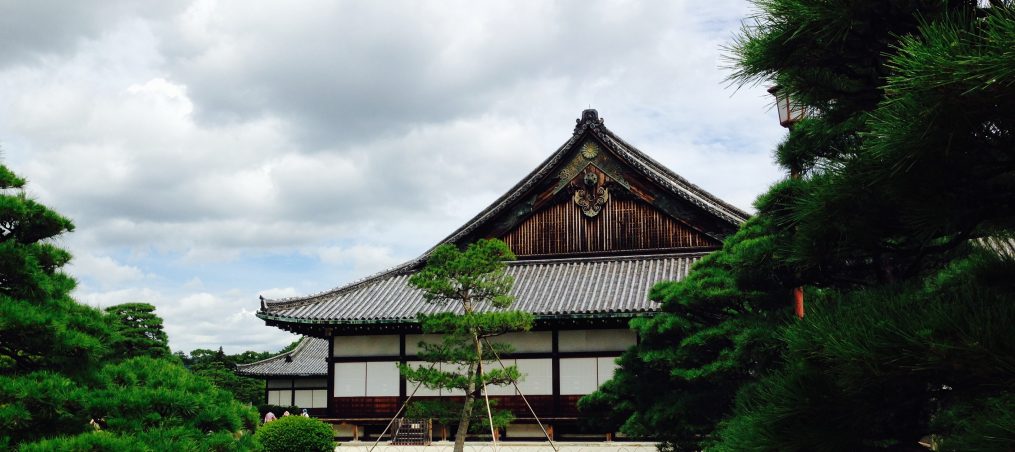
It’s time to revisit the Zodiac theme of this year. We’ll do it again with a snake-related folklore. In Japan, there aren’t many popular folktales that paint snakes in a good light. However, there are plenty of short and obscure ones, along with those that focus on the primal nature of this creature. Fortunately, I managed to find a suitable one, a local tale from Yabasama in Kani City, Gifu Prefecture. Long ago, this place used to be known as “Yabasama village”.
A snake swimming in a body of water, much like how Kyōgawa-sama was said to be the owner of a pond in the area known as Yabasama village. From Photo AC.
The name of this folklore is generally known as “Kyōgawa-sama”, which is about a snake deity that has a proper shrine, as well as a pond nearby. Below is the original Japanese from the official Kani City webpage. Alongside it is my English transliteration.
This is a tale from long time ago. Within the mountains of an area known as Yabasama stands a small stone shrine where the deity called “Kyōgawa-sama” resides¹. In the neighboring valley is Kyōgawa-sama’s pond.
Based on rumors about it, the pond appears to be small, but is very deep.
It’s also said it never lost even a drop of water, although now in its current condition it’s covered up by leaves.
During one summer, there was a village where the farmlands and rice fields were whithering, and drinking water had become scarce, due to a lack of rainfall. The villagers were left puzzled.
The villagers gathered and discussed about how to handle their situation, but couldn’t come up with any good ideas. In the end, they came up to one agreement. “Guess there’s no other choice, but to plead for help from a god during tough times like this.”
They went around to all the temples and shrines within the area and requested for rain. However, not once did it rain.
Finally, they journeyed to the stone shrine of Kyōgawa-sama. While the adults went to the shrine to appease to the god there, the children played around the pond.
Expecting that there was just a tiny bit of water there, they started to push away the clutter covering the water. Suddenly, something started to move below the surface of the pond, then out emerged a giant snake.
This scene caused everyone around to get into an uproar.
“You all there, what is the reason for all this pleading to me with such urgency?” The giant snake spoke in human speech, which caught everyone by surprise. The crowd were speechless with fear, and noone replied immediately. Finally, one person emerged and spoke up.
“This summer, we aren’t able to bear any harvest, and many of us are thirsty as there is not enough drinking water due to no rainfall. So, we came to see Kyōgawa-sama and request to make it rain for us.”
“If rain is all that you need, then can you clear the clutter in this pond and make it clean? I will surely make it rain if you do this for me.” The giant snake declared, then returned below the surface of the lake.
Doing as the owner of the pond requested, the villagers removed all the clutter, then went back home, and cleaned the lake on that same day.
Late the same night, large droplets of rain started to fall, making everyone in the village run out of their homes and cheering happily.
From there on, if there are periods of drought or when water is scarce, the villagers received rain whenever they cleaned out Kyōgawa-sama’s pond.
The stone shrine was still standing during those times until now. Due to the changes caused by modernization, it seems that all that remains is the tradition of the annual reverance of this deity.
This is a classical example of the age-old belief of locals giving prayers to deities for the sake of help during troubling times. It’s from tales like this that set the grounds for yearly traditional celebrations. What is the real story behind Kyōgawa-sama? Unfortunately there’s very little info related to the folklore. I’m even having difficulties finding the shrine dedicated to Kyōgawa-sama, along with the pond². The difficulties in uncovering more of the backstory is very strange.
This brings our article to an end. The folklore of Kyōgawa-sama is one of those few in Japan that illustrate snakes of any kind in a way where humans would revere to them for protection or good fortune…making it fitting for this Zodiac year.
1) I suspect that this was also the name of the stone shrine.
2) As hinted in the folklore, there are other strines within the general area. This is true today. From my research, doesn’t seem like any of them have any connections to Kyōgawa-sama.
Winter is officially over today in the US on 3/20¹. The same can be said in Japan, as it ended on the day of shunbun (春分)². As Spring is now upon us, we all expect life of mother nature to revive as the weather gets warmer, and flowers start blooming. Those who follow traditions in Japan may eat specific snacks on the day of shunbun, such as botamochi (ぼた餅), which is a mashed rice cake covered in sweet red bean paste.
In accordance to the 1st day of Spring, this article will introduce a rather interesting fable from Yamagata Prefecture, which is about botamochi and terms used to describe it. These terms are enough to make anyone fear for their life…including a samurai!
Han Goroshi to Hon Goroshi³ (Half-Beating and Full-Beating)
There’s a story a long time ago, where a lone samurai from the Capital⁴ sets off on a journey, which takes him into the mountains⁵. He traverses through the mountains all day till late in the night, where he finds himself wandering around aimlessly, until he finally comes to a single mountain hut. He knocks on the door, which was then opened by an old man. The samurai requests to stay in the hut for the night. The old man sits in front of an open hearth next to an old lady who is his wife, and after consulting with her, they both agree as long as the samurai was okay with their shabby hut.
Given warm thin rice porridge as a meal by his hosts, the samurai eats his fill, then retreats to a room prepared for him to rest. He falls asleep almost instantly, as he was tired from his long trip. However, in the middle of the night, he wakes up to the low conversation between the elderly couple, which prompts him to eavesdrop for awhile. The part of the conversation he hears wakes him up completely.
“Should we give him one ‘half beating’ tomorrow? Or what about a ‘pounding by hand’?” Asks the old man.
“This samurai’s from Edo, right? A ‘half beating’ should be enough for him.” The old lady replies.
Hearing this dialogue, the samurai was shocked. He concludes that this plot to beat him, possibly to death, could only be that of mountain bandits, and he just so happened to fall into their den. No longer able to sleep with those troubling thoughts on his mind, he lays down on his bedding, clutching his sheathed sword tightly to him. He remained vigilant, staying on full alert to defend himself, all night long until sun rise.
With morning upon him, the samurai was sleep-deprived. Expecting an attack from his would-be assailants while they thought he was asleep, he was surprised that no such incident occurred. Still, despite being tired, he stayed alert, with his hand ready on the handle of his sword.
A pic of a samurai, poised to draw his katana. From illust-AC.
Just then, the samurai could hear sounds coming from the area around the open hearth, along with the voices of his hosts.
“Hey, you done with the ‘half beating’ yet?” The old man calls to the old lady from a different room.
“Not yet, wait a little longer.” She responds, sounding like she was beside the open hearth. From their conversation, the samurai was certain they were about to set their plan into motion and attack him at any moment. Wanting to get the upper hand, he gets up and quickly bursts out from his room, ready to strike his would-be assailants.
Surprised that the samurai was already awake, the old lady greets him in good spirits. The sleep-deprived warrior calms down as he analyzes what’s before him; the old lady sits down on a mat with a mortar beside her, while kneading something in her hands. As he looked confused, the old lady offered him something.
“We don’t have anything else here, but thought you could at least eat a ‘half-beating’.” In the old woman’s hand, a dark-colored mochi s presented to him. The samurai immediately recognizes it to be a botamochi.
“Wha…this ‘half-beating’ is actually an azuki bean⁶ mochi? Then, what’s a ’pounding by hand’?” He ask curiously.
“Ahh, ‘pounding by hand’? That’s our homemade soba noodles. And a ‘full-beating’ is for mochi⁷.” The old lady responds with a smile.
Realizing his misunderstanding, the samurai loses all power in his legs and collapses onto his bottom down on the floor.
~ The end ~
In the original tale, the terms that the samurai heard from the elder couple are the following:
Te uchi (手打ち)
Han goroshi (半殺し)
Hon goroshi (本殺し)
Normally, these terms are of a violent context, which you would hear in relations to fighting. Te uchi means “to strike” or “to slap” someone with one’s bare hands, han goroshi means “to beat a person to the point where they’re on the brink of death”, and hon goroshi means “to certainly beat a person to death”. Anyone, especially a samurai who trains expecting death in combat, would immediately interpret such terms as dangerous, especially when applied towards someone. However, it seems that these terms have a unique usage in Yamagata when making treats or food. Since the samurai was from Edo and not from Yamagata⁸, hearing the colloquial use of those words that are normally used for violence alarmed him. From his perspective, one can understand how he felt. In present day, all countries have words that possess multiple meanings and usages, especially for cooking. In English, “beating” an egg is commonplace, but imagine a time when using such expression was unheard of.
ENDING
This concludes today’s article. The tale itself is light-hearted, and illustrates the unique culture of different prefectures in the past. Here’s looking to a fresh start on the 1st day of Spring!
1) I say this figuratively, for where I’m at it is wet & snowing outside.
2) Also known as “Shunbun no Hi” (春分の日), this year it falls on 3/19 in Japan, which slightly coincides with the US date of 3/20.
3) Title in Japanese is “半殺しと本殺し”. Here’s a version of the tale here.
4) The word “Capital” is not mentioned here, but later in the story it is, through the word “Edo”. Adding this for context purposes. Speaking of which, the Capital city at this time is Edo (Tōkyō), meaning that this tale takes place during Edo period, possibly as early as the late 1600s.
5) Most likely the samurai was on a musha shugyo (武者修行), or training journey.
6) Azuki (小豆) is the Japanese word for red bean.
7) In other words, mochi with nothing added to it is “hon goroshi”, with “hon” (本) indicating standard, or base.
8) Edo is present-day Tōkyō City, in the east. Yamagata is in the northeastern region of Japan, and is north of Tōkyō.
There are many shrines, big and small, around Japan. While each shrine has its own backstory, there’s no arguing that they all were built to honor¹ someone or something specific. In accordance to this year’s Zodiac sign, I did some research and discovered that there are many shrines in honor of snake deities. Many have their unique stories, sometimes connected to other deities, which natives can visit the corresponding shrines and pray for good fortune and blessings. These include Kanahebisui Shrine in Miyagi Prefecture, Shirohebi Shrine in Yamaguchi Prefecture, and Omiwa Shrine in Nara Prefecture.
For me, the most interesting one I’ve come across is a shrine dedicated to the deity Yato-no-kami (夜刀の神)², which has a very interesting lore regarding it being revered. While considered a folklore, it’s abit different from the ones I’ve read over the years, for it’s more grounded and paints a picture that, with abit of cultural understanding, feels more of summary (albeit with a dash of fantasy) of historical events. For this article, I will discuss about this snake deity, its fabled story, and the general views concerning intended lessons, hidden meanings and other tidbits.
INTRO OF THE HORNED GIANT SERPENT
The tale about Yato-no-kami is an ancient one said to have originally been shared verbally by elders. It is part of numerous stories from ancient Hitachi (present day Ibaraki Prefecture) that were later compiled into a collection called “Hitachi no Kuni Fudoki” (常陸国風土記, Historical Culture of Hitachi Country). In fact, it is told that this collection is viewed as a form of history of this region. In the story of Yato-no-kami, one would think it more of a monster, as it is quite opressive against humans. However, like most folklores of old, this shouldn’t be taken at face value; there are interpretations by analysts who claim there are some important factors of this snake deity, as it is more symbolic regarding the important resource that was beneficial to the people in order to survive, which is water for the farmlands. Like dragons, snakes are also associated with water, so it’s no coincidence that the conflicts the characters in the story have with Yato-no-kami involves this…whether this is made obvious or not. Thus, the reasoning behind Yato-no-kami being worshipped as a god, with a proper shrine being erected in its honor.
Today, the shrine for Yato-no-kami (夜刀神神社, Yato-no-kami Jinja) is part of a larger, overarching shrine called Atago Jinja (愛宕神社) within the fabled valley in modern Namegata City, Ibaraki Prefecture.
THE FOLKLORE
The original text is very old Japanese and not the easiet read due to a lack of modernized structure and an abundance of many archaic words. Fortunately, there are modern adaptations of this, making the tale a more approachable read. For this article, instead of a direct line-by-line translation, I will explain the story simply in English.
The original story of Yato-no-kami, reproduced in print form. From Wikipedia.
This story takes place during the period of Emperor Keitai (around 500s) . In the Imperial residence of Tamaho Palace (玉穂の宮) was a local powerful family that went by the name of “Yahazu” (箭括). The head of the Yahazu family, Matachi (麻多智), is tasked with the advancement of agricultural cultivation in the western fields of Yatsu in Namegata Country (行方郡)³ , making way for farming fields and the establishment of villages there.
Around this time, there appeared Yato-no-kami, a giant horned snake⁴, along with a horde of snake followers⁵. Since they also live in the area, Yato-no-kami and his group caused chaos, preventing agricultural advancement and killing people. It is said that it was a terrible beast of a god, to the point that those who accidently cast their eyes on Yato-no-kami would be cursed, with them and their entire family line being greeted with doom⁶.
Catching news of this, Matachi was furious, and swore to eradicate this nuisance. Donning on his armor and arming himself with a spear, he confronted the snakes and slaughtered many of them. Yato-no-kami was eventually overpowered and retreated to the nearby mountain. Matachi did not give chase into the mountain, but instead he had a type of fencing set up to block the mountain path. He also had a speacial seal placed on the fence called “Shirushi no Tsue” (標の梲), which acted as a ward strong enough to keep the giant snake from returning.
The shrine for Yato-no-kami within a woody field in Namegata City, Ibaraki Prefecture. From Wikipedia.
As a sign of victory, Matachi declared in a loud voice towards the mountain that humans would make their homes in the lower lands and establish farms, while Yato-no-kami and its kind would from there on live in the mountains. Matachi would also take up the role as a Shinto priest, along with future generations of his family line continuing this role, giving worship to the giant serpent and appease any hard feelings between them and ensure order to live in harmony. A shrine in honor of Yato-no-kami was built, and worship rituals proceeded. At the same time, farmlands were established, and many villages were built as well.
Years later, during the period of Emperor Kotoku (596~654), an individual by the name of Mibu-no-mura Jiro (壬生連麻呂) was tasked with being lord over the same valley. In order to improve the life of the farmers, he made an order to have embankments made around a body of water in the valley that was viewed as a lake⁷. These embankments would make it easier for water to be obtained and used for the farmlands. It just so happened that Yato-no-kami caught wind of what was happening there. So, in a form of protest, he climbed one of the beech trees that were near the lake, and occupied there in plain view, causing unrest to the workers.
Seeing the commotion, Jiro was brought to anger. He yelled at Yato-no-kami furiously, disregarding its god status. He declared that the lake was essential to the livelihood of the people living close by, and if he catches sight of anything, no matter what it is, that dares to disrupt their way of living by preventing their natural resource, it will be killed by his own bare hands.⁸
An image of Shii-no-ike, with the torii (鳥居, shrine main gate) of Atago Jinja placed inside. From Wikipedia.
In fear of Jiro’s boldness, Yato-no-kami fled from the tree and returned back to where it came from. Completing the project with no more interruptions, Jiro called the lake “Shii-no-ike” (椎野池)⁹, from which farmers could pull fresh water from thanks to the embankments placed.
This is pretty much how the story of Yato-no-kami plays out. On a large scale, it may serve as a subtle hint of the true history of that time: when the unified states of the Empire Kingdom from the south to central Japan were established, orders from the Imperial court were made to loyal followers bearing military strength to further expand the kingdom by making expeditions to the north. In order to do this, those tasked would travel with their force and accimilate more land, either by having natives submit and vow loyality, or being pushed out through violence. Through this, Imperial influence over the span of this island country grew, as well as the influence of these families who not only seized control of different areas, but also managed them.
Due to the reality of such actions, it was not uncommon for written records at that time to be drafted in a more lighter form in the guise of folklore, with demons and deities often representing those that were considered outsiders.
TIDBITS AND ANALYSIS
Along with the actual story are commentaries, which can range from lessons behind the folklore to meanings & symbolism regarding specific individuals. Here we’ll touch upon some of the conversations regarding the origin of Yato-no-kami and its story.
Lesson #1: Readers can interpret this story as representing the early prominent families’ success in surviving and adapting to the wild land. Yato-no-kami plays the role of nature as a whole, being wild and dangerous. The struggles that Matachi and his people had to face is demonstrated in their battle against the giant serpant and its followers. The same for Jiro and the farmers, whom needed a more suitable method for obtaining water for the farmlands, which was through the establisment of a lake. In both cases, the people won, their victory symbolizing them taming nature to the point they could guarantee sustainable life through farm lands and villages.
Lesson #2: This lesson is more geared towards expressing how gods were viewed as reachable in the mountains, while people live within the fields. By tradition, many processions and pilgrimages take place up mountains, where rituals of worship to different gods could take place directly to them. Shrines and dedicated priests are established, even up in the mountains themselves. This is represented by Matachi and his descendents taking up the role of Shinto priests. Around this time, Buddhism has been introduced to Empire Kingdom, and is adapted into the culture, alongside the already-established Shinto belief.
Lesson #3: There is talk about how the tale mirrors other mythical stories regarding the creation of Japan, where man (Matachi) battles against gods (Yato-no-kami), wins, and establishes the makings of a hero. In fact, it’s from this point where Yato-no-kami is compared to Yamata no Orochi (八岐大蛇), the eight-headed serpent defeated by the god casted out of the heavenly realm, Susano no Mikoto (須佐野の尊). While there are some noticeable parallels (i.e. both antagonists are snakes), this comparison is left to one’s personal opinion.
Lesson #4: There are thoughts that this story (along with the entire collection of “Hitachi no Kuni Fudoki” as a whole) was rewritten with an undertone reflecting Confucianism. Did this happen when it was compiled with into the collection of stories of Hitachi? Who knows. However, when compared to other folklore stories, this one has a more broader viewpoint in terms of social structure, development of society, and development of technology. This ranges from the identifying the Imperial ruler, how prominent families assumed roles of land owners and managing the establishment of farmlands and villages, devising means to create bodies of water into usable lakes, and so on. There may be more points that can be analyzed, including the significance of the people’s belief in Shinto. How does this Confucianism viewpoint affect the story? Personally it is hard to say, other than giving the vibe that there is much more realism in how things play out, while other coded points can be deciphered through further research.
Example of a wide, low-lying wetland area in Japan. From Photo-AC.
Meaning behind the name: What does the “Yato-no-kami” name stand for? If we look at each part of the name, “Yato” is thought to mean “Yatsu”, which was mentioned earlier as the western fields in Namegata and signifies “valley”¹⁰. The name is also said to be a phrase meaning “yachi” (谷地) , which apparently stands for swampy, or low-lying wetland. Such a phrase can be an indication of the conditions of the valley in which Matachi and his people expanded into. Much work must’ve went into making the area fertile enough for farming, which should’ve included a suitable source of clean water.
Significance behind the lake: Let’s turn our attention to the lake Shii-no-ike. This lake was created during Jiro’s time, and has a strong connection to Yato-no-kami. Since it didn’t exist during Matachi’s time, what water source did him and the farmers use? One idea I read tells that rain water that poured down from the mountain where Yato-no-kami had to reside in was used. To ensure this resource could be obtainable, Matachi worshipped the horned serpent. When you think about it, this fits many narratives of old, where shirnes were built for gods in order for the priests to pray and receive good fortune to the land. In this case, snakes are associated with water, thus why Matachi would erect a shrine for Yato-no-kami. Later, as that rain water poured into the vally to form lake Shii-no-ike, a torii (鳥居, Shinto shrine gate) is placed into it in honor of being a sacred resource.
ENDING
This conludes the overview on the folklore of Yato-no-kami. As a whole, the tale plays a significant part in the early development of Japan, as it not only illustrates locals’ belief in deities and their fortune they bestow on them, but also outlines the societal structure at that time. While it may come off as something frightful and menacing, we can view Yato-no-kami as pivotal in the history of Ibaraki Prefecture due to its connection with water.
1) Loosely speaking here, this points to modern times. In the past, there were other purposes for building a shrine, which ranged from protecting a castle, warding away ominous fortune, worshiping an important individual, to appeasing a possible vengeful spirit or demon. The after effect of shrines like these that do survive the test of time is becoming a sanctum where someone or something is worshipped as a deity.
2) Another pronunciation is “Yatsu-no-kami”. The same kanji (夜刀神) is still used for this as well.
3) Namegata Country is one of the areas within Hitachi.
4) It is not explained if it’s a single horn or two horns. Images of Yato-no-kami mainly depict it with 2 horns.
5) In one of the rewrites of the tale, Yato-no-kami is described as a group of snakes, possibly meaning there is not just one serpent representing this deity. Or, this could be interpreted as the god known as Yato-no-kami merely took the form of snakes. This isn’t really made clear, maybe due to the writing style?
6) This is a continuation of the point above, where the true form of Yato-no-kami is so terrifying that it assumes the guise of a horned snake(s), while an individual would be cursed only if they see its true form. Or, it could be interpreted that once it sets its sights on you, it’s so swift that its victim cannot escapte death, which in turn ends that individual’s chance of having future descendants.
7) This body of water, now turned into a lake, was probably a collection of rain water from the very mountain Yato-no-kami resided in. During Matachi’s time, the rain water was gathered for farming, but as the years went by, it accumulated to the point where the people could have a much larger, sustainable source.
8) From what is considered the original text, when Jiro regards killing any threat to the people’s survival, his statement includes “whether fish or insect…”. From further analysis, he mentions these due to them being associated with water, as they can render the lake unusable if not kept in check. Jiro’s tone also includes Yato-no-kami, for it too is viewed as essential for the farmers to get water from the lake. Guess we can see it that, despite his godly status, it’s also susceptible to receiving Jiro’s wrath.
9) This name means something like “lake of the field of beech trees”.
10) Coincidently, “Yatsu no kami” may have been the original pronunciation, which makes it a direct reference to the area Yatsu (谷). Why changed to “Yato”. Possibly to match the phonetics of the kanji in its name (夜刀) properly?
2024 is coming to a close. Being the year of the dragon, there were plans to have much more articles related to the Zodiac animal. Unfortunately, real life events took precedence, keeping me away from writing as much as I had intended. Now that things have slowed down, I have this window of opportunity to put out one(!) article in accordance to the dragon-theme. It’s a nice one.
An imagery of how dragons are affiliated with water. Here, we see water flowing from the mouth of a dragon statue at the shrinte Oguji Jinja (小梳神社), which is used to cleanse oneself before entering. from Photo-AC.
In Asia, dragons are greatly associated with water of all forms, which includes rivers, clouds, and rain. There are all sorts of cultural practices related to old tales of dragons in Japan. One story in particular that will be discussed today is tied to a unique folklore dance called “Gaku Odori”, which is preserved as a cultural practice in Yamaguchi Prefecture. Entitled, “Ryū-Ou Baasan ” (竜王ばあさん, Dragon Lord Grandma), this version of the story¹ gives a superstitious account on how the Gaku Odori came to be, and why it is important to the people. It comes from the following website here.
Below is the full folktale of Ryū-Ou Baasan. To the left is the original Japanese text, along with my English transliteration to the right.
A long time ago, there was an old woman who, residing in a place known as Central Village, was skilled in assisting in child birth.
She was called “Midwife grandma of Central Village”, for no matter how complicated the birth, she was able to resolve the situation and have the baby delivered.
One late night, someone came knocking on the door while she was sleeping.
KNOCK KNOCK, KNOCK KNOCK
Thinking that no one would show up unless there was an emergency with someone in labor, the old woman got up, prepared the necessary supplies, and headed out.
外には、使いの男がいて、
「こんなに遅くにすまんが、一緒に来て下さい」
と、言いました。
「それは良いが、どこの家かいの?」 おばあさんが尋ねると男は、
「ずっと遠くです。案内しますから、足元に気をつけてください」
と、先に立ってどんどん歩いて行きました。
As she opened the door, she met a messenger boy².
“I’m sorry to disturb you so late in the night, but I need you to please come with me,”
He said to her.
“I’d gladly do so…but to which house?” The old woman inquired, in which he answered,
“It’s one that’s very far away. I’ll take you there. Please watch your step,”
With that, they started walking, with the messenger boy taking the lead.
When the old woman came to, she discovered that she was at the Dragon Palace³, (竜宮城, Ryūgūjō), a place that shimmered with lots of precious gold and silver treasures around⁴.
As she looked surprised at her surroundings, the Dragon Lord⁵, ruler of the Dragon Palace, appeared before her.
“I thank you for making such a long trip in the middle of the night to reach here. I wish to make a request, that you assist as a midlady for the princess’ childbirth.”
“The princess⁶ is having a baby now?”
Upon hearing the word “childbirth”, the old woman didn’t pause for a moment to help where she was needed. She hastily went to the princess’ room, and saw before her the princess as pale as a ghost, as she was having labor dystocia⁷.
“Very well. We will proceed with the deliver after administering some medicine,”
The old woman made the necessary preparations, and in due time the princess was successful in giving birth to a baby boy, who looked as cute as a round gemstone.
“Oh, you did it! To show my appreciation for your assistance in the delivery of the princess’ baby, I will grant you whatever you wish.”
Filled with joy, the Dragon Lord had a heap of gold & silver coral ornaments brought before the old woman as a reward. However, the old woman made no movement to accept it.
“What’s wrong, you don’t have any interest in something like this? Please tell me, what is it you want? Say whatever’s on your mind, for I will grant it no matter what it is.”
Hearing this, the old woman’s voice trembled as she responded to the Dragon Lord.
“Okay, I will. Actually, the rice crops in the fields are drying up in my village, as we haven’t had any rain. Dragon Lord, is there any way you can use your power to make it rain for us?”
Moved by her feelings for her fellow villagers, the Dragon Lord accepted her wish.
“From now on, your people must give worship to me, and perform the Harvest Dance (豊年踊り, Hōnen Odori). If followed as so, I will then let forth great rainfall for your fields⁸.”
With all that’s said & done, the old woman left the Dragon Palace and returned back to her village. There, she found the villagers to be in an uproar, as they were out & about looking for her during her absence.
She explained to the villagers what happened while she was away, and the promise that was made to her by the Dragon Lord. Hearing her tale made the villagers very excited.
“If this is so, then we can save out village!”
“Thank you so much, Midwife grandma!”
From this day on, the old woman was then nicknamed “Dragon Lord Grandma” by the villagers.
そしてこの踊りが山口県に今に伝えられる、楽踊り(がくおどり)の始まりだという事です。
Within Yamaguchi Prefecture, the origins of “Gaku Odori” is passed down to present day as coming from this special dance.
To summarize, this folklore refers to showing appreciation for bountiful harvests each year when it rains. The rain is through the auspicious power of a dragon, thus farmers can give praise and worship to divine beings as such…with one method being the Hōnen Odori (豊年踊り), or Harvest Dance. There are many different types of Hōnen Odori still preserved today.
This concludes the final article of 2024, closing on the dragon theme. Wish everyone a happy and prosperous new year!
1) Take note that there are different versions of the story, each with slight variations. This version, as told in Yamaguchi Prefecture, may have been styled in a way to fit local practices there.
2) There may have been an event prior to the messenger boy coming to pick up the old woman. Possibly, one where she had to deliver a baby of spiritual beings posing as human, as a test.
3) Although not mentioned in this story, it is hinted that the old woman may have been carried on the back of a dragon to the Dragon Palace.
4) Where is the Dragon Palace located? A hidden island? Up in the clouds? We have to use our imagination for this one.
5) This divine being is inspired from Buddhism, which tells of a deity beast of the same name. Or, we can go even further and say the idea dates back to Hindu beliefs, which depicts various god-like beings with snake-like bodies.
6) While it’s not mentioned, it’s no secret that the princess is the Dragon Lord’s daughter.
7) There are various reasons for the difficult childbirth. In one version of this story, it is said that the baby complained it was facing the wrong direction, so the old woman had to turn it the right direcion manually. Yes, this is not a typo, the baby told her.
8) The details to performing this special dance was actually explained to the old woman by the Dragon Lord, although it is not stated in this version of the story.
Staying true to the rabbit theme for 2023, here’s another article that is related to the story “White Rabbit of Inaba Country”. The original story, along with analytical tidbits, have been covered already. Now, let’s take a turn in a different direction with it.
As mentioned in a previous article, there are speculations that tales like “The White Rabbit of Inaba Country” are more of a fantastical re-write of true events. I’ve come across a couple of discussions about what those true events could be, but the one that caught my attention the most is one that is fitting of an action film.
Snapshot of the origin story behind the folklore “White Rabbit of Inaba Country”, as it appears on the Hakuto Shrine’s website.
While visiting the website for Hakuto Shrine (the shrine located in Tottori Prefecture where the god that is revered there is indeed the White Rabbit) and viewing the mythology page¹, one can find the story about the White Rabbit that fits the same narrative that most are familiar with straight from the historical source called the Kojiki. However, there is another story below it that is claimed to be a true event that took place centuries ago in Japan.
THE NAVAL BATTLE BETWEEN SHIRO-USAGI AND WANI
This story below was passed down for generations by the chief priests, as they would be the ones to refer to in regards to the real meaning behind the popular folklore. I’ve included the original Japanese text, and beside it my English transliteration.
It is said that the name “shiro usagi” (white rabbit) from the famous book Kojiki was related to a highly prestigious clan that controlled a particular area during the age of folklore, and was not truly referencing an actual rabbit that lived in the wild. This clan was peaceful by nature with their neighbors, similar to actual rabbits, which is the reason why they were nicknamed Shiro-Usagi.
Specializing in sea fare, the Shiro-Usagi clan sailed close to the islands of Oki and engaged in battles against bandits that were terrorizing the coast, who went by the name “Wani”, meaning “Shark”².
During the last battle with the bandits, members of the Shiro-Usagi clan suffered grave injuries. Fortunately, they were rescued by the god known as Ōkuninushi no mikoto³. Later, they worked hand-to-hand with Ōkuninushi no mikoto in order to dispel the Wani force, and bring order to the islands. It’s also said that the Shiro-Usagi clan allowed Ōkuninushi to take Yagami-hime to be his wife.
Here is more information regarding this battle, which is found in the a publication from Tottori Prefecture called “Tottori Shinpō” (鳥取新報), which was issued sometime in November of 1920.
The White Rabbit clan, ruling over the area near Tottori Prefecture, went to battle against the massive force of the Wani at Oki islands.
The Wani were a wild bunch of seafarers who caused havoc around the ocean of Japan.
It is written that the gods of the White Rabbits employed a strategy against the Wani called “Line up the Wani heads, now jump!”. It’s noted that fireworks were used to push the large force of the Wani to be grouped together, which is described as “line up their heads”.
These circumstances of the battle, as written in the Kojiki, is very interesting.
The Wani grand fleet fought the White Rabbits ruthlessly as if they were nothing, as they were pushed from Oki islands all the way to Keta Front. In the end, the Wani bested the Shiro-Usagi, as they were left bloodied from the superior assault from the sea bandits.
Seeing their opponents in their defeated state, the Wani army let out a battle cry, then withdrew from the battle area.
The last sentence written is “As our clothing has been ripped from our backs, this is the last we see of the Wani force”, which is similar to the description of the white rabbit losing his fur in the Kojiki.
Guess we can image that they were beaten near the brink of death, similar to the state in which the divine white rabbit after first reaching Inaba Country.
In the end, the surviving members of the White Rabbit clan recovered, and, with the help from Ōkuninushi no mikoto, chased after the Wani force and defeated them for good, ridding them from the area…or so it’s said.
ANOTHER LAYER TO THE REAL EVENT
If we take the story above as fact, then that means that the folklore from the Kojiki is coded for an actual navel battle between a reputable clan and sea rogues…as so recorded at Hakuto Shrine in Tottori Prefecture. Yet, the story does not end here. Apparently, this naval battle is coded yet again, with the original bearing much more robust details, along with intertwining parties involved.
A map depicting the conflict between the Baekje and Silla in Ancient Korea in the mid-600s. From Wikipedia.
On the blog, “Shinwa wo kagaku suru tanbou“, there is a discussion regarding the naval battle version spoken about above, and how there’s yet another theory about it being a coded tale for an actual historical event. This theory states that this historical event is known as “Battle of Baekgang” (白村江の戦い, reads as “Hakusontou no Tatakai” in Japanese), which is a true event that took place in old Korea in the year 663. Historical data reads this as a civil war between surviving clans of the ancient south-western kingdom of Baekje and their eastern neighbors of Silla. The groups from Baekje were supported by a Japanese force, while those of Silla found support in the form of troops from the Tang Empire of China. This battle took place both on on land & sea, with the masterful naval prowess of the Baekje at the forefront, later supported by the naval crafts of the Japanese. while the Tang Empire did the same for their side.
The naval battle story found in Hakuto Shrine parallels this Battle of Baekgang, with the Shiro-Usagi clan representing Baekje/Japan alliance (ie. the native clansmen), while the Wani force represents the Silla/Tang alliance (ie. the raiders). Of course, this particular event takes place at the end, with much more content found years before. In a similar fashion, the Baekje faced near annihilation at the hands of the rivaling army in their own homeland of Baekje, which first happened in 660. To their saving grace, survivors that fled south were able to find a glimpse of hope by the last Baekje ruler, Prince Buyeo Pung, who at the time found refuge in Japan. As the beaten Baekje warriors recover, and bolster their strength once again, a large Japanese naval fleet was sent out to assist in helping them continue the fight with the Tang army in the former southern city of Ungjin County (located present-day Gongju) on the Korean Peninsula. A few years later, in 663, the Baekje/Japanese force set out for their final battle in southern Baekje with the Tang army in the form of 5 naval face-offs.
As a reminder, this is just speculation for the origins of the “White Rabbit of Inaba Country”. In truth, there is more content regarding the struggle for power between the people of Baekje and Silla that prevents it from being a simple cut-and-paste in the form of a fairy tale, while the outcome found in history is different even from the coded version of the tale (hint: the Baekje/Japanese force lost all 5 naval battles, which ended the survivors of Baekje completely). From what I understand, there is no strategy related to “lining up the sharks’ heads” used by the Baekje/Japanese force, although the Japanese naval fleet took the most casualties at the end, which included many of their ships being burned down.
FINAL THOUGHTS
This concludes our look at this wild take on a popular folklore. I’ve only introduced one theoretical take on this, for while there are more, the idea of a naval battle is the most interesting in my opinion. Like anything based on theory, the connection to a war that took place in Korea which the Japanese was also involved in isn’t a perfect one, especially the reasoning why, if the connection is true, it had to be re-written in a folklore that give no indications to the history behind it. Nonetheless, the coded version is pretty wild & exciting with its more pro-nationalistic theme and mythological image that is portrayed.
1) Currently, the website is down. Interestingly, I was able to visit the site a few times this year, but now this is no longer the case.
2) It’s been considered that the ancient use of the Chinese characters “和爾” is a reading for the sea creature “shark”, as well for “crocodile”. To stay consistent with the accepted viewpoints regarding the Kojiki, I will use the shark term.
3) This is another name for Ōkuninushi no kami (大国主神), as used in the articles here and here.