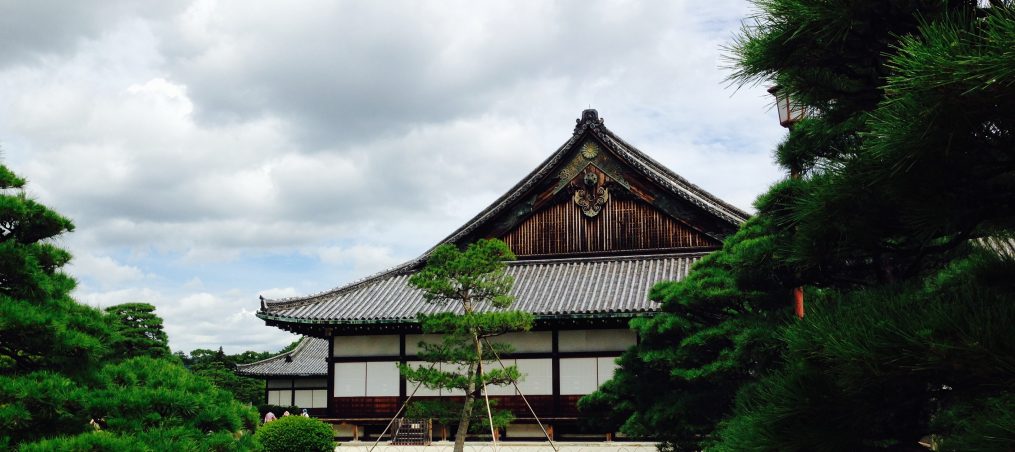
As the year is coming to a close, I present one last article on this year’s Zodiac sign, the snake. One point that must be repeated is the fact that under the Zodiac system, the snake represents many quality values, such as longevity, rejuvenation, and fortune. Through superstitions and stories, these values are sought after by the general populous.
In Japan’s case, there are snake deities that can be worshiped at designated shrines throughout Japan, which are especially highlighted during the year of the snake. Earlier this year I covered one by the name of Kyōgawa-sama, who was a savior to villagers during times of drought. Here are a few more.
Ryūjajin (龍蛇神), the “Dragon-Snake God”, is widely recognized as a worshiped deity at the shrine Ryūjajin Jinja (龍蛇神神社) by the coastal area Seto-ura of Ashibe Town, located in Iki City, Nagasaki Prefecture
Kanahebi (金蛇), the “Golden Snake”, resides in the Kanahebisui Jinja (金蛇水神社) in Iwanuma City, Miyagi Prefecture
Shirahebi (白蛇), the “White Snake”, is revered in numerous shrines around Japan, including 3 major ones in Tokyo City, Chiba Prefecture, and Nagasaki Prefecture.
Minokami Sugi (巳の神杉), “Snake of the Divine Cedar tree”, is tied to the legends of of the shrine Oomiwa Jinja (大神神社) in Sakurai City, Nara Prefecture
One in particular, Shirahebi, has many shrines dedicated to it. The story behind this is that the White Snake is a messenger for the deity of good fortune, Benten¹. Other than a messenger, it is also said to be used as a vessal for when Benten himself goes to interact with humans. As many shrines are visited for the sake of benefits such as receiving good luck, protection from disaster, or falling into wealth, the idea of paying tribute to shrines connected to Benten is very appealing, while it’s not unusual for shrines dedicated to the White Snake, due to its connection to Benten, to be held in high regard.
To the left is a shrine revering Shirahebi, which is found in Iwakuni City, Yamaguchi Prefecture. To the left is a statue in the liking of the Shirahebi, with the words “nade Shirahebi” (撫で白蛇, stroking Shirahebi) written below.From Photo-AC.
Just how did Shirahebi benefit humanity in the name of Benten? There are several stories illustrating its acts of goodness to those in need in the form of folklores. For this article, we will look at one entitled, “Jinrikisha ni notta Shirahebi” (人力車に乗った白蛇, The White Snake rides the Rickshaw). An old local tale from Chiba Prefecture, dating back around late Edo period. It gives an example of the many ways, as written in folklores, in which Shirahebi performs its duties. One of the many folklores recorded as important cultural treasure of this prefecture. The following site is where the version of this folklore used is taken from:
Just as he stood up, he heard a voice call out to him.
“Mr. rickshaw, Mr. rickshaw!” A young woman with fair white skin approached him.
“I’d like to get to Fuse no Benten-sama³ Can you please take me there?⁴ How much is the fare?”
To the left is a rickshaw being pulled by a rickshaw man, a representative of what is described in the folklore. To the right, a striking image of a pretty young woman, a possible representation of the likelihood in which Shirahebi disguised as. From Photo-AC.
The rickshaw man was captivated by the young woman’s beauty, and for a moment couldn’t take his eyes off from her. Regaining his senses, he replied,
“Customers can typically get a ride despite how much fare they pay.”
The young girl paid the fare and tip in advance, and with that, she sat in the cart and they took off. The rickshaw man was in great spirits over receiving both the fare and tip in advance from such a pretty girl.
“Hold on tight!” he exclaimed as the cart was traveling faster as he ran at top speed.
While running he commented, “Wow, you are very light. Carrying you is no problem, as expected from a young girl.”
Pulling such a light customer in his cart, he weaved through the numerous streets with no issues, taking a route that, while normally would take 1 & 1/2 hrs, got them to the entrance of Fuse no Benten in record time of about 1 hr⁵.
A pic of the shrine Fuse no Benten Tōkaiji in Kashiwa City, Chiba Prefecture. From Photo-AC.
Stopping the cart at their destination, the rickshaw man turned to his customer, but was confused when he didn’t see her. Just as he was contemplating about the possibility of her falling out of her cart while they were rushing through the streets, he noticed that the seat where the young girl sat was soaking wet.
Surprised, he quickly looked around the area, when he spotted a white snake slithering into the shadows of Mt. Benten⁶.
うすきみ悪くなった車屋さんは、きた時以上のはやさで上野に帰ったということです。
Spooked at the sight, the rickshaw man ran back to Ueno in a record speed more faster than that used to get to Fuse Benten.
What’s the moral of the story? Fortune can come to one’s way when least expected, especially when in need. In the case of the story, this fortune was tied to doing one’s job. Through Shirahebi, Benten tested the rickshaw man’s resolve at a time when he was about to give up and go home due to a slow day with barely any customers. Shirahebi suddenly showed up with a request, and through a little bit of persuasion with paying a generous fare (and using the appearance of a pretty girl), the rickshaw man went over & beyond to carry his customer to their destination. Talk about lucky!
One thing to point out is the matter of the Shirahebi not showing its true form until after reaching Fuse no Benten. This isn’t unusual, for in many folklores deities of all kinds use disguises to interact with humans, sometimes to judge their character, to provide assistance, or help them in times of need. If the person reciprocates and goes accordingly, they are usually bestowed with a well-deserved fortune. The catch is, these deities’ true identity mustn’t be revealed, or else they will be forced to leave, halting whatever blessing or service they were providing. In the case of the rickshaw man, seeing the Shirahebi after receiving his fortune in the form of a generous fare was fine, for he had already completed the task.
ENDING
This marks the final look at this year’s Zodiac sign. Although personally I’m familiar with some of the positive standings the snake has in Asia history, this Zodiac year gave me more reason to do research and learned a great deal of historical information. For Japan, most of these are tied to temples and shrines, linked to deities like Shirahebi. For the readers, I hope you all can say the same as well.
1) Benten, or the full name “Benzaiten”, is a male deity categorized as one of the “Shichifuku Jin ” (七福神, Seven Lucky Gods) in Japan. Originating in Hinduism, then adapted into Buddhism as well as Shintō, this deity was known under different appearances, names and possessed varying benefits. The name “Benzaiten” is written a few ways in kanji, or Chinese characters, such as “弁才天” and “弁財天”. On a related note, since the prevailing image is that of a god representing material fortune, it is not surprising to find the kanji “財”, which means “treasure”, is used in his name.
2) This lake is located in present day Onshi Park in Ueno, Tōkyō City.
3) The label “Fuse no Benten” is linked to a network of three prominent shrines in Eastern Japan called “Kantō no San Benten”. They are as follow:
Benten-dō (弁天堂), located in Asakusa, Tōkyō City
Fuse no Benten Tōkaiji (布施弁天東海道), located in Kashiwa City, Chiba Prefecture
E-no-Shima Benten-dō (江島弁天堂), located in Fujisawa City, Kanagawa Prefecture
While there are more than one way to identify these 3 shrines (over time, different names were given according to circumstances and trends), they all are known as “Fuse no Benten”, which stands for “Charitable Benten”. The more respectful & familiar nickname of “Fuse no Benten-sama” is also common amongst locals.
4) As mentioned earlier, this folklore is tied to Fuse no Benten Tōkaiji in Chiba Prefecture.
5) The explanation regarding this small trip, if taken literally, is no less than amazing. Distance-wise, it’ll take about an hour if traveling from Ueno to Benten Tōkaiji Shrine by car for modern time standards. A rickshaw should take longer even at a running pace. However, since it took an hour in the story, and considering roads were becoming more easier to traverse during the folklore’s time setting, it demonstrates the rickshaw man truly hustled at a superhuman pace!
6) The label “Benten-yama” (Mt. Benten) is used to identify shrines of Benten that are on small hills. The shrine Benten Tōkaiji in Chiba Prefecture is built on elevated grounds, which gives it the impression that it sits on a mountain. This is an important preference, for historically shrines were built on mountains as a means to be “closer” to the gods who reside in the heavens.
Sakura (桜), or commonly known as cherry blossom in English, is one of Japan’s most revered flowers next to the kiku (菊, chrysantemums). It took time over the generations to reach this level, for early in Japan’s history another flower by the name of ume (梅, plum) held this position beforehand, up until Nara period. From Heian period onward, this appreciation for cherry blossoms “bloomed”; as it was introduced into society alongside the development of new nice fields and crops, its appearance and and traits became very appealing to the mass. Many sentimental feelings, alongside auspicious meanings were tied to cherry blossoms that had influences within society over time. In fact, there is an old poetic line by those of the warrior caste that goes “hana wa sakuragi, hito wa bushi” (花は桜木, 人は武士), which compares the splendor of their petals in full bloom followed by their sudden withering due to the short life span of cherry blossoms to the glorious feats in battle of the samurai that will inevitably be cut short through untimely death by the blade of their opponents.
It isn’t hard to find artistic images of chery blossoms. Here’s an example of capturing clear details of several cherry blossoms fully bloomed, while petals are shown fluttering in the air like snow. From Photo-AC.
The love for cherry blossoms can be seen in paintings, artworks, crafts, and fashion. There is national pride in having images and designs in the liking of this flower, such as when the petals flutter down in the air like light snowflakes. Despite all this, there are situations where people also shown caution regarding the usage of cherry blossoms, to avoid what would be considered bad luck. For example, whereas many cherry blossom motifs were willingly used for clothing, products, and even on the weapons of warriors, there was significant hesitation to use it as a family crest. Why is that?
Some clues are linked to the origin of the cherry blossom. There are different tales that depict this, a few in the form of ancient mythological tales. They are from sources such as the Kojiki and Nihon Shoki, which speak of major deities inhabiting Heaven, while minor deities populating Earth. As tales like these were taken as truth in the past, they in turn shaped people’s minds as societies grew in Japan.
THE BEAUTIFUL SAKUYA
There is a prominent source to how the name “sakura” is linked to the manner in which this flower blooms. It’s tied to the popular tale of a goddess named “Konohana no Sakuya-bime¹” (木花之開耶姫²). Daughter of a mountain god residing in a shrine on Mt. Fuji, Sakuya was courted by and soon married Ninigi no Mikoto, the descendant of the Sun goddess Amaterasu. When Ninigi no Mikoto laid his eyes on her for the first time, Sakuya became immortalized through his statment about her beauty paralleled to blooming flowers which is the highest form since, in a fleeting moment, will eventually disappear like how flowers wither away. As a deity, she is worshipped as the goddess of growth of flowers & plants at the major shrine Fujisan Hongu Asama Taisha (富士山本宮浅間大社), as well as others. She is also recognized as the protector of safe childbirth, and child rearing due to her very strong personality as demonstrated in mythology³.
An artwork of Konohana no Sakuya-bime from the series “Fugaku Hyakkei” (富嶽百景) by Katsushika Hokusai.
Here’s where we arrive to a theoretical origin for the cherry blossom. It is said that at one point, Sakuya became possessed by the divine God of Harvest, traveled to the very top of Mt. Fuji and made the flowers there to bloom. This incident is then linked to Sakuya’s name, from which we get a play on this flower’s name in the following case:
SA = represents the God of Harvest, with “Harvest” pronounced as “sa” (稲)
KURA = inhabiting a vessel, with the action represented by the phonetic “kura” (座)
An artwork featuring Sakuya sitting amongst sakura trees. By Dōmoto Inshō.
The parallel of Sakuya and flowers is that her beauty is liken to that of flowers in full bloom. Yet this moment of beauty is fleeting, as the petals will eventually fall, and the flowers eventually wither away. As fragile as they are, blooming flowers are priceless even if for a moment, making them invaluable more than anything else, even more than a forever-lasting stone.⁴
FAMILY CRESTS
As mentioned earlier, imagery of sakura was very common throughout Japanese culture once it became popular in society. This became even more apparent from Edo period onward. This was also a period when kamon (家紋), or family emblem, became widespread not just amongst the elite, as having such a thing represented the longevity of one’s family line. See, one’s family lineage was valuable, and how this lineage was presented was very important, especially those prestigious ones with long history. Family emblems served this purpose, each using a plethora of imagery from almost anything from nature. These range from mountains, rivers, insects, plants, bird feathers, to even shapes. Through interpretations and varying superstitions, each can have powerful meanings that can bolster a family line’s standing in society, such as longevity, protection against ailments, bravery, and knowledge.
Entitled “Oka no Utage” (丘の宴), a scene of women of nobility attending a “sakurami” (桜見, cherry blossom viewing) event. Cherry blossom motif can be seen on many of the attendee’s clothing, as well as on the tapestry. By Kitagawa Utamaro.
A cherry blossom emblem, on the other hand, was not viewed in the same way. While there is beauty and sutble strength appreciated in the qualities of cherry blossoms, many people were in agreement regarding its dark & its ominous traits in how petals fall off at the same time, which signals how quickly this flower withers away. These traits are viewed as a bad omen when applied to a family emblem, as it could result to one’s family line ending. Thus, historically it was rare for any family to establish any form of cherry blossom family emblem openly as it wasn’t a popular practice. Still, this didn’t stop those who went against the norm and establish an actual cherry blossom emblem⁵.
Here’s a short list of those families who used one of the existing cherry blossom emblems:
Matsudaira / 松平
Hosokawa / 細川
Sengoku / 仙石
Sakurai / 櫻井
Yoshino / 吉野
Yoshida / 吉田
Aono / 青野
Masaki / 正木
This is a short list. Note that some of these families, such as the Sakurai family, are main branches. Later, some of them have branch families or extended families that follow suit and use the same emblems, including those cherry blossom emblems.
The following are cherry blossom emblems, from left to right and top to bottom: Sakurai zakura, Sengoku Kuyō zakura, Hosokawa zakura, Sakura, Yama zakura, Edo zakura.From Kamon no Iroha.
Here are a few of the types of cherry blossom emblems used:
Sakura / 桜
Sakurai zakura / 桜井桜
Hosokawa zakura / 細川桜
Yamazakura / 山桜
Sengoku Kuyō zakura / 仙石九曜桜
Edo zakura / 江戸桜
Each of these emblems have a unique meaning behind their design. Let’s take the Sakurai zakura emblem as an example. This presents a sakura growing wild in the mountains with a row of petals overlapping another row. Matsudaira families from old regions called Settsu (area between the north-central part of Osaka and south-eastern part of Hyōgō Prefecture) and Dewa (area in both Yamagata Prefecture and Akita Prefecture), whom have roots from the Sakurai clan, had this particular cherry blossom emblem a reserved one behind another that was used as their public emblem. It is thought that the Sakurai clan is connected to the establishment of the Sakurai zakura emblem. Next example is the Hosokawa zakura emblem, which features 5 petals, each with 3 pistils on top. This emblem was used by the Hosokawa family from Kumamoto domain of Higo Prefecture. However, there is another story stating that the Hosokawa family gained this emblem from Matsudaira Tadataka, whose roots are also from the Sakurai clan.
CONCLUSION
As this article comes to a close, I’ll reiterate about how there’s always something interesting to learn when research different topics in Japan’s history, no matter how small or obscure it may seem. Case in point, as the cherry blossom continues to be a flower beloved not just in Japan, but also appreciated by many all around the world, one would think that it’s seen as a flawless creation of life. Yet, there is one point of its qualities that would shun families from representing their own family line. This is due in part to the cherry blossom’s deep connection to auspicious beliefs ingrained in the livelihood of the populous, established by mythological stories once held in high regard as the origins of Japan itself.
1) Just for additional info, her first original name was Kamuatsu-hime (神阿多都比売) in the Kojiki. Later in the Nihon Shoki, the name was written as Kamiatsu-hime or Kamutaka-ashitsu-hime, as well as Konohana no Sakuya-bime. Seems like the last name sticks out more, thus what she is referred to nowadays. Another completely different name tied to her is “Asama no Ookami” (浅間大神).
2) There are different ways to write her name using kanji, or Chinese characters. Some using kanji for the sake of phonetics, and others that string kanji together to create a uniqe meaning. At the end of the day, there is no one “right” way to write this.
3) In Sakuya’s tale the event where she was pregnant with children between her and Ninigi no Mikoto unfolds as follow. The two had a discussion where Ninigi no Mikoto spoke doubt about the children being that of Earthly status instead of Divine status such as him. In opposition, Sakuya protested that their children will be that of Divine status. To prove this, she holed up in a room, and set fire around herself to demonstrate that only divine children can be born safely under such extreme conditions. In the end, Sakuya successfully gave birth to children that would also be recognized as gods.
4) This refers back to the original tale found in sources such as the Kojiki, when Ninigi no Mikoto seeked out Sakuya to request for her hand in marraige at her family’s shrine, her father presented another daughter named Iwanaga-hime (石長比売) as a better match. While Iwanaga-hime’s qualities were compared to the ever-persistence and long-lasting qualities of stone (which her name implies), Ninigi no Mikoto believed Sakuya’s beauty, likened to flowers, surpassed everything, and refused to accept anyone else besides her.
5) Note that many families possessed more than one family emblem at any given time. So just because a particular family decides to have a sakura emblem doesn’t mean that they have to use it publicly. Instead, they can use one of their other ones, and keep the cherry blossom emblem only for specific occassions.
It’s time to revisit the Zodiac theme of this year. We’ll do it again with a snake-related folklore. In Japan, there aren’t many popular folktales that paint snakes in a good light. However, there are plenty of short and obscure ones, along with those that focus on the primal nature of this creature. Fortunately, I managed to find a suitable one, a local tale from Yabasama in Kani City, Gifu Prefecture. Long ago, this place used to be known as “Yabasama village”.
A snake swimming in a body of water, much like how Kyōgawa-sama was said to be the owner of a pond in the area known as Yabasama village. From Photo AC.
The name of this folklore is generally known as “Kyōgawa-sama”, which is about a snake deity that has a proper shrine, as well as a pond nearby. Below is the original Japanese from the official Kani City webpage. Alongside it is my English transliteration.
This is a tale from long time ago. Within the mountains of an area known as Yabasama stands a small stone shrine where the deity called “Kyōgawa-sama” resides¹. In the neighboring valley is Kyōgawa-sama’s pond.
Based on rumors about it, the pond appears to be small, but is very deep.
It’s also said it never lost even a drop of water, although now in its current condition it’s covered up by leaves.
During one summer, there was a village where the farmlands and rice fields were whithering, and drinking water had become scarce, due to a lack of rainfall. The villagers were left puzzled.
The villagers gathered and discussed about how to handle their situation, but couldn’t come up with any good ideas. In the end, they came up to one agreement. “Guess there’s no other choice, but to plead for help from a god during tough times like this.”
They went around to all the temples and shrines within the area and requested for rain. However, not once did it rain.
Finally, they journeyed to the stone shrine of Kyōgawa-sama. While the adults went to the shrine to appease to the god there, the children played around the pond.
Expecting that there was just a tiny bit of water there, they started to push away the clutter covering the water. Suddenly, something started to move below the surface of the pond, then out emerged a giant snake.
This scene caused everyone around to get into an uproar.
“You all there, what is the reason for all this pleading to me with such urgency?” The giant snake spoke in human speech, which caught everyone by surprise. The crowd were speechless with fear, and noone replied immediately. Finally, one person emerged and spoke up.
“This summer, we aren’t able to bear any harvest, and many of us are thirsty as there is not enough drinking water due to no rainfall. So, we came to see Kyōgawa-sama and request to make it rain for us.”
“If rain is all that you need, then can you clear the clutter in this pond and make it clean? I will surely make it rain if you do this for me.” The giant snake declared, then returned below the surface of the lake.
Doing as the owner of the pond requested, the villagers removed all the clutter, then went back home, and cleaned the lake on that same day.
Late the same night, large droplets of rain started to fall, making everyone in the village run out of their homes and cheering happily.
From there on, if there are periods of drought or when water is scarce, the villagers received rain whenever they cleaned out Kyōgawa-sama’s pond.
The stone shrine was still standing during those times until now. Due to the changes caused by modernization, it seems that all that remains is the tradition of the annual reverance of this deity.
This is a classical example of the age-old belief of locals giving prayers to deities for the sake of help during troubling times. It’s from tales like this that set the grounds for yearly traditional celebrations. What is the real story behind Kyōgawa-sama? Unfortunately there’s very little info related to the folklore. I’m even having difficulties finding the shrine dedicated to Kyōgawa-sama, along with the pond². The difficulties in uncovering more of the backstory is very strange.
This brings our article to an end. The folklore of Kyōgawa-sama is one of those few in Japan that illustrate snakes of any kind in a way where humans would revere to them for protection or good fortune…making it fitting for this Zodiac year.
1) I suspect that this was also the name of the stone shrine.
2) As hinted in the folklore, there are other strines within the general area. This is true today. From my research, doesn’t seem like any of them have any connections to Kyōgawa-sama.
There are many shrines, big and small, around Japan. While each shrine has its own backstory, there’s no arguing that they all were built to honor¹ someone or something specific. In accordance to this year’s Zodiac sign, I did some research and discovered that there are many shrines in honor of snake deities. Many have their unique stories, sometimes connected to other deities, which natives can visit the corresponding shrines and pray for good fortune and blessings. These include Kanahebisui Shrine in Miyagi Prefecture, Shirohebi Shrine in Yamaguchi Prefecture, and Omiwa Shrine in Nara Prefecture.
For me, the most interesting one I’ve come across is a shrine dedicated to the deity Yato-no-kami (夜刀の神)², which has a very interesting lore regarding it being revered. While considered a folklore, it’s abit different from the ones I’ve read over the years, for it’s more grounded and paints a picture that, with abit of cultural understanding, feels more of summary (albeit with a dash of fantasy) of historical events. For this article, I will discuss about this snake deity, its fabled story, and the general views concerning intended lessons, hidden meanings and other tidbits.
INTRO OF THE HORNED GIANT SERPENT
The tale about Yato-no-kami is an ancient one said to have originally been shared verbally by elders. It is part of numerous stories from ancient Hitachi (present day Ibaraki Prefecture) that were later compiled into a collection called “Hitachi no Kuni Fudoki” (常陸国風土記, Historical Culture of Hitachi Country). In fact, it is told that this collection is viewed as a form of history of this region. In the story of Yato-no-kami, one would think it more of a monster, as it is quite opressive against humans. However, like most folklores of old, this shouldn’t be taken at face value; there are interpretations by analysts who claim there are some important factors of this snake deity, as it is more symbolic regarding the important resource that was beneficial to the people in order to survive, which is water for the farmlands. Like dragons, snakes are also associated with water, so it’s no coincidence that the conflicts the characters in the story have with Yato-no-kami involves this…whether this is made obvious or not. Thus, the reasoning behind Yato-no-kami being worshipped as a god, with a proper shrine being erected in its honor.
Today, the shrine for Yato-no-kami (夜刀神神社, Yato-no-kami Jinja) is part of a larger, overarching shrine called Atago Jinja (愛宕神社) within the fabled valley in modern Namegata City, Ibaraki Prefecture.
THE FOLKLORE
The original text is very old Japanese and not the easiet read due to a lack of modernized structure and an abundance of many archaic words. Fortunately, there are modern adaptations of this, making the tale a more approachable read. For this article, instead of a direct line-by-line translation, I will explain the story simply in English.
The original story of Yato-no-kami, reproduced in print form. From Wikipedia.
This story takes place during the period of Emperor Keitai (around 500s) . In the Imperial residence of Tamaho Palace (玉穂の宮) was a local powerful family that went by the name of “Yahazu” (箭括). The head of the Yahazu family, Matachi (麻多智), is tasked with the advancement of agricultural cultivation in the western fields of Yatsu in Namegata Country (行方郡)³ , making way for farming fields and the establishment of villages there.
Around this time, there appeared Yato-no-kami, a giant horned snake⁴, along with a horde of snake followers⁵. Since they also live in the area, Yato-no-kami and his group caused chaos, preventing agricultural advancement and killing people. It is said that it was a terrible beast of a god, to the point that those who accidently cast their eyes on Yato-no-kami would be cursed, with them and their entire family line being greeted with doom⁶.
Catching news of this, Matachi was furious, and swore to eradicate this nuisance. Donning on his armor and arming himself with a spear, he confronted the snakes and slaughtered many of them. Yato-no-kami was eventually overpowered and retreated to the nearby mountain. Matachi did not give chase into the mountain, but instead he had a type of fencing set up to block the mountain path. He also had a speacial seal placed on the fence called “Shirushi no Tsue” (標の梲), which acted as a ward strong enough to keep the giant snake from returning.
The shrine for Yato-no-kami within a woody field in Namegata City, Ibaraki Prefecture. From Wikipedia.
As a sign of victory, Matachi declared in a loud voice towards the mountain that humans would make their homes in the lower lands and establish farms, while Yato-no-kami and its kind would from there on live in the mountains. Matachi would also take up the role as a Shinto priest, along with future generations of his family line continuing this role, giving worship to the giant serpent and appease any hard feelings between them and ensure order to live in harmony. A shrine in honor of Yato-no-kami was built, and worship rituals proceeded. At the same time, farmlands were established, and many villages were built as well.
Years later, during the period of Emperor Kotoku (596~654), an individual by the name of Mibu-no-mura Jiro (壬生連麻呂) was tasked with being lord over the same valley. In order to improve the life of the farmers, he made an order to have embankments made around a body of water in the valley that was viewed as a lake⁷. These embankments would make it easier for water to be obtained and used for the farmlands. It just so happened that Yato-no-kami caught wind of what was happening there. So, in a form of protest, he climbed one of the beech trees that were near the lake, and occupied there in plain view, causing unrest to the workers.
Seeing the commotion, Jiro was brought to anger. He yelled at Yato-no-kami furiously, disregarding its god status. He declared that the lake was essential to the livelihood of the people living close by, and if he catches sight of anything, no matter what it is, that dares to disrupt their way of living by preventing their natural resource, it will be killed by his own bare hands.⁸
An image of Shii-no-ike, with the torii (鳥居, shrine main gate) of Atago Jinja placed inside. From Wikipedia.
In fear of Jiro’s boldness, Yato-no-kami fled from the tree and returned back to where it came from. Completing the project with no more interruptions, Jiro called the lake “Shii-no-ike” (椎野池)⁹, from which farmers could pull fresh water from thanks to the embankments placed.
This is pretty much how the story of Yato-no-kami plays out. On a large scale, it may serve as a subtle hint of the true history of that time: when the unified states of the Empire Kingdom from the south to central Japan were established, orders from the Imperial court were made to loyal followers bearing military strength to further expand the kingdom by making expeditions to the north. In order to do this, those tasked would travel with their force and accimilate more land, either by having natives submit and vow loyality, or being pushed out through violence. Through this, Imperial influence over the span of this island country grew, as well as the influence of these families who not only seized control of different areas, but also managed them.
Due to the reality of such actions, it was not uncommon for written records at that time to be drafted in a more lighter form in the guise of folklore, with demons and deities often representing those that were considered outsiders.
TIDBITS AND ANALYSIS
Along with the actual story are commentaries, which can range from lessons behind the folklore to meanings & symbolism regarding specific individuals. Here we’ll touch upon some of the conversations regarding the origin of Yato-no-kami and its story.
Lesson #1: Readers can interpret this story as representing the early prominent families’ success in surviving and adapting to the wild land. Yato-no-kami plays the role of nature as a whole, being wild and dangerous. The struggles that Matachi and his people had to face is demonstrated in their battle against the giant serpant and its followers. The same for Jiro and the farmers, whom needed a more suitable method for obtaining water for the farmlands, which was through the establisment of a lake. In both cases, the people won, their victory symbolizing them taming nature to the point they could guarantee sustainable life through farm lands and villages.
Lesson #2: This lesson is more geared towards expressing how gods were viewed as reachable in the mountains, while people live within the fields. By tradition, many processions and pilgrimages take place up mountains, where rituals of worship to different gods could take place directly to them. Shrines and dedicated priests are established, even up in the mountains themselves. This is represented by Matachi and his descendents taking up the role of Shinto priests. Around this time, Buddhism has been introduced to Empire Kingdom, and is adapted into the culture, alongside the already-established Shinto belief.
Lesson #3: There is talk about how the tale mirrors other mythical stories regarding the creation of Japan, where man (Matachi) battles against gods (Yato-no-kami), wins, and establishes the makings of a hero. In fact, it’s from this point where Yato-no-kami is compared to Yamata no Orochi (八岐大蛇), the eight-headed serpent defeated by the god casted out of the heavenly realm, Susano no Mikoto (須佐野の尊). While there are some noticeable parallels (i.e. both antagonists are snakes), this comparison is left to one’s personal opinion.
Lesson #4: There are thoughts that this story (along with the entire collection of “Hitachi no Kuni Fudoki” as a whole) was rewritten with an undertone reflecting Confucianism. Did this happen when it was compiled with into the collection of stories of Hitachi? Who knows. However, when compared to other folklore stories, this one has a more broader viewpoint in terms of social structure, development of society, and development of technology. This ranges from the identifying the Imperial ruler, how prominent families assumed roles of land owners and managing the establishment of farmlands and villages, devising means to create bodies of water into usable lakes, and so on. There may be more points that can be analyzed, including the significance of the people’s belief in Shinto. How does this Confucianism viewpoint affect the story? Personally it is hard to say, other than giving the vibe that there is much more realism in how things play out, while other coded points can be deciphered through further research.
Example of a wide, low-lying wetland area in Japan. From Photo-AC.
Meaning behind the name: What does the “Yato-no-kami” name stand for? If we look at each part of the name, “Yato” is thought to mean “Yatsu”, which was mentioned earlier as the western fields in Namegata and signifies “valley”¹⁰. The name is also said to be a phrase meaning “yachi” (谷地) , which apparently stands for swampy, or low-lying wetland. Such a phrase can be an indication of the conditions of the valley in which Matachi and his people expanded into. Much work must’ve went into making the area fertile enough for farming, which should’ve included a suitable source of clean water.
Significance behind the lake: Let’s turn our attention to the lake Shii-no-ike. This lake was created during Jiro’s time, and has a strong connection to Yato-no-kami. Since it didn’t exist during Matachi’s time, what water source did him and the farmers use? One idea I read tells that rain water that poured down from the mountain where Yato-no-kami had to reside in was used. To ensure this resource could be obtainable, Matachi worshipped the horned serpent. When you think about it, this fits many narratives of old, where shirnes were built for gods in order for the priests to pray and receive good fortune to the land. In this case, snakes are associated with water, thus why Matachi would erect a shrine for Yato-no-kami. Later, as that rain water poured into the vally to form lake Shii-no-ike, a torii (鳥居, Shinto shrine gate) is placed into it in honor of being a sacred resource.
ENDING
This conludes the overview on the folklore of Yato-no-kami. As a whole, the tale plays a significant part in the early development of Japan, as it not only illustrates locals’ belief in deities and their fortune they bestow on them, but also outlines the societal structure at that time. While it may come off as something frightful and menacing, we can view Yato-no-kami as pivotal in the history of Ibaraki Prefecture due to its connection with water.
1) Loosely speaking here, this points to modern times. In the past, there were other purposes for building a shrine, which ranged from protecting a castle, warding away ominous fortune, worshiping an important individual, to appeasing a possible vengeful spirit or demon. The after effect of shrines like these that do survive the test of time is becoming a sanctum where someone or something is worshipped as a deity.
2) Another pronunciation is “Yatsu-no-kami”. The same kanji (夜刀神) is still used for this as well.
3) Namegata Country is one of the areas within Hitachi.
4) It is not explained if it’s a single horn or two horns. Images of Yato-no-kami mainly depict it with 2 horns.
5) In one of the rewrites of the tale, Yato-no-kami is described as a group of snakes, possibly meaning there is not just one serpent representing this deity. Or, this could be interpreted as the god known as Yato-no-kami merely took the form of snakes. This isn’t really made clear, maybe due to the writing style?
6) This is a continuation of the point above, where the true form of Yato-no-kami is so terrifying that it assumes the guise of a horned snake(s), while an individual would be cursed only if they see its true form. Or, it could be interpreted that once it sets its sights on you, it’s so swift that its victim cannot escapte death, which in turn ends that individual’s chance of having future descendants.
7) This body of water, now turned into a lake, was probably a collection of rain water from the very mountain Yato-no-kami resided in. During Matachi’s time, the rain water was gathered for farming, but as the years went by, it accumulated to the point where the people could have a much larger, sustainable source.
8) From what is considered the original text, when Jiro regards killing any threat to the people’s survival, his statement includes “whether fish or insect…”. From further analysis, he mentions these due to them being associated with water, as they can render the lake unusable if not kept in check. Jiro’s tone also includes Yato-no-kami, for it too is viewed as essential for the farmers to get water from the lake. Guess we can see it that, despite his godly status, it’s also susceptible to receiving Jiro’s wrath.
9) This name means something like “lake of the field of beech trees”.
10) Coincidently, “Yatsu no kami” may have been the original pronunciation, which makes it a direct reference to the area Yatsu (谷). Why changed to “Yato”. Possibly to match the phonetics of the kanji in its name (夜刀) properly?
When asked to name one thing a warrior would carry with them onto the battlefield during Japan’s warring periods, what would you say? I’m sure popular responses would be bow & arrow, spear, sword, and possibly rifle, depending on the time period. But what about the gunbai? Although it’s not viewed as a weapon to kill an opposing soldier, a gunbai holds a very high level of respect in Japan’s military history. In fact, it can be said that it embodies the idea of obtaining victory on a non-physical level.
In this post, we will discuss about what a gunbai is and its design. Along with this, we’ll explore what it represents physically, as well as the conceptual practices in regards to the success in military campaigns.
WHAT IS A GUNBAI?
A gunbai (軍配)¹ is categorized as a type of fan, with an alternative name being “uchiwa” (団扇). The full name for this is “gunbai-uchiwa” (軍配団扇) , or “war fan” in English. It is recorded that this tool came from China, and seen its start as an essential item for military purposes around the Muromachi period. A gunbai was symbolic as a sign of authority by those who wield it, which is generally the commander, a leader, or someone equivelant in term of strategy know-how. With a gunbai in hand, the one in charge directs the army’s movements and actions. However, it was more than just a tool for signaling, as there was a concept that went beyond this physical tool, where one learns to predict the conditions going into war, as well as the potnential outcome. Despite its physical appearance, the physical gunbai had a special place in the study of military strategy more than just “fanning” to keep a person cool.
To the left, an artwork of Takeda Shingen sitting with a black gunbai in the right hand. By Utagawa Kuniyoshi, from ukiyo-e.org. To the right, a screenshot of a referee monitoring a sumo match while holding a gunbai in the right hand. From Wikipedia.
Nowadays, antiquated war fans can be seen in museums, in the property of those who may have acquired it as an heirloom, or even purchasable at auctions . On another note, gunbai are widely seen in modern day sumo competitions, with the gyōji (行司, referee) using it in dictating the progression of a match, as well as to ward away evil spirits to ensure safe competition.
DESIGNS AND PRESENTATION
The structure and design of a gunbai follows a specific format. A common look is a rod around 2 ft long, with two broad planks attached on either side on the top half of the rod, and a long tassle(s) on the opposite end. The planks come in different shapes, usually roundish. A gunbai is made out of either metal and/or wood, and is painted or lacquered.
An image of a wooden gunbai. Note that the cords are wrapped around the planks when put in storage. From pixta.jp.
It is not unccommon for a gunbai to have different kanji (漢字, Chinese characters) or even esoteric writings such as bonji (梵字, Sankrit) written on them; the combination of these characters may carry significant, power-attuning meanings. There were those that may even possess diagrams that follow auspicious practices or systems. More on this later.
USAGE AND PRACTICES
On a fundamental level, a gunbai is used for commanding one’s army, such as making orders, dictating formations, etc. If you look at woodblock paintings, or even better, watch any programs that has a setting dated back to Japan’s warring periods, you’ll most likely see it in the hands of a commanding officer, while out on the battlefield or in a camp. It’s similar in use to another tool called the saihai (采配), which consisted of a baton with a bushy long hairs like a horsetail on one end, and a long tassel on the opposite end.
On a deeper, surreal level, it is connected to specific beliefs, including energy attuning, reading the weather, fortune predictions, discerning luck based on a particular days and directions, and understanding positions of the stars. While such practices are usually associated with particular priests or shamans, those specializing in military activities are also documented to have taken this serious as well. Also, Chinese-influenced concepts such Inyō Gogyō no setsu (陰陽五行説) and Hakke (八卦) were part of this unique study with the gunbai, for it was not unusual to have illustrations of the diagrams of said concepts drawn on one side of this war fan.
Such a vast level of metaphysical and spiritual practice was viewed as essential for the sake of victory. This wasn’t seen as strange, since the nation of Japan in the past was very superstitious on many topics.
DIFFERENT STYLES
As mentioned earlier, the concept of the “gunbai” goes beyond a mere tool, as it represented the study of dictating the outcome of a battle in one’s favor. This encompassed strategies from old Chinese military text, applicable control of battlefield movements, and auspicious practices to assist in one’s decision making. As a whole, this is coined “gunbai no jutsu” (軍配術), or “gunbai hyōhō” (軍配兵法). Those who study this are nicknamed “gunbaisha” (軍配者).
Here’s an illustration of a gunbai, with different diagrams used for fortune telling and reading possible (un)lucky days, which determines when and how long one would go out to war. From the 8th volume of Kunetsushu (訓閲集).
Below are a few examples of schools on utilizing gunbai in its strategy form:
Takeda gungaku (武田軍学)
Sankoku ryū gunbai (三極流軍配)
Iga Fuzan ryū hyōhō (伊賀風山兵法)
Many of these different schools tend to reference the source of this study being Minamoto no Yoshitsune’s legendary Tora no maki (虎の卷). Along with this, scholars use Takeda gungaku as a valuable research point, as comprehensive documentation regarding practices of gunbai as military study is made available publicly, such as Kōyō Gunkan (甲陽軍鑑). Much of Takeda gungaku’s acclamations is contributed to Yamamoto Kansuke’s knowledge, who is said to have been a brilliant strategist and warrior.
Statues at Kawanakajima Kōsen jōshi seki Kōen in Nagano City, Nagano Prefecture. These depict the clash between Uesugi Kenshin (right) and Takeda Shingen (left), where Shingen shielded himself with a metal gunbai against sword strikes. From Photo-ac.com.
Typically not seen as an instrument for physical combat, there is one interesting case. There is an iconic story that took place in 1561, where 2 rivaling warlords by the name of Takeda Shingen and Uesugi Kenshin were prepared to clash against one another in an ongoing battlefield campaign at Kawanakajima (present-day Nagano City, Nagano Prefecture). It is said that Shingen was at his camp, as his army were preparing to head out to the battlefield, when Kenshin rushed into the camp on horseback. Charging straight at his long time rival, Uesugi brandished his long sword and swung for the vulnerable Shingen, who in response cooly held up his metal gunbai and effortlessly blocked the attack. This exchange continued, for as Kenshin lashed with more sword strokes, Shingen held his ground and deflected them all with his gunbai. Things finally at a standstill, with Kenshin quickly departing from the camp just as he had entered. This story has been immortalized as an example of valor and martial expertise…but is this tale actually fictional? It is hard to verify, but what can be taken from this is the claimed sturdyness of a metal gunbai.
ENDING
We come to the close on this discussion on the gunbai. Researching the ins and outs of this, especially the fortune-telling concepts attached to its use in military-related purposes, is a dedicated study on its own. While a gunbai’s popular, physical form as a fan is what is usually presented, it’s important to remember that there is also the strategic concept that can stand alone as well.
1) Also said to use the kanji “軍敗”, although personally I’ve not come across this variation before.
It’s the start of the year 2025, so I’ll kick off the first article in the usual pattern and review this year’s Zodiac sign and other related info. According to the Zodiac cycle, the sign for 2025 is the snake. Depending on the culture, impressions on anything snake-related can either be welcomed with open arms or shut out, despite whatever fortunes predicted. Before we get into any deep conversations, let’s take a look at the specifics of the sanke according to the Zodiac system, and its role in daily life in Japan’s past.
Zodiac number: 6th sign
Zodiac character: 巳
Pronunciation: mi
Animal / creature: snake
Direction: south – southeast
Time: between 9 am-11 am or 10 am-12pm
Month: 4th month (according to the old calendar)
Ying/Yang: dark
Element: fire / wood
Normally the kanji used for snake is “蛇”, which is pronounced as “hebi”. However, for the Zodiac sign the kanji “巳” is used in its place. With this, the Zodiac year is called “Hebidoshi” (巳年)¹, or Year of the Snake.
IMPRESSIONS AND FORTUNE OF THE SNAKE SIGN
What is the fortune we are to expect in this year of the snake? Before going forward, let’s first touch on the general image of the snake. Born and raised in the US, one will see that it’s not very favorable. Words such as sneaky, deceitful, dangerous, venomous, and (for those familiar with teachings from the bible) demonic all come from the negative concepts associated to this creature which persists in today’s society, and has varying levels of severity depending on each individual. It can be due to many factors, including bad experiences with them for those who settled here in this country’s infancy. Of course, it’s not all black & white, for there are plenty of people who view the image and qualities of a snake favorably, and may even say they are cool. It is not unusual to see some people have tattoos of snakes on their body…or even goes as far as having them as pets!
How are snakes viewed in Asia? I would say it’s mix bag, with some impressions positive, and others negative. Due to most Asian countries having a longer history, there is a better understanding on how to deal with it, as well as to make use of them in society. When it comes down to superstitions and stories, the snake has its place where it can represent many ideas, from appearing as a mysterious figure, being used as a messenger of deities, to being a god-like being. A unique trait seen in stories is its skin shedding, which at times is viewed as symbolic for undying. Remember this point, as this is closely tied to this year’s fortune.
BEARING FRUIT IS THE KEY TO SUCCESS
In the Zodiac calendar of old, the kanji “巳” is pronounced as “mi”. This character’s original meaning is interpreted similarly to a common character “実” (jitsu), which is “fruits” or “nuts², which are the byproducts of seeds. Through the seed analogy, this Zodiac sign represents the imagry of when a seed has grown fully and is just right to “bear fruit”, which in turn can also mean “earnings”, both literally (for farmers, merchants, etc.) and metaphorically (locals, etc). As a fortune, it is predicted that this sign is effective for increase in earnings and luck.
With the snake now associated with the Zodiac sign, how does its image contribute to auspicious readings in Japan? A snake shedding its old, dead skin and revealing a shiny new one is akin to starting afresh, like getting rid of old baggage tied to failed or missed opportunities, which in turn will attract good luck. Metaphorically, this luck can represent 2 things:
One’s wounds being healed or receiving medical treatment to recover from illness
Having a stroke of luck or blessings, which can lead to great fortune
In accordance to receiving the goodness from what this Zodiac sign is predicted to give, people may wear accessories, carry charms, and the like that bear snake motifs on them.
THE WOODEN SNAKE
Now it’s time to talk about the 10 Heavenly Stems, which is the 2nd half of the Zodiac calendar. The sign that is tied to this year is “乙”, or read as “kinoto”, and is #2 in this system. It’s meaning is “kijimu” in Japanese, which refers to something being ajar or creaking open. Within The 5 Elements and Ying/Yang concept³ , this meaning has a harmonious feeling, where it’s interpreted as grass sprouting from the shadows of a tree, stretching outward and spreading into a flourishing field. Also, The element for kinoto this year is “wood” (木).
Together, the full title of this year is “kinoto-mi” (乙巳) in Japanese. In English, we can read this as “wood-snake”⁴.
PREDICTIONS AND WORDS OF WISDOM
To sum things up, popular key phrases related to this year used in Japan include:
Birth of the new me (新しい自分に生まれ変わる)
Seizing a bright & happy future (幸せな未来をつかむ)
Also, when addressing the full title, “kinoto-mi”, we can interpret it as “displaying the flexibility to adapt through constant revisions or reviving”. Key words that depict this include “vitality” (生命力) and “regeneration” (再生).
Finally, here are a few old sayings from Japan related to both the Zodiac year, as well as the auspicious views regarding snakes.
Hebi no yume wo miru to engi ga yoi (蛇の夢を見ると縁起がよい, if a snake appears in your dreams, it is a good sign)
This is connected to fortune-telling based on a person’s dreams, where good luck or lots of fortune is in one’s future if a snake appears. Take note that this is but one of the many see-a-snake old sayings that exist in Japan, most with the same meaning.
Kaoku ni hebi ga sumu to kanemochi ni naru (家屋に蛇が住むと金持ちになる, when a snake resides in your home, you will become rich)
Not to be taken literally, this saying relates to receiving good luck in the form of a particular snake deity taking residence in one’s home. If we go ahead and apply this saying in a more practical scenario, a snake living under one’s home can mean it will hunt and eat vermin and bugs, such as rats, keeping one’s home pest-free.
Hebi wa take no tsutsu ni irete mo massugu ni naranu (蛇は竹の筒に入れても真っすぐにならぬ, a snake will not be straight even if you put it in a bamboo tube)
This phrase is an interesting one. To keep it simple, things will be as they are by nature, no matter what. If we take a snake for example, it will always bend and curl, even if stuffed in a tube. A better example is how when certain plants or trees grow with a bend in them, it is difficult to naturally straighten them.
Dappi shite motte orochi to naru (脱皮して以て大蛇と成る, when it sheds its old skin will it then become a giant serpent)
The meaning for this is becoming a better person each time the weight of one’s past troubles are “peeled away”. This can also be used in a more positive manner torwards self-improvement, or even advancement in one’s career or craft, where you can become more skilled by always gaining more knowledge and re-innovation.
Hebi ni niramareta kaeru (蛇に睨まれた蛙, a frog whom a snake sets its gaze on)
This refers to when a person encounters an enemy too strong to match. With nowhere to run or hide, fear sets in.
Hebi ni kamarete kuchinawa ni ojiru (蛇に噛まれて朽縄におじる, being bitten by a snake, you are frighten even by a worn-out rope)
For this phrase, the message expressed here is that after a bad experience, you become more cautious to ensure you don’t repeat it. In the example of being bitten by a snake, a person would stop in their tracks the minute they see something similar in shape…such as a mere rope. Note that there is a bit of wordplay in this phrase, where the Japanese word for worn-out rope, “kuchinawa”(朽ち縄), is a play on an old word used for snake, which is pronounced the same way.
CLOSING
Just as the snake sheds its old skin and reveals a fresh new layer, we too have a chance to bring forth our “new” selves in the new year through self-improvement. Here’s hoping that good fortune awaits all uf us in 2025!
1) Can also be pronounced as “Midoshi”, which is the proper way to read this. On the other hand, it is not too unusual to use the appropriate snake kanji and write this year as “蛇年”.
2) By design, snakes had no relations with the original Zodiac character when the Zodiac system was first conceived. However, that changed over time as now “巳” is associated with these slithering creatures. It is even acceptable to read it as “hebi”.
3) Inyō Gogyō setsu (陰陽五行説)
4) Actually, there are 2 elements for this year. Under the 10 Heavenly Stem is the element wood, while under the 12 Zodiac is the element fire. Not sure how it all comes together and when either is referenced, but for the most part I have seen more emphasis on the “wood snake” labeling, so for the time being I will stick with this.
2024 is coming to a close. Being the year of the dragon, there were plans to have much more articles related to the Zodiac animal. Unfortunately, real life events took precedence, keeping me away from writing as much as I had intended. Now that things have slowed down, I have this window of opportunity to put out one(!) article in accordance to the dragon-theme. It’s a nice one.
An imagery of how dragons are affiliated with water. Here, we see water flowing from the mouth of a dragon statue at the shrinte Oguji Jinja (小梳神社), which is used to cleanse oneself before entering. from Photo-AC.
In Asia, dragons are greatly associated with water of all forms, which includes rivers, clouds, and rain. There are all sorts of cultural practices related to old tales of dragons in Japan. One story in particular that will be discussed today is tied to a unique folklore dance called “Gaku Odori”, which is preserved as a cultural practice in Yamaguchi Prefecture. Entitled, “Ryū-Ou Baasan ” (竜王ばあさん, Dragon Lord Grandma), this version of the story¹ gives a superstitious account on how the Gaku Odori came to be, and why it is important to the people. It comes from the following website here.
Below is the full folktale of Ryū-Ou Baasan. To the left is the original Japanese text, along with my English transliteration to the right.
A long time ago, there was an old woman who, residing in a place known as Central Village, was skilled in assisting in child birth.
She was called “Midwife grandma of Central Village”, for no matter how complicated the birth, she was able to resolve the situation and have the baby delivered.
One late night, someone came knocking on the door while she was sleeping.
KNOCK KNOCK, KNOCK KNOCK
Thinking that no one would show up unless there was an emergency with someone in labor, the old woman got up, prepared the necessary supplies, and headed out.
外には、使いの男がいて、
「こんなに遅くにすまんが、一緒に来て下さい」
と、言いました。
「それは良いが、どこの家かいの?」 おばあさんが尋ねると男は、
「ずっと遠くです。案内しますから、足元に気をつけてください」
と、先に立ってどんどん歩いて行きました。
As she opened the door, she met a messenger boy².
“I’m sorry to disturb you so late in the night, but I need you to please come with me,”
He said to her.
“I’d gladly do so…but to which house?” The old woman inquired, in which he answered,
“It’s one that’s very far away. I’ll take you there. Please watch your step,”
With that, they started walking, with the messenger boy taking the lead.
When the old woman came to, she discovered that she was at the Dragon Palace³, (竜宮城, Ryūgūjō), a place that shimmered with lots of precious gold and silver treasures around⁴.
As she looked surprised at her surroundings, the Dragon Lord⁵, ruler of the Dragon Palace, appeared before her.
“I thank you for making such a long trip in the middle of the night to reach here. I wish to make a request, that you assist as a midlady for the princess’ childbirth.”
“The princess⁶ is having a baby now?”
Upon hearing the word “childbirth”, the old woman didn’t pause for a moment to help where she was needed. She hastily went to the princess’ room, and saw before her the princess as pale as a ghost, as she was having labor dystocia⁷.
“Very well. We will proceed with the deliver after administering some medicine,”
The old woman made the necessary preparations, and in due time the princess was successful in giving birth to a baby boy, who looked as cute as a round gemstone.
“Oh, you did it! To show my appreciation for your assistance in the delivery of the princess’ baby, I will grant you whatever you wish.”
Filled with joy, the Dragon Lord had a heap of gold & silver coral ornaments brought before the old woman as a reward. However, the old woman made no movement to accept it.
“What’s wrong, you don’t have any interest in something like this? Please tell me, what is it you want? Say whatever’s on your mind, for I will grant it no matter what it is.”
Hearing this, the old woman’s voice trembled as she responded to the Dragon Lord.
“Okay, I will. Actually, the rice crops in the fields are drying up in my village, as we haven’t had any rain. Dragon Lord, is there any way you can use your power to make it rain for us?”
Moved by her feelings for her fellow villagers, the Dragon Lord accepted her wish.
“From now on, your people must give worship to me, and perform the Harvest Dance (豊年踊り, Hōnen Odori). If followed as so, I will then let forth great rainfall for your fields⁸.”
With all that’s said & done, the old woman left the Dragon Palace and returned back to her village. There, she found the villagers to be in an uproar, as they were out & about looking for her during her absence.
She explained to the villagers what happened while she was away, and the promise that was made to her by the Dragon Lord. Hearing her tale made the villagers very excited.
“If this is so, then we can save out village!”
“Thank you so much, Midwife grandma!”
From this day on, the old woman was then nicknamed “Dragon Lord Grandma” by the villagers.
そしてこの踊りが山口県に今に伝えられる、楽踊り(がくおどり)の始まりだという事です。
Within Yamaguchi Prefecture, the origins of “Gaku Odori” is passed down to present day as coming from this special dance.
To summarize, this folklore refers to showing appreciation for bountiful harvests each year when it rains. The rain is through the auspicious power of a dragon, thus farmers can give praise and worship to divine beings as such…with one method being the Hōnen Odori (豊年踊り), or Harvest Dance. There are many different types of Hōnen Odori still preserved today.
This concludes the final article of 2024, closing on the dragon theme. Wish everyone a happy and prosperous new year!
1) Take note that there are different versions of the story, each with slight variations. This version, as told in Yamaguchi Prefecture, may have been styled in a way to fit local practices there.
2) There may have been an event prior to the messenger boy coming to pick up the old woman. Possibly, one where she had to deliver a baby of spiritual beings posing as human, as a test.
3) Although not mentioned in this story, it is hinted that the old woman may have been carried on the back of a dragon to the Dragon Palace.
4) Where is the Dragon Palace located? A hidden island? Up in the clouds? We have to use our imagination for this one.
5) This divine being is inspired from Buddhism, which tells of a deity beast of the same name. Or, we can go even further and say the idea dates back to Hindu beliefs, which depicts various god-like beings with snake-like bodies.
6) While it’s not mentioned, it’s no secret that the princess is the Dragon Lord’s daughter.
7) There are various reasons for the difficult childbirth. In one version of this story, it is said that the baby complained it was facing the wrong direction, so the old woman had to turn it the right direcion manually. Yes, this is not a typo, the baby told her.
8) The details to performing this special dance was actually explained to the old woman by the Dragon Lord, although it is not stated in this version of the story.
The starting point of the Spring season was on 3/19 in the States, parallell to the starting point of 3/20 in Japan. As the veil of winter is lifted, we should be greeted with warmer weather and the revigorated growth of nature. It’s a gradual process, one that has different phases.
There are some interesting practices of old in Japan for interpreting changes in nature. Recently, I learned of a method called “Nanajūnikō” (七十二候), or “72 Pentads” in English. Derived from ancient China ideaology, it is a climatological way of interpreting the seasonal behavior through a 5-day period started during the early Edo period. In essence, each season undertakes numerous changes, which affects nature and those creatures living within it at certain times during its duration.
The following 15 days represent shunbun (春分), the Spring equinox. Each 5 days are described by a unique phrase, which will be interpreted in English, followed by a short description.
雀始巣 (すずめはじめてすくう) ENGLISH: suzume hajimete sukū (sparrow begins to make its nest) PERIOD: 3/20 ~ 3/24 DESC: At the start of Spring, sparrows make their presence in particular areas, as they build their nests to lay their eggs. In the past, sparrows were common to see around villages, towns, and fields, thus making a natural indicator that Spring had arrived.
Artwork entitled “Fuyō ni suzume” (芙蓉に雀), part of the Hokusai kachō gashū (北斎花鳥画集, Hokusai’s art collection of birds and flowers). We see a sparrow gliding around cotton rose. By Katsushika Hokusai.
桜始開 (さくらはじめてひらく) ENGLISH: sakura hajimete hiraku (cherry blossoms start to spread their leaves) PERIOD: 3/25 ~ 3/29 DESC: Within these next 5 days, cherry blossoms should begin to bloom country-wide. Of course, this is dependent on the conditions of each area and the type of cherry blossoms that grow there.
Artwork titled “Meisho Edo Hyakkei: Sumida-gawa suijn mori massaki” (名所江戸百景 隅田川水神の森真崎). Here, we see cherry blossoms upclose within the grove by the large Sumida river. By Utagawa Hiroshige.
雷乃発声 (かみなりすなわちこえをはっす) ENGLISH: sudden roar of thunder PERIOD: 3/29 ~ 4/3 DESC: There will be this short period where the weather will grow turbulent with precipitation, accompanied by thunder & lightning. It is not limited to rain, as snow and hail may come depending on the area and weather conditions.
Artwork entitled “Hashidate uchu no kaminari” (橋立雨中雷), this scene portrays an area known as Hashidate being pelted by rain while lightning dances in the sky. By Utagawa Kunoyoshi.
While this method is tried & true for many generations, make no mistake that it is dated, for these interpretation on seasonal behavior may not always hold up today. On top of that, modernization and global warming have had an impact on climate changes. Still, it is interesting to study old practices like this and compare the environment around us, both in and outside of Japan. Planning to cover more, if not all, of the 72 Pentads in a future post or project.
It’s 2024! Happy new year! What better way to start than with a post about what Zodiac year is upon us? As stated in early reports, the next sign is the dragon, making 2024 the year of the dragon (辰年, tatsudoshi in Japanese). A mythical creature from lore, it is extremely popular in pop culture due to its strong symbolism of power. Let’s take a look at the dragon sign’s specifics, and how it was used in the past:
Zodiac number: 5th sign
Zodiac character: 辰
Pronunciation: tatsu
Animal/creature: dragon (竜/龍, ryū in Japanese)
Direction: around south-east
Time: Around 8 am / within the 2 hour period 7 am ~ 9 am
Month: 3nd (based on the old calendar)
Ying/Yang: yang (positive or light)
Element: Wood (木)
The dragon is the 5th creature of the 12 Zodiac animals, and falls on the 5th year of the current Zodiac cycle (十二支, Jūnishi in Japanese). The Zodiac system played a significant role in Japan’s society in the past, both symbolically, systematically, and in practical applications. Today, this dependency is not as pronounced due to the modern direction driven by technology society is headed. However, classical rituals & practices such as the Zodiac calendar help keep these ancient lessons alive.
WHAT THE DRAGON SIGN REPRESENTS
Most people who are familiar with Chinese characters would write “龍” or “竜” to represent the dragon sign. However, in reality the character “辰” is the correct sign used in the Zodiac calendar. As mentioned in the other articles that are on the same topic here on Light in the Clouds, the only connection the Zodiac sign has with dragon is pronunciation; when the idea to make it more accessible to the common folks by having a particular creature represent each sign is when the dragon image started to be used.
A creative design of this year’s sign, “tatsu”. From illustAC.
So what is the actual meaning of this year’s sign? Let’s look at what the Chinese character “辰” actually means. The pronunciation of this sign is generally “tatsu” when related to the Zodiac, and its meaning is defined as something shaking or waving¹. This understanding comes from research from classical documents such as “Kansho Ritsurekishi” (漢書 律暦志), an ancient manuscript on Chinese Astrology. This connects with the overall theme of the Zodiac system and its imagery of the cycle of plants growing, where this sign represents a bud that is extending upward from its seed out through the ground, vibrating with life as it takes the shape of a plant.
A popular phrase describing this year used on Japanese sites is ”陽気が動いて、万物が振動しながら活力旺盛になって大きく成長する年”, which translates as “a year to grow healthy & prosper with vitality, as everything in life is blanketed in the flow of positive energy”². This goes hand-in-hand with what the tatsu character expresses for the new year.
FORTUNE FORECAST FOR 2024
Out of the 12 Zodiac animals, the dragon is a mythical creature that has abilities that are far more extraordinary. This plays a part in the type of energy forecast that goes into each dragon year. For this year, the energy of the dragon is positive. Due to this, it is predicted that good fortune awaits everyone in every endeavor they uptake, with positive results being evident with each step in the process.
Those of the dragon sign are viewed as energetic, powerful, and have great vitality³. These individuals are viewed to be destined to achieve great things, including being competent leaders. However, it is also stated that they have a short temper, and to cross individuals like these can bring unwanted trouble. A phrase that best describe this personality is “gekirin ni fureru” (逆鱗に触れる). Full interpretation is “do not touch the scales under the dragon’s throat, lest you want to face its wrath”. We can relate this to angering one’s boss, or a dangerous individual like a gangster, or even our parents. However, this year is viewed as an especially good year, so people of the dragon sign will be less prone to throwing fits.
ADDITIONAL SIDE TO THE ZODIAC YEAR
As mentioned in other articles, the Zodiac calendar isn’t only made up by the 12 Zodiac signs. Now let’s turn to the 10 Stems (十干, Jikkan in Japanese), which also plays a role in the Zodiac calendar. This time around we get “ki-no-e” (甲), which is a character that stands for “shell” or “hard covering”. A commonly used character, it’s usually associated with words that describe something hard and gives fortified protection, such as armor. For a seed, this fits perfectly as well.
There is another meaning for ki-no-e in relations to the auspicious nature of the Zodiac system. Here, it represents a seed, but not interpreted in its physical appearance. Instead, the idea of the seed represents growth, which perfectly aligns with the forecast of this year.
OLD DRAGON SAYINGS
The dragon symbolism is very strong in Asia. On a cultural level, its influence can be seen in almost all walks of life in the past, especially in conversations. It is not unusual to hear phrases and expressions of all types that make reference to this creature to communicate a concept. As one can imagine, there are plenty of interesting old sayings using the dragon in Japanese.
A woodblock print entitled, “Bunji sannen Ōshū Takadachi Gassen Koromogawa yori hakuryū ten e noboru” (文治三年奥州高館合戦自衣川白竜昇天). An auspicious depiction of a white dragon rising up from the Koromo river during the Battle of Takadachi in 1187. By Utagawa Yoshitsuya. From the digital archive of the Shizuoka Prefectural Central Library.
The following are a few examples of dragon-inspired old sayings. I will include the Japanese text and its literal description, followed by its interpreted meaning and further explanation.
・Ryū no hige wo naderu (龍の鬚を撫でる, stroke a dragon’s whiskers) MEANING: Don’t awaken the beast! Don’t go looking for trouble there.
Dragons are known as wise and powerful creatures. At the same time, they can easily come to a wrathful behavior if bothered. Touching their sacred hairs (to steal) is considered suicide; even just coming face to face is risky, as it’s advised to leave asap if possible. This old saying is to caution a person to refrain from doing something that will get them into trouble.
・Ryū no hige wo ari ga nerau (龍の鬚を蟻が狙う, an ant will seek the whiskers of a dragon) MEANING: Those in a weaker position will take the risk to rise to a greater status
This phrase refers to when you want greater power to achieve a goal. It uses the idea of a dragon’s whiskers being special, and that anyone would seek it to gain great fortune, including a tiny ant. As an example, when an inferior person seeks to surpass a superior person.
・Ryū no agito no tama wo toru (龍の頷の珠を取る, steal the jeweled orb from the dragon’s territory) MEANING: Getting involved in something very difficult
This is a phrase used when someone’s embarking on a risky/dangerous task. It’s similar to the first old phrase mentioned above, where one risks their life to obtain a valuable jeweled orb dragons are rumored to possess by trespassing into their lair. You can say it has the same usage as another popular phrase that incorporates the tiger⁴, the sworn rival of the dragon.
・Ryū gin sureba kumo okoru (龍吟ずれば雲起こる, when the dragon bellows, clouds stir up) MEANING: When in need, you will attract the right people
An interesting one, this has a meaning of meeting the right people who will be beneficial to you. In a folklore-type example, it is like when a hero sets out on a journey, they have the tendency to run into like-minded people that will eventually join them. This is applicable to almost any type of scenarios, such as when starting a new business.
・Ryū no mizu wo euru gotoshi (龍の水を得る如し, like a dragon in water) MEANING: Gaining more resources to accomplish greater things
Dragons are said to have a natural connection with water and its many forms in nature. This includes clouds, rivers, rain, and waterfalls. When a dragon is in its element, so to speak, it can demonstrate its power at greater folds. This phrase plays on the idea of gaining something to do even better. It can be anything that can grant an individual more success.
CONCLUSION
We end this article with a look at the start of the year. Here’s hoping that the 2024 forecast comes to fruition. There’s much history behind the lore of dragons, most of which couldn’t make it into this article. At a later date, there are plans to publish a few more articles related to the dragon theme, so look out for them.
1) Some things to point out is that this character is pretty old, and isn’t formally used that much outside of ancient practices like the Zodiac. While in older documentations, the idea of its meaning to shake or wave is evident, but nowadays this character is outdated and is not used in this manner. In modern dictionaries it is not unusual to see “dragon” as one of its meanings, which is based on its (limited) usage in present day.
On another note, “tatsu” is more of a Japanese phonetic. The Chinese phonetic is “shin” (chén in Pinyin), and is another way of reading this character. Since “tatsu” is another phonetic for “dragon” for both the more familiar Chinese characters “竜” and “龍”, this just makes it easier to connect this to the Zodiac character “辰”…at least in Japanese.
2) It must be stated again that this is just a prediction, one made a few months in advance before the New Year. In reality, we hope for a healthy and positive year, but we must also accept that there as already been fatal tragedies all around the world, where in some cases happened on New Years day.
3) There are more traits, but for this article I will focus on the ones that come up the most in relations to the Zodiac sign.
Here is part 2 on the series regarding the folklore “White Rabbit of Inaba Country”, which will cover fun facts, real life comparisons, as well as certain research topics. Although introduced as a folklore to many kids, originally this was held with high esteem as a source of Japan’s origin story, as well as the rights of the Imperial line. Of course, this type of literature was only privy to nobles and influential clans as early as 700s, but was made available to the general public from around the mid 1600s, especially as literature in schools.
Here’s a list of some of the sources used as research material for this article:
Before going forward, it’s worth mentioning again that the story of the white rabbit and his journey to Inaba Country is originally part of a bigger tale regarding Ōkuninushi no kami, and how he becomes the head of the earthly gods, as well as the ruler of the central land in Japan, which is all recited in the Kojiki. While it may seem that the white rabbit plays a minor role, it is in fact the opposite, for he was critical in Ōkuninushi’s rise in status, and can even be argued that he judged Ōkuninushi’s fate. While this, as well as all other stories found in the Kojiki, part of the mythological origin of Japan, it is worth noting that the interpretations aren’t as clear cut as one would assume; reading the clear & easily digestible versions of the folklore (including the one from the previous article) paints an acceptable image of the white rabbit and his journey to Inaba Country, but in reality these are based on adjusted, acceptable interpretations. The original text isn’t as clear with the details, nor the meaning behind some of the dialogue used. These, along with not fully understanding the reasoning behind why the Kojiki was written the way it is, has lead to numerous discussions on the meaning behind much of the text. In the end, researchers have to struggle reading in-between the lines, which in itself can lead to more confusion. Some of these issues will be touched upon lightly in this article.
Another point regarding interpretation challenges leads to the idea about aspects of the folklore being a parallel to real social, and political events that are linked to geographical areas of old. While there may be some truth to this (especially later on in the Kojiki, when the “gods” theme tones down abit and focuses more on actual people), it is still challenged by a lack of concrete, factual evidence. Reasons behind this include certain aspects of the past intentionally hidden due to political issues, which can be remedied through either changing names of certain individuals involved, to replacing with a misdirection in the form of a fantasy-like narrative.
LESSONS FROM THE FOLKLORE
As a folklore geared towards children, what types of lessons are young readers expected to take away from the story “Inaba no Shiro Usagi”? There are 2 lessons that I was able to find.
1) GREAT FORTUNE COMES TO THOSE WHO DO GOOD DEEDS – This one points to Ōkuninushi no kami, and how he was rewarded for his kind nature. Unlike his mean and selfish older siblings, he helped an injured white rabbit heal itself & regain his fur. In turn to his kindness, the white rabbit ensured that it was Ōkuninushi be the one to take Yagami-hime’s hand in marriage.
2) AVOID BRASH ACTIONS, LEST BE GREETED BY DISASTER– This pertains to the white rabbit and how he foiled himself as he crossed along the backs of the sharks to reach Inaba Country. While his wit to have the sharks line up unaware is admirable, getting ahead of himself and making them look stupid by bragging about his trick was his undoing. The white rabbit brought bad luck to himself due to this…which is a poor habit we should avoid.
THE REAL OKI ISLAND AND INABA COUNTRY
The country Inaba, from where the events took place, has been deduced by researchers to be modern-day Shimane, in the eastern part of Tottori Prefecture. Shimane is also part of the area that was once called “Inaba Country” or “Inaba Province”, during ancient times. The land of Inaba is painted as an important location where a goddess named “Yagami-hime” resides. This may not be a coincidence, as there is a bit of a parallel with real life. You see, while most of the events in the Kojiki are considered mythological, this possibly was done intentionally as it covers possibly social structures. In the past, Inaba Country was one of the highest ranking lands in terms of powerful clans, coming second to the capital where the Imperial Palace was located. Inaba Country was also close to the capital at a time, so the clans there served the Imperial family directly. In terms of its geography, Inaba Country sits next to the Sea of Japan, which is important to note for the next part.
A map that details the locations of both Inaba Country and Oki Islands in the past. From Wikipedia.
Looking at Oki Island, where the white rabbit was first introduced, there are a few areas that are thought to be this location. Based on distance, as well as the idea that this is a “lone” island, researchers point to an archipelago in the Sea of Japan called Oki Islands, meaning that it wasn’t a single island. Despite it’s distance in the ocean, it is part of the territory of Shimane Prefecture that is called “Oki District” in modern times. While being one of the many smaller islands off the coast of Japan, Oki Islands was considered its own country, as there are records of inhabitants even during ancient times. This also made these islands suitable for political exile. Speaking of which, The full story of Ōkuninishi has a relatively profound political tone, especially later in his life. Some of it is thought to be parallel to real events between aristocrats, warlords, and the Imperial Palace. Is it possible that the white rabbit, being the only one of his kind on Oki Island, was a representation of a reputable individual who was exiled? Or one who escaped from a bad situation? That is a personal theory of mine, one out of speculation.
WHAT’S IN A TITLE
At 1st glance, the modern title “White Rabbit of Inaba Country” seems to be more straight-forward and staying true to the story. Yet, something is off, as this points to the rabbit being from Inaba Country. Isn’t he originally from Oki island? To be honest, the modern title isn’t as straight forward as one would think when reading the Japanese title, yet it’s one of those minor points that’s not easily obvious. Now, if we compare this with how the older title was written, we then discover it is filled with hidden meanings behind the story. Of course, to understand this would be to analyze and dissect the characters used in the Japanese title.
Here’s variations of the modern title. Note that they are both essentially the same, other than that the word for “white rabbit” (shiro usagi) is either written in modern kanji (Chinese characters) or simpler Japanese phonetic characters called hiragana:
因幡の白兎
因幡のしろうさぎ
Now, here’s what the older title looks like.
稲羽之素兎
Inaba (因幡) is the name of the country where the events took place. In the older title, we see “稲羽” used for the name Inaba instead. Other than small nuances such as character presentation, representation of phonetics, and the like based on the time period, both mean the same thing. However, the real point of interest lies in the theory that the name is thought to have a hidden reading, which is “往ば” or “去ば”. Both are verbs with the conjugation “inaba” pronunciation, and have the meaning “to return” or “go back”. If either is used in the story’s title, it’ll properly read “White Rabbit who’s Returning Home”. This theory isn’t too far-fetched, as in many older Japanese literature there tends to be word play through the use of Chinese characters. Also, the white rabbit’s desire to travel to Inaba Country must mean that he knows something about this area….possibly because he’s been there before?
There is one other point, which is concerning the older title “shiro usagi” and how it does not use a character that actually means white. Instead, there was a theory that it actually references him returning back to normal after facing his ordeals. This will be saved for a more in-depth discussion later in the article.
YAGAMI-HIME = GODDESS
Yagami-hime is whom Ōkuninushi no kami and his 80 sibling gods head to see. Is this also true for the white rabbit? There’s some interesting tidbits regarding her, as well as what she represents.
Yagami is the name of an area in Inaba in the past. Thought to have gotten its name from the actual story, the area of Yagami was fairly large, consisting of 12 towns. Today, it is known as “Yazu District” (八頭郡) in Tottori Prefecture. Having such a historical record as such, it’s possible that Yagami was a place of significance, for it’s even thought that the white rabbit, as well as Ōkuninushi no kami and his siblings, were heading to this very area. In parallel to the regalia of Yagami-hime in the story, the area of Yagami may have been controlled by a noble family. Whether or not this family had a daughter of such significance as demonstrated through Yagami-hime in the story is a mystery. Another thing worth mentioning is that her name can can also be pronounced as “Yakami-hime”.
In terms of her position, since the premise of the folklore centers around gods, Yagami-hime is indeed a goddess. So, it would make sense that other gods would seek her out to take her hand in marriage. What about the white rabbit? What would be his purpose in meeting with her? In the version of the story used in the previous article, it’s written that the white rabbit traveled to Inaba to meet a goddess. Is Yagami-hime whom the white rabbit wanted to meet? This isn’t specified. In fact, this appears to be an addition to this version. Going off of the original story found in the Kojiki, readers only learn of his intentions after Ōkuninushi asks what’s ailing him, which the reply includes his statement about wanting to visit Inaba. In truth, the white rabbit doesn’t mention about a goddess, let alone Yagami-hime. In the end, most likely he only went to see Yagami-hime as a means to help Ōkuninushi no kami, and foil the 80 sibling gods’ plans.
A snapshot of statues portraying Okuninushi no kami, Yagami-hime, and the white rabbit. The location of this is the Menuma Jinja (賣沼神社), which is in Kawabara Town, Tottori Prefecture. There is a sign to the left stating that this is a place where visitors can pray for love. From Tottori City Tourism.
One more fact to mention is how Yagami-hime and Ōkuninushi no kami’s relationship is considered one Japan’s oldest love story. While this isn’t the only example of a relationship taking place in the Kojiki (nor is it the first one), it is, in a way, appreciated on a romantic level. In true fashion, their relationship did blossom into something special, where they did get married and have a child. Unfortunately, their tale did not have a happy ending, as Ōkuninushi would be forced to leave after an attempt was made to take his life, and would never return back to Yagami-hime.
SHARK VS CROCODILE
In terms of topics pertaining to the story that have no clear resolution, one I’d like to point out in detail concerns the first obstacle for the white rabbit, which are the sharks. Surprisingly, it wasn’t always sharks that were presented in the story, for there was a time when instead the sea creatures that cost the white rabbit’s fur were described as crocodiles. The reasoning behind this has to do with the naming convention used during ancient times, and the confusion that comes with it due to inconsistencies in geographical inhabitancy, as well as changes in the Japanese language in modern times.
First, let’s look at the name used in the story. The creatures deceived by the white rabbit are called “wani” in Japanese, which are represented by the Chinese characters “和爾”. Verbally, wani means “crocodile” or “alligator”. So one would assume that crocodiles were the correct sea creatures that were the obstacle in the story. There are a couple of issues with this, the biggest deals with when the story (and as a whole, the Kojiki) was written. It dates back around the 700s, which around this time, crocodiles were not a creature naturally inhabiting Japan. Furthermore, the event with the white rabbit took place out in the sea, where crocodiles would not be at for they are reptiles and not sea creatures. Although they are active in water, crocodiles are generally found closer to land. Sharks, on the other hand, are a type of sea creature that are fish and can be found out in the ocean, which better fits the narrative.
The covers of 2 different books, each depicting the scene where the white rabbit crosses the sea. The left one featuring sharks, while the one on the right has crocodiles.
So why use the term wani for a sea creature? There are some theories behind this. One is that the Japanese had knowledge of crocodiles from their interactions with other Asian countries, such as China and, for the sake of fantasy, added them into the story. This isn’t too far-fetch, especially when you consider how many artworks incorporate tigers, which are also not natural to Japan. In fact, this is a pretty strong one, as there are other cases of the word wani appearing in other Japanese folklore, which was used for dragon-like or snake-like reptilian creatures. On the other hand, one thought is that the word wani was used as a label for multiple creatures in ancient times, and not just for reptilian ones such as crocodiles; there is evidence that the name may have been attached to other sea creatures as far back as when the Kojiki was written, which includes fugu (河豚, puffer fish) and same (鮫, shark) . This isn’t too unusual; in fact, this practice is still used today in certain parts of Japan, as apparently the word wani is associated to sharks. This is similar to the difference in pig/boar labeling in Japan when compared to China.
At the end of the day, there is no concrete answer to whether it’s a crocodile or a shark that appears in the story. In current times, the shark theory is more accepted, and is in the majority of versions and art depictions of the story. In fact, to distinguish from crocodiles, the common practice is to use the unique title of “wani-zame” (鰐鮫) for these sharks.
MIRACLE CATTAIL
The cattail, called “gama no hana” (蒲の花) in Japanese, plays a symbolic role for bringing back the white rabbit’s fur. Or, it can be thought that it replaces the lost fur completely. For those who are unfamiliar (like myself), a cattail reed has spiky seeds all over it. When ready, these same seeds bloom into fluffy cotton. In reality, the cattail is a multi-purpose plant that has been relied on for generations, as it can be used for making utilitarian supplies such as hats & baskets, it can be used for culinary purposes, as well as for medicinal purposes. Quite amazing is how the cotton from the seeds can be used as stuffing and insulation, which is probably where the idea of rubbing a cattail along the white rabbit’s body had the seeds stick to him in order to bloom into a new white coat of fur came from.
Outside of this playfully creative remedy in a folklore, cattail does have actual medicinal usages in Japan in the past, as it is said there are some archaic remedies found in old documentations. One usage was for resolving certain pain-related issues, possibly through boiling or burning down certain parts into some form of concoction. Another medical usage was for bleeding issues, where the cotton from the seeds were probably used to cover up cuts. Speaking of which, there is the idea that the cattail was actually used for the purpose of relieving the white rabbit’s pain and not for regaining his white fur. Could it be that the cotton from the cattail was actually used to cover up and heal his lacerated skin? While this aligns with actual medical purposes, this idea is not incorporated in most (if any) interpretations of the folklore.
We’ll stop here, as this quip about cattails is a small piece of a much bigger conversation that will be covered more in depth in the following paragraphs below.
ORIGINS OF THE WHITE RABBIT
Pinpointing where the white rabbit comes from is one with no clear answer. Exploring the origin would be a fruitless endeavor, as there are no concrete methods to uncover this. On the other hand, we can look into some fun facts regarding the character used to identify him, as well as the idea of him crossing the sea.
For linguistic buffs, it’s interesting to know that the white rabbit was identified by a different Chinese character. Normally, “兎” is the character that represents rabbits, but in the Kojiki there is a unique variation for this word, which is “菟”. The difference between both characters is the top part of the character, which means “grass”. This is an old character not used in modern Japanese, but is thought to be the original character used to identify rabbits. One can say that the old character describes rabbits better, as they do live out in fields and eat vegetation to survive.
The idea of a rabbit crossing the ocean on the backs of sharks is quite unique, but not necessarily the sole example of such story telling. There are other such tales in older Asian lore where animals, such as foxes and small deer, have to cross the sea using various modes of transportation. It’s possible that the author of Kojiki was inspired by other Asian lore from other countries, and incorporated this theme. But why? On another note, what does this tell us about the white rabbit? Was he native to Oki Island, or did he somehow get stranded over there? Does that mean that he’s originally from Inaba? Also, what was the reason to traveling to Oki Island? Could his travel have been a reflection of political conflict? Is the white rabbit a parallel of an important individual sent to Oki Island? Questions like these probably won’t be answered anytime soon. Interestingly, there was a work of literary art produced generations later that expands on the origins of the white rabbit with a unique spin, adding reasoning behind his journey. Since it is out of scope with this article, it won’t be discussed here, but I intend to go in depth about it in another article.
BEHIND THE “WHITE” FUR
In the modern adaption of the story, the protagonist is called “shiro usagi”, which is white rabbit in English, and this name is represented by the characters “白兎”. However, note that this differs from the original text, which includes the point that the color of his fur was never mentioned before he lost his fur. In the Kojiki, he is not called “white rabbit”. Instead, simply the term “rabbit” is used to address him, along with other terms based on the changes of his situation, such as naked rabbit (裸の兎) from when he lost his fur, and rabbit god (兎神) after he elevates to the status of a deity. The name of the book “Inaba no Shiro Usagi” is taken directly from the following line in the Kojiki upon regaining his fur after following Ōkuninushi’s remedy:
JAPANESE: 此稻羽之素菟者也 TRANS: He’s become the “white” rabbit of Inaba
Here we have rabbits that have brownish-to-beige-hue fur (left) during the warm seasons, while a white fur rabbit (right) sits in the snow during winter. Could there be any significance to the white rabbit having white fur in the folklore outside of wintertime?From Photo AC.
Although here the word “shiro” is used, which normally stands for white in Japanese through the character “白”, in the Kojiki a different character is used. This particular character for shiro is “素”, which has a meaning that leans toward “clean”, “unstained”, or “original”. An Edo period scholar Motoori Norinaga (1730 ~ 1801) reasoned that the reading of this character can be white through the same meaning. His reasoning has often been compared to how non-dyed clothing or fabric is often white, and is represented by the characters “素布”. Interestingly, the pronunciation shiro is uncommon for the character “素”, but could be a case where it’s used to represent the idea of “white”, thus allowing readers to understand that the rabbit does indeed have white fur.
On another train of thought, some of the descriptions geared towards the white rabbit is more “human-like”, as opposed to how other animals in the Kojiki are described. For example, when the white rabbit loses its fur, it is called the “naked rabbit”. The characters used for naked feels more of what you’d say to a person, as it has the nuance of meaning “being clothe-less and having a reddish hue”, similar to that of a new born baby. Some thoughts about the white fur likens it to clothing, such as him putting on a white robe. This could be because the white rabbit turned into a deity that is revered today, thus encouraging the words that describe him to be more respectful.
REAL PURPOSE OF ŌKUNINUSHI’S REMEDY
The most problematic conversation regarding the meaning behind “white” is regarding Ōkuninushi’s remedy, and what it truly was intended for in the original text. If we examine the white rabbit’s condition in the story, he was more than just fur-less, but was wind-burnt and lacerated from the 80 sibling gods’ prank. Seeing the injured body, Ōkuninushi’s remedy of using clean water and the cotton from cattail seeds may have only been to treat the cuts sustained and heal the body, for his intentions were to return the rabbit back to his “normal” state. Following this concept, the use of the word shiro (素) may have actually been speaking towards this, and not actually getting a white (白) fur back, if he even had one from the start.
While the application of medical treatment in the form of a remedy makes perfect sense, it does detract from a story that deals with individuals that are beyond normal. In fact, it takes away from the surreal nature that the narrative hints towards, not just in the “Inaba no Shiro Usagi” story, but from the Kojiki as a whole. It’s possible that the consensus found this “normal” medical idea distasteful; there are plenty of criticisms in the unclear and segmented narrative used in the Kojiki and its whole “gods” theme, which spurred many concepts such as this one in hopes to being the “missing” piece to solve the puzzle. In truth, reading the older, non-restructured version of “Inaba no Shiro Usagi” (as well as Kojiki as a whole) can be a chore trying to interpret, as the descriptions are not very fleshed out, which can lead to a lot of misunderstandings. Thus, with this idea ruled out, future interpretations steered toward the notion that the character “素” refers to “white”, and incorporated the vivid imagery of a rabbit with white fur losing it, then regaining it through Ōkuninushi’s remedy.
WORSHIPING THE RABBIT DEITY
There’s no argument that “Inaba no Shiro Usagi” has had an influence on Japanese society. With the likeable image of the white rabbit, it is not surprising to see rabbits play a star role in future stories, traditions, and pop culture. One of the more substantial result of this can be seen in the number of shrines and temples built in honor of rabbits, or that have a rabbit motif somewhere in their structure.
The most well-known shrine that is directly correlated with the iconic folklore is “Hakuto Jinja” (白兎神社), or “White Rabbit Shrine” in English. This is located in Tottori City, Tottori Prefecture, the origin land of the folklore itself. This shrine was built generations later, Here, people revere the same white rabbit as “Hakuto-kami” (白兎神), and pray to receive aid for various situations, such as the following:
Images of Hakuto Jinja, which includes the main shrine hall (left), the torii gate (middle), and statues depicting the white rabbit and Ōkuninushi no kami (right). From Photo AC.
Curing skin disease
Healing from injuries
Recover from various illnesses
Animal Healthcare
Fate
Marriage
All these are related to the folklore one way or the other, especially the last one. In “Inaba no Shiro Usagi”, the deity white rabbit displayed the unique ability to affect the fate of specific individuals, or people of special existence. As such, we see how remarkable he was as the go-between in sealing the fate between Yagami-hime and Ōkuninushi. Thus, why lovers would come to the Hakuto Jinja and pray for a successful marriage.
CONCLUSION
Here comes the end to this article. This became a much longer one than anticipated due to finding a lot of interesting information. This is also a testament on the importance of “Inaba no Shiro Usagi” in Japanese culture as a whole. There are other interesting concepts based on this folklore, which are currently planned as separate articles to be shared on this blog later this year.