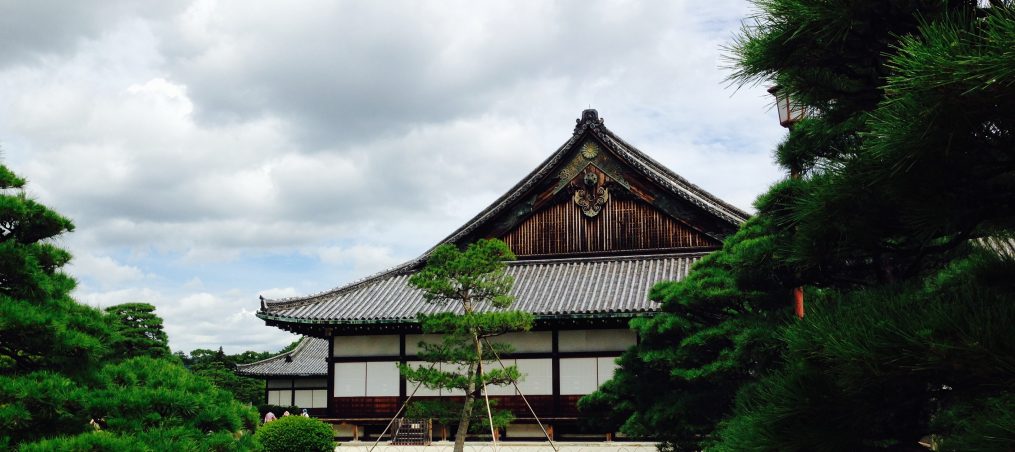
Winter is officially over today in the US on 3/20¹. The same can be said in Japan, as it ended on the day of shunbun (春分)². As Spring is now upon us, we all expect life of mother nature to revive as the weather gets warmer, and flowers start blooming. Those who follow traditions in Japan may eat specific snacks on the day of shunbun, such as botamochi (ぼた餅), which is a mashed rice cake covered in sweet red bean paste.
In accordance to the 1st day of Spring, this article will introduce a rather interesting fable from Yamagata Prefecture, which is about botamochi and terms used to describe it. These terms are enough to make anyone fear for their life…including a samurai!
Han Goroshi to Hon Goroshi³ (Half-Beating and Full-Beating)
There’s a story a long time ago, where a lone samurai from the Capital⁴ sets off on a journey, which takes him into the mountains⁵. He traverses through the mountains all day till late in the night, where he finds himself wandering around aimlessly, until he finally comes to a single mountain hut. He knocks on the door, which was then opened by an old man. The samurai requests to stay in the hut for the night. The old man sits in front of an open hearth next to an old lady who is his wife, and after consulting with her, they both agree as long as the samurai was okay with their shabby hut.
Given warm thin rice porridge as a meal by his hosts, the samurai eats his fill, then retreats to a room prepared for him to rest. He falls asleep almost instantly, as he was tired from his long trip. However, in the middle of the night, he wakes up to the low conversation between the elderly couple, which prompts him to eavesdrop for awhile. The part of the conversation he hears wakes him up completely.
“Should we give him one ‘half beating’ tomorrow? Or what about a ‘pounding by hand’?” Asks the old man.
“This samurai’s from Edo, right? A ‘half beating’ should be enough for him.” The old lady replies.
Hearing this dialogue, the samurai was shocked. He concludes that this plot to beat him, possibly to death, could only be that of mountain bandits, and he just so happened to fall into their den. No longer able to sleep with those troubling thoughts on his mind, he lays down on his bedding, clutching his sheathed sword tightly to him. He remained vigilant, staying on full alert to defend himself, all night long until sun rise.
With morning upon him, the samurai was sleep-deprived. Expecting an attack from his would-be assailants while they thought he was asleep, he was surprised that no such incident occurred. Still, despite being tired, he stayed alert, with his hand ready on the handle of his sword.
A pic of a samurai, poised to draw his katana. From illust-AC.
Just then, the samurai could hear sounds coming from the area around the open hearth, along with the voices of his hosts.
“Hey, you done with the ‘half beating’ yet?” The old man calls to the old lady from a different room.
“Not yet, wait a little longer.” She responds, sounding like she was beside the open hearth. From their conversation, the samurai was certain they were about to set their plan into motion and attack him at any moment. Wanting to get the upper hand, he gets up and quickly bursts out from his room, ready to strike his would-be assailants.
Surprised that the samurai was already awake, the old lady greets him in good spirits. The sleep-deprived warrior calms down as he analyzes what’s before him; the old lady sits down on a mat with a mortar beside her, while kneading something in her hands. As he looked confused, the old lady offered him something.
“We don’t have anything else here, but thought you could at least eat a ‘half-beating’.” In the old woman’s hand, a dark-colored mochi s presented to him. The samurai immediately recognizes it to be a botamochi.
“Wha…this ‘half-beating’ is actually an azuki bean⁶ mochi? Then, what’s a ’pounding by hand’?” He ask curiously.
“Ahh, ‘pounding by hand’? That’s our homemade soba noodles. And a ‘full-beating’ is for mochi⁷.” The old lady responds with a smile.
Realizing his misunderstanding, the samurai loses all power in his legs and collapses onto his bottom down on the floor.
~ The end ~
In the original tale, the terms that the samurai heard from the elder couple are the following:
Te uchi (手打ち)
Han goroshi (半殺し)
Hon goroshi (本殺し)
Normally, these terms are of a violent context, which you would hear in relations to fighting. Te uchi means “to strike” or “to slap” someone with one’s bare hands, han goroshi means “to beat a person to the point where they’re on the brink of death”, and hon goroshi means “to certainly beat a person to death”. Anyone, especially a samurai who trains expecting death in combat, would immediately interpret such terms as dangerous, especially when applied towards someone. However, it seems that these terms have a unique usage in Yamagata when making treats or food. Since the samurai was from Edo and not from Yamagata⁸, hearing the colloquial use of those words that are normally used for violence alarmed him. From his perspective, one can understand how he felt. In present day, all countries have words that possess multiple meanings and usages, especially for cooking. In English, “beating” an egg is commonplace, but imagine a time when using such expression was unheard of.
ENDING
This concludes today’s article. The tale itself is light-hearted, and illustrates the unique culture of different prefectures in the past. Here’s looking to a fresh start on the 1st day of Spring!
1) I say this figuratively, for where I’m at it is wet & snowing outside.
2) Also known as “Shunbun no Hi” (春分の日), this year it falls on 3/19 in Japan, which slightly coincides with the US date of 3/20.
3) Title in Japanese is “半殺しと本殺し”. Here’s a version of the tale here.
4) The word “Capital” is not mentioned here, but later in the story it is, through the word “Edo”. Adding this for context purposes. Speaking of which, the Capital city at this time is Edo (Tōkyō), meaning that this tale takes place during Edo period, possibly as early as the late 1600s.
5) Most likely the samurai was on a musha shugyo (武者修行), or training journey.
6) Azuki (小豆) is the Japanese word for red bean.
7) In other words, mochi with nothing added to it is “hon goroshi”, with “hon” (本) indicating standard, or base.
8) Edo is present-day Tōkyō City, in the east. Yamagata is in the northeastern region of Japan, and is north of Tōkyō.
Minamoto no Yoshitsune is a name many are familiar with. Being an actual historical figure, Yoshitsune is elevated to legendary status through his exploits as a warrior during a chaotic period where 2 sides engaged in war over control of Japan. His exploits have been documented and retold through numerous mediums, from written records, theatrical performances, to TV shows. His fame has reached modern times, for even if you are not so versed in Japanese history, there are chances that you have come across his name in pop culture, which includes comics and video games.
Yoshitsune is viewed as a protégé in both martial arts and military affairs, which is a large appeal to many. In fact, many have made strides to keep alive, albeit few, his knowledge of combat. This extends to martial arts styles that not only give credit to him, but have skills and instructions accredited to his documented combat sense. These attempts are even visible in the scrolls of defunct styles (most of which were devised centuries later during Edo period), some of which are named after him, as the contents claim to be of instructions of his fighting style. While it’s safe to say that Yoshitsune himself didn’t create any style of his own, his exploits were vividly recorded where they may have given inspiration to others to develop similar techniques and strategies. How much of his legacy was preserved? Let’s proceed with the following discussions below.
Painting of Yoshitsune training with the great Tengu monk Sōjōbō on Mt. Kurama. By Tsukioka Yoshitoshi.
MYRIAD OF WEAPONS
Out of the pages of official records such as Azuma Kagami (吾妻鏡), as well as war chronicles like Gikeiki (義経記), are the names of strategies, techniques, and weapons Yoshitsune used in his illustrious career.
Yoshitsune’s combat experience heavily weighs on kenjutsu, which he was proficient in from a young age. The source of his swordplay stems from Kurama Temple on Mt. Kurama, the source of knowledge for all established sword schools in Japan, where he stayed for several years during his youth. From Kurama Temple hails the famous style “Kyōhachi ryū” (京八流), which is said to contain methods of swordplay and other strategies spread througout Japan through 8 disticnt schools, with Yoshitsune’s thought to be the first.
Before going through specific techniques, let’s examine actual weapons Yoshitsune once wielded when he was alive. Keep in mind that some of these are either claimed to be of his possession, or are recreations.
#1: Kuruma dachi / Sha dachi (車太刀) DIMENSION: ??? MAKER: ??? Although identified as a tachi (battlefield sword), it doesn’t come even close to the standard length of one. This aligns more to the length of a kodachi (short sword) that would normally be worn alongside with a tachi. However, what sets this apart from the normal kodachi is the unusually wide curve generally found on a tachi. Used since his youth, it’s thought that its short length allowed Yoshitsune to utilize fast, agile, and graceful movements, which allowed him to outbest others in duels or fights. Not as long as a standard tachi, it’s also not so short where it has no reach similar to a knife, setting it as a versatile weapon against any opponent. This balance in both length and versatility was adopted by other sword schools associated with the swordplay from Mt. Kurama, which includes sets of techniques and strategies against those with longer swords being taught.
This sword is currently in the safekeeping at Kurama Temple (鞍馬寺, Kuramadera). No pictures are allowed to be taken while visiting, so outside of the actual website for the temple, it’s difficult to see in greater details online.
#2: Usumidori (薄緑) LENGTH: around 80cm MAKER: Chōen (長円) This is a sword that has no concrete origins. Believed to have been first mentioned in the war chronicle Heike Monogatari (平家物語) as “Tsurugi no Maki” (剣巻), it’s speculated to have been in the possession of the Minamoto family for quite a bit of time. In fact, some believe that it was passed down within the Minamoto family for several generations alongside with other swords, such as Higegiri (髭切). Depending on the source, it goes under numerous names as it is used in different scenarios not just by Yoshitsune, but his half brother Minamoto no Yoritomo as well, such as Hizamaru (膝丸). Nowadays, this sword is recognized under the label “Usumidori”.
This is often labeled as Yoshitsune’s favorite sword. Depending on the source, the length of Usumidori is measured about 80cm. It is a sword he’s said to have carried on his person since his youth after he received it during his stay at Kurama Temple. Various documents reference this…however it is known by numerous names.
To make matters even more confusing, there are apparently 3 sources that claim to have the authentic Usumidori. One of these sources is a private collector by the name of Ishijima Morio (石島護雄).
#3: Naginata (薙刀) MAKER: unknown (unsigned) While not normally associated with him, Yoshitsune is said to have been adept with a naginata. There’s really not much info on the actual naginata itself, nor about the instances he used it while in battle.
It is kept at the shrine Ōyamazumi Jinja (大山祇神社) in Imabari City, Aichi Prefecture, which is the same location where Yoshitsune’s loyal retainer, Musashibō Benkei’s famed giant naginata is. Unfortunately, photography of it appears to not be allowed, thus why there’s no pictures of it up on the Internet to easily review it.¹
#4: Ima no Tsurugi (今剣) LENGTH: 18 ~ 24 cm² MAKER: Munechika (Sanjō) This is a bladed weapon that is thought to have been in use between the Nanboku period and the Muromachi period. Mentioned in the Gikeiki as Yoshitsune’s beloved sword, it is stated to once have been a very long sword³ received from one of the priests at Kurama temple when he was younger. However, it appears to have survived into today’s generation the length of a tantō. Why the drastic difference in length? One thought is that there was an error in how it was documented, where the length being written as “6尺5寸” (around 197 cm) should’ve been written as “6寸5分” (around 24 cm). This could be the case, especially since it’s also documented as being the blade used to commit suicide.
While it was deemed as missing for several centuries, this Ima no Tsurugi was reported as found in Mutsu City, Aomori Prefecture in 2015, then went on display for public viewing in 2016.
#5: Tomonari-saku no tantō (友成作の短刀) MAKER: Tomonari (友成) An unnamed blade, only recognized by the swordmaker’s name on the tang. Believed to be the product of a swordsmith of the Ko-Bizen line. While not much details in sword-related documents like Chōkyō Meizukushi (長享銘尽), it is thought to actually be the length of a tantō, or a very short sword that would align closer to a knife.
Outside of it being documented, this weapon is currently lost in history.
#6: Nodachi (野太刀) MAKER: ??? A very long battlefield sword, it is claimed that Yoshitsune used this particular one in battle, which is in the collection at Kurama Temple. In fact, there are two present, one for Yoshitsune, and the other for Benkei. Like many of the antiquated items there, no photos or further details online other than what is present on Kurama Temple’s website, so currently no way to prove this claim.
#7: Minamoto no Yoshitsune no chōshin tachi (義経朝臣太刀) MAKER: ??? When Yoshitsune was appointed by the Imperial court his position as General, this tachi may have been acquired to signify his position. Appearing to be of the general length of a long sword, it is also adorned lavishly. One of the treasures said to be of Yoshitsune’s, it is in the possession of Kuramadera, which is visible online. There is also a note that it was restored, which can be interpreted in many ways. Apart from this, no other information about this sword.
One thing to note is, outside of the naginata, almost all of the swords mentioned (especially the ones deemed as a candidate for being his most cherished blade during his youth) are pretty short in length. Most are described as being either the length of a shorter tachi or fitting the image of an actual kodachi. This is probably to align with Yoshitsune’s portrayal as both graceful and elusive with his swordplay, and occassionally incorporating small items to distract his opponents before taking them down. This idea was further followed by the other sword schools part of Kyōhachi ryū, where specific forms and strategies evolved around using a shorter sword. One lingering question regarding all this would be, “which one is the real sword of Yoshitsune during his youth”? It’s highly possible that all these short swords are one in the same, with varying dimensions details to the appearance, and stem from the same documented sources. However, we can’t disregard the idea that many of them may just be recreations, since there are so many that claim they have in possession the “real deal”.
SWORD TECHNIQUES
Looking further into his sword skills, there are few scenes from where Yoshitsune’s fighting style is presented in details. There is one particular incident where, after his coming of age⁴, he sets off from Kurama Temple, descends the mountain, and accompanies a traveling gold merchant who’s familiar with his father. It is from here that Yoshitsune comes upon a large gang of thieves led by an individual identified as Kumasaka Chōhan (熊坂長範)⁵. Despite being outnumbered, Yoshitsune was able to skillfully defeat Chōhan and his criminal gang thanks to his quality training at Kurama Temple.
A scene from the theatrical performance “Eboshi Ori”, with a young actor playing as “Minamoto no Yoshitsune” (right) battling against another actor taking the role of “Kumasaka Chōhan” (left). Can be viewed on YouTube.
In certain sources, there were a few sword techniques presented as being used during the battle. Particularly, there is a theatrical rendition called “Eboshi Ori” (烏帽子折), which is said to give visual details of these techniques in action. The following are those said techniques below:
Kiri no Hō (霧の法)
Kotaka no Hō (小鷹の法)
Shishi Funjin (獅子奮迅)
Ko Rannyū (虎乱入)
Hichō no Kakeri (飛鳥翔)
Here’s some explanations regarding each of these techniques.
Kiri no Hō / Kotaka no Hō: These 2 are not necessarily specified attacks, for it is said that they don’t appear in scrolls of classical sword schools that have connections to the swordplay of Kyōhachi ryū. Instead, they are more like higher-level methods of combat, as the names became more commonly used in martial arts schools from Edo period onward. This doesn’t mean there’s any actual relations to Yoshitsune, per say.
Shishi Funjin / Ko Rannyū / Hichō no Kakeri: These 3 are names of actual sword techniques. While one would be suspicious of these techniques being real, in truth there are sword schools such as Shintō ryū and Chūjō ryū that actually have one or more of these techniques listed as part of their curriculum. For the 1st and 2nd techniques, their movements are more aggressive in nature, while the 3rd technique represents much agile, elusive movements⁶. These techniques, from their respectful systems, don’t directly reflect what is presented in the Eboshi Ori theatrical play, though. One can view this as the director of this performance possibly consulting with a particular school(s), and only gaining inspiration from the information that was shared.
To the right, a picture scroll of techniques from Kage ryū, with the top labeled “Shishi Funjin”. From the right, a page from a manual of Chūjō ryū, with descriptions for “Ko Rannyū”.
Whether the movements shown in the performance for each technique are the same in execution to the sources they come from or not, the fact that there is this connection between different kenjutsu ryūha is one of the reasons why Kyōhachi ryū is thought to have been real. At the very least, it can be thought that the essence of the techniques themselves, said to be drawn from Yoshitsune’s swordplay style, are inspirations for each kenjutsu ryūha.
CONCLUSION
Just by covering more tangible points such as weapons and fighting techniques, we get an idea of how much impact Minamoto no Yoshitsune, drawing the attention of many who became fans of his story. While his life history is fairly grounded, novel-like stories and live performanaces retelling about his past often present him and his abilities bigger than life, thus the large collection of weapons all claimed to be that very one he grew up with. As for sword techniques, martial arts schools hold their link to his legacy through just the few mentioned, and retain them as proof of the validity of Kyōhachi ryū. This concludes part 1 here. We’ll pick up with part 2 in the next article, which will cover topics including recorded strategies, and martial systems & battle skills that bear Yoshitsune’s namesake.
1) I have managed to find one picture online, but since it is from someone else’s social media account, I decline posting it here.
2) I’ve seen it reported as 18 cm, as well as about 24 cm. The difference in length could be that one is for the length of the blade alone (from tip to base, right before the tang), and the other measuring the entire sword length (including the tang).
3) It is estimated that Yoshitsune left Kurama Temple between the age 15 ~ 16.
4) This is ōdachi (大太刀) in Japanese, which is generally described as a sword much longer than a regular battlefield sword (ie. tachi) of that time period.
5) Depending on the source, the gang leader’s name varies. In some cases, such as Gikeiki, a name is not mentioned.
6) Animals are part of these techniques’ names, which seem to indication the type of movements that would be involved. Shishi Funjin has “lion”, Ko Rannyū has “tiger”, while Hichō no Kakeri has “flyig bird”.
There are many shrines, big and small, around Japan. While each shrine has its own backstory, there’s no arguing that they all were built to honor¹ someone or something specific. In accordance to this year’s Zodiac sign, I did some research and discovered that there are many shrines in honor of snake deities. Many have their unique stories, sometimes connected to other deities, which natives can visit the corresponding shrines and pray for good fortune and blessings. These include Kanahebisui Shrine in Miyagi Prefecture, Shirohebi Shrine in Yamaguchi Prefecture, and Omiwa Shrine in Nara Prefecture.
For me, the most interesting one I’ve come across is a shrine dedicated to the deity Yato-no-kami (夜刀の神)², which has a very interesting lore regarding it being revered. While considered a folklore, it’s abit different from the ones I’ve read over the years, for it’s more grounded and paints a picture that, with abit of cultural understanding, feels more of summary (albeit with a dash of fantasy) of historical events. For this article, I will discuss about this snake deity, its fabled story, and the general views concerning intended lessons, hidden meanings and other tidbits.
INTRO OF THE HORNED GIANT SERPENT
The tale about Yato-no-kami is an ancient one said to have originally been shared verbally by elders. It is part of numerous stories from ancient Hitachi (present day Ibaraki Prefecture) that were later compiled into a collection called “Hitachi no Kuni Fudoki” (常陸国風土記, Historical Culture of Hitachi Country). In fact, it is told that this collection is viewed as a form of history of this region. In the story of Yato-no-kami, one would think it more of a monster, as it is quite opressive against humans. However, like most folklores of old, this shouldn’t be taken at face value; there are interpretations by analysts who claim there are some important factors of this snake deity, as it is more symbolic regarding the important resource that was beneficial to the people in order to survive, which is water for the farmlands. Like dragons, snakes are also associated with water, so it’s no coincidence that the conflicts the characters in the story have with Yato-no-kami involves this…whether this is made obvious or not. Thus, the reasoning behind Yato-no-kami being worshipped as a god, with a proper shrine being erected in its honor.
Today, the shrine for Yato-no-kami (夜刀神神社, Yato-no-kami Jinja) is part of a larger, overarching shrine called Atago Jinja (愛宕神社) within the fabled valley in modern Namegata City, Ibaraki Prefecture.
THE FOLKLORE
The original text is very old Japanese and not the easiet read due to a lack of modernized structure and an abundance of many archaic words. Fortunately, there are modern adaptations of this, making the tale a more approachable read. For this article, instead of a direct line-by-line translation, I will explain the story simply in English.
The original story of Yato-no-kami, reproduced in print form. From Wikipedia.
This story takes place during the period of Emperor Keitai (around 500s) . In the Imperial residence of Tamaho Palace (玉穂の宮) was a local powerful family that went by the name of “Yahazu” (箭括). The head of the Yahazu family, Matachi (麻多智), is tasked with the advancement of agricultural cultivation in the western fields of Yatsu in Namegata Country (行方郡)³ , making way for farming fields and the establishment of villages there.
Around this time, there appeared Yato-no-kami, a giant horned snake⁴, along with a horde of snake followers⁵. Since they also live in the area, Yato-no-kami and his group caused chaos, preventing agricultural advancement and killing people. It is said that it was a terrible beast of a god, to the point that those who accidently cast their eyes on Yato-no-kami would be cursed, with them and their entire family line being greeted with doom⁶.
Catching news of this, Matachi was furious, and swore to eradicate this nuisance. Donning on his armor and arming himself with a spear, he confronted the snakes and slaughtered many of them. Yato-no-kami was eventually overpowered and retreated to the nearby mountain. Matachi did not give chase into the mountain, but instead he had a type of fencing set up to block the mountain path. He also had a speacial seal placed on the fence called “Shirushi no Tsue” (標の梲), which acted as a ward strong enough to keep the giant snake from returning.
The shrine for Yato-no-kami within a woody field in Namegata City, Ibaraki Prefecture. From Wikipedia.
As a sign of victory, Matachi declared in a loud voice towards the mountain that humans would make their homes in the lower lands and establish farms, while Yato-no-kami and its kind would from there on live in the mountains. Matachi would also take up the role as a Shinto priest, along with future generations of his family line continuing this role, giving worship to the giant serpent and appease any hard feelings between them and ensure order to live in harmony. A shrine in honor of Yato-no-kami was built, and worship rituals proceeded. At the same time, farmlands were established, and many villages were built as well.
Years later, during the period of Emperor Kotoku (596~654), an individual by the name of Mibu-no-mura Jiro (壬生連麻呂) was tasked with being lord over the same valley. In order to improve the life of the farmers, he made an order to have embankments made around a body of water in the valley that was viewed as a lake⁷. These embankments would make it easier for water to be obtained and used for the farmlands. It just so happened that Yato-no-kami caught wind of what was happening there. So, in a form of protest, he climbed one of the beech trees that were near the lake, and occupied there in plain view, causing unrest to the workers.
Seeing the commotion, Jiro was brought to anger. He yelled at Yato-no-kami furiously, disregarding its god status. He declared that the lake was essential to the livelihood of the people living close by, and if he catches sight of anything, no matter what it is, that dares to disrupt their way of living by preventing their natural resource, it will be killed by his own bare hands.⁸
An image of Shii-no-ike, with the torii (鳥居, shrine main gate) of Atago Jinja placed inside. From Wikipedia.
In fear of Jiro’s boldness, Yato-no-kami fled from the tree and returned back to where it came from. Completing the project with no more interruptions, Jiro called the lake “Shii-no-ike” (椎野池)⁹, from which farmers could pull fresh water from thanks to the embankments placed.
This is pretty much how the story of Yato-no-kami plays out. On a large scale, it may serve as a subtle hint of the true history of that time: when the unified states of the Empire Kingdom from the south to central Japan were established, orders from the Imperial court were made to loyal followers bearing military strength to further expand the kingdom by making expeditions to the north. In order to do this, those tasked would travel with their force and accimilate more land, either by having natives submit and vow loyality, or being pushed out through violence. Through this, Imperial influence over the span of this island country grew, as well as the influence of these families who not only seized control of different areas, but also managed them.
Due to the reality of such actions, it was not uncommon for written records at that time to be drafted in a more lighter form in the guise of folklore, with demons and deities often representing those that were considered outsiders.
TIDBITS AND ANALYSIS
Along with the actual story are commentaries, which can range from lessons behind the folklore to meanings & symbolism regarding specific individuals. Here we’ll touch upon some of the conversations regarding the origin of Yato-no-kami and its story.
Lesson #1: Readers can interpret this story as representing the early prominent families’ success in surviving and adapting to the wild land. Yato-no-kami plays the role of nature as a whole, being wild and dangerous. The struggles that Matachi and his people had to face is demonstrated in their battle against the giant serpant and its followers. The same for Jiro and the farmers, whom needed a more suitable method for obtaining water for the farmlands, which was through the establisment of a lake. In both cases, the people won, their victory symbolizing them taming nature to the point they could guarantee sustainable life through farm lands and villages.
Lesson #2: This lesson is more geared towards expressing how gods were viewed as reachable in the mountains, while people live within the fields. By tradition, many processions and pilgrimages take place up mountains, where rituals of worship to different gods could take place directly to them. Shrines and dedicated priests are established, even up in the mountains themselves. This is represented by Matachi and his descendents taking up the role of Shinto priests. Around this time, Buddhism has been introduced to Empire Kingdom, and is adapted into the culture, alongside the already-established Shinto belief.
Lesson #3: There is talk about how the tale mirrors other mythical stories regarding the creation of Japan, where man (Matachi) battles against gods (Yato-no-kami), wins, and establishes the makings of a hero. In fact, it’s from this point where Yato-no-kami is compared to Yamata no Orochi (八岐大蛇), the eight-headed serpent defeated by the god casted out of the heavenly realm, Susano no Mikoto (須佐野の尊). While there are some noticeable parallels (i.e. both antagonists are snakes), this comparison is left to one’s personal opinion.
Lesson #4: There are thoughts that this story (along with the entire collection of “Hitachi no Kuni Fudoki” as a whole) was rewritten with an undertone reflecting Confucianism. Did this happen when it was compiled with into the collection of stories of Hitachi? Who knows. However, when compared to other folklore stories, this one has a more broader viewpoint in terms of social structure, development of society, and development of technology. This ranges from the identifying the Imperial ruler, how prominent families assumed roles of land owners and managing the establishment of farmlands and villages, devising means to create bodies of water into usable lakes, and so on. There may be more points that can be analyzed, including the significance of the people’s belief in Shinto. How does this Confucianism viewpoint affect the story? Personally it is hard to say, other than giving the vibe that there is much more realism in how things play out, while other coded points can be deciphered through further research.
Example of a wide, low-lying wetland area in Japan. From Photo-AC.
Meaning behind the name: What does the “Yato-no-kami” name stand for? If we look at each part of the name, “Yato” is thought to mean “Yatsu”, which was mentioned earlier as the western fields in Namegata and signifies “valley”¹⁰. The name is also said to be a phrase meaning “yachi” (谷地) , which apparently stands for swampy, or low-lying wetland. Such a phrase can be an indication of the conditions of the valley in which Matachi and his people expanded into. Much work must’ve went into making the area fertile enough for farming, which should’ve included a suitable source of clean water.
Significance behind the lake: Let’s turn our attention to the lake Shii-no-ike. This lake was created during Jiro’s time, and has a strong connection to Yato-no-kami. Since it didn’t exist during Matachi’s time, what water source did him and the farmers use? One idea I read tells that rain water that poured down from the mountain where Yato-no-kami had to reside in was used. To ensure this resource could be obtainable, Matachi worshipped the horned serpent. When you think about it, this fits many narratives of old, where shirnes were built for gods in order for the priests to pray and receive good fortune to the land. In this case, snakes are associated with water, thus why Matachi would erect a shrine for Yato-no-kami. Later, as that rain water poured into the vally to form lake Shii-no-ike, a torii (鳥居, Shinto shrine gate) is placed into it in honor of being a sacred resource.
ENDING
This conludes the overview on the folklore of Yato-no-kami. As a whole, the tale plays a significant part in the early development of Japan, as it not only illustrates locals’ belief in deities and their fortune they bestow on them, but also outlines the societal structure at that time. While it may come off as something frightful and menacing, we can view Yato-no-kami as pivotal in the history of Ibaraki Prefecture due to its connection with water.
1) Loosely speaking here, this points to modern times. In the past, there were other purposes for building a shrine, which ranged from protecting a castle, warding away ominous fortune, worshiping an important individual, to appeasing a possible vengeful spirit or demon. The after effect of shrines like these that do survive the test of time is becoming a sanctum where someone or something is worshipped as a deity.
2) Another pronunciation is “Yatsu-no-kami”. The same kanji (夜刀神) is still used for this as well.
3) Namegata Country is one of the areas within Hitachi.
4) It is not explained if it’s a single horn or two horns. Images of Yato-no-kami mainly depict it with 2 horns.
5) In one of the rewrites of the tale, Yato-no-kami is described as a group of snakes, possibly meaning there is not just one serpent representing this deity. Or, this could be interpreted as the god known as Yato-no-kami merely took the form of snakes. This isn’t really made clear, maybe due to the writing style?
6) This is a continuation of the point above, where the true form of Yato-no-kami is so terrifying that it assumes the guise of a horned snake(s), while an individual would be cursed only if they see its true form. Or, it could be interpreted that once it sets its sights on you, it’s so swift that its victim cannot escapte death, which in turn ends that individual’s chance of having future descendants.
7) This body of water, now turned into a lake, was probably a collection of rain water from the very mountain Yato-no-kami resided in. During Matachi’s time, the rain water was gathered for farming, but as the years went by, it accumulated to the point where the people could have a much larger, sustainable source.
8) From what is considered the original text, when Jiro regards killing any threat to the people’s survival, his statement includes “whether fish or insect…”. From further analysis, he mentions these due to them being associated with water, as they can render the lake unusable if not kept in check. Jiro’s tone also includes Yato-no-kami, for it too is viewed as essential for the farmers to get water from the lake. Guess we can see it that, despite his godly status, it’s also susceptible to receiving Jiro’s wrath.
9) This name means something like “lake of the field of beech trees”.
10) Coincidently, “Yatsu no kami” may have been the original pronunciation, which makes it a direct reference to the area Yatsu (谷). Why changed to “Yato”. Possibly to match the phonetics of the kanji in its name (夜刀) properly?
When asked to name one thing a warrior would carry with them onto the battlefield during Japan’s warring periods, what would you say? I’m sure popular responses would be bow & arrow, spear, sword, and possibly rifle, depending on the time period. But what about the gunbai? Although it’s not viewed as a weapon to kill an opposing soldier, a gunbai holds a very high level of respect in Japan’s military history. In fact, it can be said that it embodies the idea of obtaining victory on a non-physical level.
In this post, we will discuss about what a gunbai is and its design. Along with this, we’ll explore what it represents physically, as well as the conceptual practices in regards to the success in military campaigns.
WHAT IS A GUNBAI?
A gunbai (軍配)¹ is categorized as a type of fan, with an alternative name being “uchiwa” (団扇). The full name for this is “gunbai-uchiwa” (軍配団扇) , or “war fan” in English. It is recorded that this tool came from China, and seen its start as an essential item for military purposes around the Muromachi period. A gunbai was symbolic as a sign of authority by those who wield it, which is generally the commander, a leader, or someone equivelant in term of strategy know-how. With a gunbai in hand, the one in charge directs the army’s movements and actions. However, it was more than just a tool for signaling, as there was a concept that went beyond this physical tool, where one learns to predict the conditions going into war, as well as the potnential outcome. Despite its physical appearance, the physical gunbai had a special place in the study of military strategy more than just “fanning” to keep a person cool.
To the left, an artwork of Takeda Shingen sitting with a black gunbai in the right hand. By Utagawa Kuniyoshi, from ukiyo-e.org. To the right, a screenshot of a referee monitoring a sumo match while holding a gunbai in the right hand. From Wikipedia.
Nowadays, antiquated war fans can be seen in museums, in the property of those who may have acquired it as an heirloom, or even purchasable at auctions . On another note, gunbai are widely seen in modern day sumo competitions, with the gyōji (行司, referee) using it in dictating the progression of a match, as well as to ward away evil spirits to ensure safe competition.
DESIGNS AND PRESENTATION
The structure and design of a gunbai follows a specific format. A common look is a rod around 2 ft long, with two broad planks attached on either side on the top half of the rod, and a long tassle(s) on the opposite end. The planks come in different shapes, usually roundish. A gunbai is made out of either metal and/or wood, and is painted or lacquered.
An image of a wooden gunbai. Note that the cords are wrapped around the planks when put in storage. From pixta.jp.
It is not unccommon for a gunbai to have different kanji (漢字, Chinese characters) or even esoteric writings such as bonji (梵字, Sankrit) written on them; the combination of these characters may carry significant, power-attuning meanings. There were those that may even possess diagrams that follow auspicious practices or systems. More on this later.
USAGE AND PRACTICES
On a fundamental level, a gunbai is used for commanding one’s army, such as making orders, dictating formations, etc. If you look at woodblock paintings, or even better, watch any programs that has a setting dated back to Japan’s warring periods, you’ll most likely see it in the hands of a commanding officer, while out on the battlefield or in a camp. It’s similar in use to another tool called the saihai (采配), which consisted of a baton with a bushy long hairs like a horsetail on one end, and a long tassel on the opposite end.
On a deeper, surreal level, it is connected to specific beliefs, including energy attuning, reading the weather, fortune predictions, discerning luck based on a particular days and directions, and understanding positions of the stars. While such practices are usually associated with particular priests or shamans, those specializing in military activities are also documented to have taken this serious as well. Also, Chinese-influenced concepts such Inyō Gogyō no setsu (陰陽五行説) and Hakke (八卦) were part of this unique study with the gunbai, for it was not unusual to have illustrations of the diagrams of said concepts drawn on one side of this war fan.
Such a vast level of metaphysical and spiritual practice was viewed as essential for the sake of victory. This wasn’t seen as strange, since the nation of Japan in the past was very superstitious on many topics.
DIFFERENT STYLES
As mentioned earlier, the concept of the “gunbai” goes beyond a mere tool, as it represented the study of dictating the outcome of a battle in one’s favor. This encompassed strategies from old Chinese military text, applicable control of battlefield movements, and auspicious practices to assist in one’s decision making. As a whole, this is coined “gunbai no jutsu” (軍配術), or “gunbai hyōhō” (軍配兵法). Those who study this are nicknamed “gunbaisha” (軍配者).
Here’s an illustration of a gunbai, with different diagrams used for fortune telling and reading possible (un)lucky days, which determines when and how long one would go out to war. From the 8th volume of Kunetsushu (訓閲集).
Below are a few examples of schools on utilizing gunbai in its strategy form:
Takeda gungaku (武田軍学)
Sankoku ryū gunbai (三極流軍配)
Iga Fuzan ryū hyōhō (伊賀風山兵法)
Many of these different schools tend to reference the source of this study being Minamoto no Yoshitsune’s legendary Tora no maki (虎の卷). Along with this, scholars use Takeda gungaku as a valuable research point, as comprehensive documentation regarding practices of gunbai as military study is made available publicly, such as Kōyō Gunkan (甲陽軍鑑). Much of Takeda gungaku’s acclamations is contributed to Yamamoto Kansuke’s knowledge, who is said to have been a brilliant strategist and warrior.
Statues at Kawanakajima Kōsen jōshi seki Kōen in Nagano City, Nagano Prefecture. These depict the clash between Uesugi Kenshin (right) and Takeda Shingen (left), where Shingen shielded himself with a metal gunbai against sword strikes. From Photo-ac.com.
Typically not seen as an instrument for physical combat, there is one interesting case. There is an iconic story that took place in 1561, where 2 rivaling warlords by the name of Takeda Shingen and Uesugi Kenshin were prepared to clash against one another in an ongoing battlefield campaign at Kawanakajima (present-day Nagano City, Nagano Prefecture). It is said that Shingen was at his camp, as his army were preparing to head out to the battlefield, when Kenshin rushed into the camp on horseback. Charging straight at his long time rival, Uesugi brandished his long sword and swung for the vulnerable Shingen, who in response cooly held up his metal gunbai and effortlessly blocked the attack. This exchange continued, for as Kenshin lashed with more sword strokes, Shingen held his ground and deflected them all with his gunbai. Things finally at a standstill, with Kenshin quickly departing from the camp just as he had entered. This story has been immortalized as an example of valor and martial expertise…but is this tale actually fictional? It is hard to verify, but what can be taken from this is the claimed sturdyness of a metal gunbai.
ENDING
We come to the close on this discussion on the gunbai. Researching the ins and outs of this, especially the fortune-telling concepts attached to its use in military-related purposes, is a dedicated study on its own. While a gunbai’s popular, physical form as a fan is what is usually presented, it’s important to remember that there is also the strategic concept that can stand alone as well.
1) Also said to use the kanji “軍敗”, although personally I’ve not come across this variation before.
It’s the start of the year 2025, so I’ll kick off the first article in the usual pattern and review this year’s Zodiac sign and other related info. According to the Zodiac cycle, the sign for 2025 is the snake. Depending on the culture, impressions on anything snake-related can either be welcomed with open arms or shut out, despite whatever fortunes predicted. Before we get into any deep conversations, let’s take a look at the specifics of the sanke according to the Zodiac system, and its role in daily life in Japan’s past.
Zodiac number: 6th sign
Zodiac character: 巳
Pronunciation: mi
Animal / creature: snake
Direction: south – southeast
Time: between 9 am-11 am or 10 am-12pm
Month: 4th month (according to the old calendar)
Ying/Yang: dark
Element: fire / wood
Normally the kanji used for snake is “蛇”, which is pronounced as “hebi”. However, for the Zodiac sign the kanji “巳” is used in its place. With this, the Zodiac year is called “Hebidoshi” (巳年)¹, or Year of the Snake.
IMPRESSIONS AND FORTUNE OF THE SNAKE SIGN
What is the fortune we are to expect in this year of the snake? Before going forward, let’s first touch on the general image of the snake. Born and raised in the US, one will see that it’s not very favorable. Words such as sneaky, deceitful, dangerous, venomous, and (for those familiar with teachings from the bible) demonic all come from the negative concepts associated to this creature which persists in today’s society, and has varying levels of severity depending on each individual. It can be due to many factors, including bad experiences with them for those who settled here in this country’s infancy. Of course, it’s not all black & white, for there are plenty of people who view the image and qualities of a snake favorably, and may even say they are cool. It is not unusual to see some people have tattoos of snakes on their body…or even goes as far as having them as pets!
How are snakes viewed in Asia? I would say it’s mix bag, with some impressions positive, and others negative. Due to most Asian countries having a longer history, there is a better understanding on how to deal with it, as well as to make use of them in society. When it comes down to superstitions and stories, the snake has its place where it can represent many ideas, from appearing as a mysterious figure, being used as a messenger of deities, to being a god-like being. A unique trait seen in stories is its skin shedding, which at times is viewed as symbolic for undying. Remember this point, as this is closely tied to this year’s fortune.
BEARING FRUIT IS THE KEY TO SUCCESS
In the Zodiac calendar of old, the kanji “巳” is pronounced as “mi”. This character’s original meaning is interpreted similarly to a common character “実” (jitsu), which is “fruits” or “nuts², which are the byproducts of seeds. Through the seed analogy, this Zodiac sign represents the imagry of when a seed has grown fully and is just right to “bear fruit”, which in turn can also mean “earnings”, both literally (for farmers, merchants, etc.) and metaphorically (locals, etc). As a fortune, it is predicted that this sign is effective for increase in earnings and luck.
With the snake now associated with the Zodiac sign, how does its image contribute to auspicious readings in Japan? A snake shedding its old, dead skin and revealing a shiny new one is akin to starting afresh, like getting rid of old baggage tied to failed or missed opportunities, which in turn will attract good luck. Metaphorically, this luck can represent 2 things:
One’s wounds being healed or receiving medical treatment to recover from illness
Having a stroke of luck or blessings, which can lead to great fortune
In accordance to receiving the goodness from what this Zodiac sign is predicted to give, people may wear accessories, carry charms, and the like that bear snake motifs on them.
THE WOODEN SNAKE
Now it’s time to talk about the 10 Heavenly Stems, which is the 2nd half of the Zodiac calendar. The sign that is tied to this year is “乙”, or read as “kinoto”, and is #2 in this system. It’s meaning is “kijimu” in Japanese, which refers to something being ajar or creaking open. Within The 5 Elements and Ying/Yang concept³ , this meaning has a harmonious feeling, where it’s interpreted as grass sprouting from the shadows of a tree, stretching outward and spreading into a flourishing field. Also, The element for kinoto this year is “wood” (木).
Together, the full title of this year is “kinoto-mi” (乙巳) in Japanese. In English, we can read this as “wood-snake”⁴.
PREDICTIONS AND WORDS OF WISDOM
To sum things up, popular key phrases related to this year used in Japan include:
Birth of the new me (新しい自分に生まれ変わる)
Seizing a bright & happy future (幸せな未来をつかむ)
Also, when addressing the full title, “kinoto-mi”, we can interpret it as “displaying the flexibility to adapt through constant revisions or reviving”. Key words that depict this include “vitality” (生命力) and “regeneration” (再生).
Finally, here are a few old sayings from Japan related to both the Zodiac year, as well as the auspicious views regarding snakes.
Hebi no yume wo miru to engi ga yoi (蛇の夢を見ると縁起がよい, if a snake appears in your dreams, it is a good sign)
This is connected to fortune-telling based on a person’s dreams, where good luck or lots of fortune is in one’s future if a snake appears. Take note that this is but one of the many see-a-snake old sayings that exist in Japan, most with the same meaning.
Kaoku ni hebi ga sumu to kanemochi ni naru (家屋に蛇が住むと金持ちになる, when a snake resides in your home, you will become rich)
Not to be taken literally, this saying relates to receiving good luck in the form of a particular snake deity taking residence in one’s home. If we go ahead and apply this saying in a more practical scenario, a snake living under one’s home can mean it will hunt and eat vermin and bugs, such as rats, keeping one’s home pest-free.
Hebi wa take no tsutsu ni irete mo massugu ni naranu (蛇は竹の筒に入れても真っすぐにならぬ, a snake will not be straight even if you put it in a bamboo tube)
This phrase is an interesting one. To keep it simple, things will be as they are by nature, no matter what. If we take a snake for example, it will always bend and curl, even if stuffed in a tube. A better example is how when certain plants or trees grow with a bend in them, it is difficult to naturally straighten them.
Dappi shite motte orochi to naru (脱皮して以て大蛇と成る, when it sheds its old skin will it then become a giant serpent)
The meaning for this is becoming a better person each time the weight of one’s past troubles are “peeled away”. This can also be used in a more positive manner torwards self-improvement, or even advancement in one’s career or craft, where you can become more skilled by always gaining more knowledge and re-innovation.
Hebi ni niramareta kaeru (蛇に睨まれた蛙, a frog whom a snake sets its gaze on)
This refers to when a person encounters an enemy too strong to match. With nowhere to run or hide, fear sets in.
Hebi ni kamarete kuchinawa ni ojiru (蛇に噛まれて朽縄におじる, being bitten by a snake, you are frighten even by a worn-out rope)
For this phrase, the message expressed here is that after a bad experience, you become more cautious to ensure you don’t repeat it. In the example of being bitten by a snake, a person would stop in their tracks the minute they see something similar in shape…such as a mere rope. Note that there is a bit of wordplay in this phrase, where the Japanese word for worn-out rope, “kuchinawa”(朽ち縄), is a play on an old word used for snake, which is pronounced the same way.
CLOSING
Just as the snake sheds its old skin and reveals a fresh new layer, we too have a chance to bring forth our “new” selves in the new year through self-improvement. Here’s hoping that good fortune awaits all uf us in 2025!
1) Can also be pronounced as “Midoshi”, which is the proper way to read this. On the other hand, it is not too unusual to use the appropriate snake kanji and write this year as “蛇年”.
2) By design, snakes had no relations with the original Zodiac character when the Zodiac system was first conceived. However, that changed over time as now “巳” is associated with these slithering creatures. It is even acceptable to read it as “hebi”.
3) Inyō Gogyō setsu (陰陽五行説)
4) Actually, there are 2 elements for this year. Under the 10 Heavenly Stem is the element wood, while under the 12 Zodiac is the element fire. Not sure how it all comes together and when either is referenced, but for the most part I have seen more emphasis on the “wood snake” labeling, so for the time being I will stick with this.
2024 is coming to a close. Being the year of the dragon, there were plans to have much more articles related to the Zodiac animal. Unfortunately, real life events took precedence, keeping me away from writing as much as I had intended. Now that things have slowed down, I have this window of opportunity to put out one(!) article in accordance to the dragon-theme. It’s a nice one.
An imagery of how dragons are affiliated with water. Here, we see water flowing from the mouth of a dragon statue at the shrinte Oguji Jinja (小梳神社), which is used to cleanse oneself before entering. from Photo-AC.
In Asia, dragons are greatly associated with water of all forms, which includes rivers, clouds, and rain. There are all sorts of cultural practices related to old tales of dragons in Japan. One story in particular that will be discussed today is tied to a unique folklore dance called “Gaku Odori”, which is preserved as a cultural practice in Yamaguchi Prefecture. Entitled, “Ryū-Ou Baasan ” (竜王ばあさん, Dragon Lord Grandma), this version of the story¹ gives a superstitious account on how the Gaku Odori came to be, and why it is important to the people. It comes from the following website here.
Below is the full folktale of Ryū-Ou Baasan. To the left is the original Japanese text, along with my English transliteration to the right.
A long time ago, there was an old woman who, residing in a place known as Central Village, was skilled in assisting in child birth.
She was called “Midwife grandma of Central Village”, for no matter how complicated the birth, she was able to resolve the situation and have the baby delivered.
One late night, someone came knocking on the door while she was sleeping.
KNOCK KNOCK, KNOCK KNOCK
Thinking that no one would show up unless there was an emergency with someone in labor, the old woman got up, prepared the necessary supplies, and headed out.
外には、使いの男がいて、
「こんなに遅くにすまんが、一緒に来て下さい」
と、言いました。
「それは良いが、どこの家かいの?」 おばあさんが尋ねると男は、
「ずっと遠くです。案内しますから、足元に気をつけてください」
と、先に立ってどんどん歩いて行きました。
As she opened the door, she met a messenger boy².
“I’m sorry to disturb you so late in the night, but I need you to please come with me,”
He said to her.
“I’d gladly do so…but to which house?” The old woman inquired, in which he answered,
“It’s one that’s very far away. I’ll take you there. Please watch your step,”
With that, they started walking, with the messenger boy taking the lead.
When the old woman came to, she discovered that she was at the Dragon Palace³, (竜宮城, Ryūgūjō), a place that shimmered with lots of precious gold and silver treasures around⁴.
As she looked surprised at her surroundings, the Dragon Lord⁵, ruler of the Dragon Palace, appeared before her.
“I thank you for making such a long trip in the middle of the night to reach here. I wish to make a request, that you assist as a midlady for the princess’ childbirth.”
“The princess⁶ is having a baby now?”
Upon hearing the word “childbirth”, the old woman didn’t pause for a moment to help where she was needed. She hastily went to the princess’ room, and saw before her the princess as pale as a ghost, as she was having labor dystocia⁷.
“Very well. We will proceed with the deliver after administering some medicine,”
The old woman made the necessary preparations, and in due time the princess was successful in giving birth to a baby boy, who looked as cute as a round gemstone.
“Oh, you did it! To show my appreciation for your assistance in the delivery of the princess’ baby, I will grant you whatever you wish.”
Filled with joy, the Dragon Lord had a heap of gold & silver coral ornaments brought before the old woman as a reward. However, the old woman made no movement to accept it.
“What’s wrong, you don’t have any interest in something like this? Please tell me, what is it you want? Say whatever’s on your mind, for I will grant it no matter what it is.”
Hearing this, the old woman’s voice trembled as she responded to the Dragon Lord.
“Okay, I will. Actually, the rice crops in the fields are drying up in my village, as we haven’t had any rain. Dragon Lord, is there any way you can use your power to make it rain for us?”
Moved by her feelings for her fellow villagers, the Dragon Lord accepted her wish.
“From now on, your people must give worship to me, and perform the Harvest Dance (豊年踊り, Hōnen Odori). If followed as so, I will then let forth great rainfall for your fields⁸.”
With all that’s said & done, the old woman left the Dragon Palace and returned back to her village. There, she found the villagers to be in an uproar, as they were out & about looking for her during her absence.
She explained to the villagers what happened while she was away, and the promise that was made to her by the Dragon Lord. Hearing her tale made the villagers very excited.
“If this is so, then we can save out village!”
“Thank you so much, Midwife grandma!”
From this day on, the old woman was then nicknamed “Dragon Lord Grandma” by the villagers.
そしてこの踊りが山口県に今に伝えられる、楽踊り(がくおどり)の始まりだという事です。
Within Yamaguchi Prefecture, the origins of “Gaku Odori” is passed down to present day as coming from this special dance.
To summarize, this folklore refers to showing appreciation for bountiful harvests each year when it rains. The rain is through the auspicious power of a dragon, thus farmers can give praise and worship to divine beings as such…with one method being the Hōnen Odori (豊年踊り), or Harvest Dance. There are many different types of Hōnen Odori still preserved today.
This concludes the final article of 2024, closing on the dragon theme. Wish everyone a happy and prosperous new year!
1) Take note that there are different versions of the story, each with slight variations. This version, as told in Yamaguchi Prefecture, may have been styled in a way to fit local practices there.
2) There may have been an event prior to the messenger boy coming to pick up the old woman. Possibly, one where she had to deliver a baby of spiritual beings posing as human, as a test.
3) Although not mentioned in this story, it is hinted that the old woman may have been carried on the back of a dragon to the Dragon Palace.
4) Where is the Dragon Palace located? A hidden island? Up in the clouds? We have to use our imagination for this one.
5) This divine being is inspired from Buddhism, which tells of a deity beast of the same name. Or, we can go even further and say the idea dates back to Hindu beliefs, which depicts various god-like beings with snake-like bodies.
6) While it’s not mentioned, it’s no secret that the princess is the Dragon Lord’s daughter.
7) There are various reasons for the difficult childbirth. In one version of this story, it is said that the baby complained it was facing the wrong direction, so the old woman had to turn it the right direcion manually. Yes, this is not a typo, the baby told her.
8) The details to performing this special dance was actually explained to the old woman by the Dragon Lord, although it is not stated in this version of the story.
Over the years, I’ve put out a few articles regarding the importance of working on kihon gata (基本形), or basic techniques, for kobudō, as one would have a difficult road proceeding forward without a solid foundation these develop. Now I want to go into a little about kata (形), or forms with preset movements, which are next in the journey of learning a Japanese martial art. Just like basic techniques, one must take the same approach and work hard on what would be the basic for forms, in order to properly learn the methodology of one’s martial system.
A term found in traditional Japanese systems is “honwaza” (本技). What does honwaza mean? This label is used to identify kata that are base forms. Honwaza is used a good deal when working with kata (形), a well known term for forms used in most of Japanese martial arts. Depending on the martial art school, there may be different terms used to identify forms, such as sei (勢), or gyō (業). In the end, they represent the same concept of forms to learn a school’s methodology.
Why are base forms so important? For starters, they are the vehicles for learning one’s selected martial system; from principles, strategies, to techniques, a base form is constructed as the prime instruction for this. Also, base forms are built on the basic techniques one learns at the start of one’s martial journey, so they become another method of refining those core skills, and enhancing one’s overall ability. Of course, if one’s basics are not cemented properly, then base forms will expose this, for you will find difficulties in performing them as instructed.
Along with base forms, there are “variation” forms that accompany them in order flesh out a student’s understanding of their martial system. Falling under specific terms such as henka (変化), ura gata (裏形), sayū jōge (左右上下), and so on, these variations are taught at different stages depending on when students have achieved an adequate understanding of said base forms. These variation forms are necessary for teaching options in specific situations, from utilizing different movements, techniques, and so forth, adding more tools to one’s repetoire. While there is a lot to be taken from these, understand that they do not replace the importance of base forms. For starters, variation forms, while necessary for further instructions in one’s martial system, may not fully “teach” key methodologies or principles clearly without understanding the original. While some variation forms may differ from the base form in simply a few movements or the technique used to defeat one’s opponent, others may change early in the form and use a strategy that veers away a considerable amount from the original. Then there are those cases where the variation form does not resemble the basic form at all.
Let’s take a kata from Kukishin ryu Bōjutsu called “Sashi Ai” as an example. In the base form, after several sequences, when our opponent raises their sword to strike, we react by crouching low and swinging our bō upwards into our opponent’s lower area. There is a lot to unpack here even just by focusing on this simple movement of taking a low profile against a high strike. Now, let’s compare with a similar version of this kata, but instead we step to the side, and lower one’s stance while thrusting the tip of our bō to the opponent’s face. It can be stated that this alternative movement is equally effective as the base form. However, it deviates by using different movements that change certain key elements, such as distance, timing, and positioning. Alternative movements in a kata like so may not utilize core fundamentals that are part of the identity of a martial art, but instead introduce supplemental lessons in the event a situation changes based on the opponent’s movements, thus why this is labeled as a variation form.
In truth, all versions of kata are important, whether it be the base form or a variation. However, since the base form usually represents the identity of a martial system, full details of it, whether in the form of visuals or specific lessons, may be held back. In its place, a variation can be openly presented…which in turn is a strategic decision of its own. Here’s a scenario to which variation forms are chosen over base forms. During a public demonstration, a school may choose to use a variation form with many changes from the original. This keeps the core principles of the martial system safe, not exposing the key components, so those viewers who see just the variation form and choose to copy it won’t be able to steal the most critical points. From another angle, those same viewers could later turn around and openly declare they too have learned a specific martial system in order to draw unsuspecting students by demonstrating the variation form they saw, saying it’s the real deal. Of course, legitimate schools can expose them as lying, revealing them as frauds.
In ending, the idea of honwaza, or base forms, being a key component of one’s growth in martial arts is on the same level as learning, establishing, and refining one’s foundation through fundamental skills. Base forms can be thought of as a form of treasure, which should be preserved even when you have mastered all that there is to learn in the martial system you dedicate yourself to. While there is no love lost for legitimate schools that present only variation form so long as within inner circles they are acknowledged as truly knowing the original, it still holds true the importance of ensuring that base forms are preserved accurately in order to continue being an essential tool for proper learning.
This article can be viewed as an indirect “bonus” chapter of the Tenga Goken series. In part 1, I mentioned in note #4 about an extra sword on the same page of the listing of Tenga Goken in the documentation entitled Meikenden, but wasn’t part of the group. This lone sword is known as Kanze Masamune (観世正宗). In an attempt to give it some shine, this article will cover the history of this sword, from its maker, to its recorded timeline in the hands of renown family lines.
Here are a few of this sword’s official details below.
An image of the bare blade Kanze Masamune. From e-Museum.
Rank: National treasure Type: katana (uchigatana) Signature: not listed / modified Sword line: Sōshū Masamune Blade length: 73.6cm
Currently, Kanze Masamune is in collection of fine works at the Tokyo National Museum.
VALUE OF A MASAMUNE SWORD
In terms of Japanese swords, Kanze Masamune is categorized as a katana in today’s standards. In actuality, it is an uchigatana (打刀) according to the period it was created. This differs from the previous articles, as it is not a tachi (太刀) like the 5 swords of the Tenga Goken. In terms of status and design, this is a big deal, for tachi were considered a weapon bestowed on those warriors with a higher status. An uchigatana, on the other hand, was something most warriors could use. Despite the labeling, This doesn’t take away from the value a well-crafted uchigatana can possess; in fact, there were few lines of this that were sought after & commissioned to outfit certain warlords’ troops during Sengoku period, with one of them being the Muramasa-line of swords.
Focusing on Masamune, what type of swords were these, and who was the forefather of this style? The Masamune-line was established by Okazaki Masamune (岡崎正宗)¹, who was considered a talented swordsmith. This was around the Muromachi period, when power over control of Japan was sought after by powerful individuals, causing warlords and the like to engage in war with each other. Okazaki used different techniques from other smiths to make his swords high quality, durable, and visually appealling. It is said that his methods helped to reinvigorate craftmanship of Japanese swords by utilizing methods to craft otherwise high-quality swords, which drew many smiths to learn from him. Influential figures such as Oda Nobunaga praised Okazaki and his craftsmanship, and went as far as labeling him “best swordsmith of Japan”². Today, Okazaki is famously recognized as one of Japan’s greatest swordsmiths, with swords of the Masamune-line acclaimed as works of art.
Artwork entitled “Katana Kaji Okazaki Goro Masamune” (刀鍛冶岡崎五郎政宗), portraying Masamune Okazaki crafting a sword. From the series “Meiyo Shokunin Tsukushi no Uchi” (名誉職人盡之内). By Utagawa Hiroshige.
Okazaki is recorded to have made tachi, uchigatana (katana), and tantō. However, those that have survived to modern times are those deemed as katana, tantō, and wakizashi. More on this later.
In comparison to the other 5 swords of the Tenga Goken, there really aren’t any amazing stories regarding the Kanze; no tales of it’s omni-potent spiritual powers, no writings regarding how it was battle-tested with great (or tragic) results on the battlefield, no usage in religious rituals or practices. It can be said that, although it’s passed through the hands of prominent families of the ages and is considered a high-quality sword with exquisite craftsmanship, the Kanze is more or less just a sword…and a fine one at that.
KANZE’S TRAITS
Kanze is labeled as being of the Sōshūden³ line of fine swords. A highly reputable line, Masamune acquired many apprentices who would contribute to the fame of the Masamune-style.
Although it is deemed as one of these select Masamune-style swords, when and by whom Kanze was crafted by is unknown. The reason behind this is because it is an ōsuriagemumei (大磨上無銘), which refers to when a sword is shortened by having part of its tang cut off. Usually the maker’s inscription is on the part of the tang that is cut off, which is probably the same reason why the Kanze has none. With this being the case, could it be that it was once the length of a proper tachi? What was the reason behind it being shortened to the length of an uchigatana? As Japan headed into peaceful times brought in during the unification by the Tokugawa Shogunate in the Edo period, many battlefield-designed weapons were shortened to conform to the new, strict rules set by the ruling government. Long war swords known as tachi were targets of this, as many of them were shortened to lengths of the now-common katana, as well as the much shorter wakizashi⁴. For the Kanze, in place of an inscription on the tang are bonji (梵字, sansrit characters) on either side, a dragon, and a sword etched on it. It is thought that these were added after the sword’s length was shortened at a later date.
An interesting point about Kanze is a speculation about it having an alternate name, which is said to be “Mori Masamune” (森正宗). Rumors behind this name include that it was once the propery of a member from a specific Mori line (森家) in either Shinano or Tsuyama, or even owned by someone from the famous Mōri family (毛利家) known for their many merits in battles during the 1500s. While attempts to uncover this were made to verify the name claim, no solid proof has yet to be uncovered.
PIONEERS IN THE NOH WORLD
The name “Kanze” is tied to Nōraku no Kanze Sachika. Kanze was a family line during the Muromachi period who specialized in Yamato sarugaku (大和猿楽), a style of theatrical performance believed to be the roots for today’s Noh theatre. Elevating it from a simple public performance during festivals at temples to an in-house entertainment the elite sought after, this family is considered the “superstars” in the Noh world. The name “Sachiku” was first used by the 7th successor, which in turn became a title inherited by following successors.
Illustrations of various Nōraku (Noh) performances. From “Nōraku Zue – Zenben jō” (能樂圖繪 前編 上), which is part of the 5-volumn series “Nōraku Zue”. By Tsukioka Kōgyo.
It is thought that the sword came into the hands of the Kanze family through Ashikaga Yoshimitsu, the 3rd shogun during the Muromachi Bakufu. This is around the time of when Kanami (観阿弥), or possibly his grandson Zeami (世阿弥), were active, and gained favor from the shogun to the point one or the other was rewarded for their talented performances.
Entertainers of Yamato sarugaku such as the Kanze family fell into a unique position in society, as their dance, storytelling, and the like was considered mystical and captivating. It became natural for their names to reach the ears of powerful individuals, as it became a status to watch & appreciate (and in some cases, to study) their artistic craft. As an example, Oda Nobunaga showed favor to Kanze Nagatoshi (観世長俊) and his son, Kanze Motoyori (元頼). It went as far as where Nobunaga granted Motoyori a shuinjo (朱印状), which is a special decree allowing him safe passage into Nobunaga’s territories.
Kanze Sōsetsu (観世宗節), the 7th head of this illustrious family, didn’t have the same luck. It appears that Sōsetsu, accompanied by his grandson Kuroyuki, struggled with gaining favor from land owners, warlords, and aristocrats. After some hardship, he managed to become an acquaintance of Tokugawa Ieyasu in the late 1500s, which from there he started receiving support. Some years later, the sword was offered as a gift, and became a treasure of the Tokugawa family. It is speculated that Sōsetsu, or possibly Kuroyuki when he became the 9th head of the Kanze family, had done so.
IN THE HANDS OF THE TOKUGAWA
In 1616, the 2nd Tokugawa shogun Tokugawa Hidetada allowed Honda Tadatoki, one of Ieyasu’s faithful and successful retainers, to marry his daughter Senhime. As a wedding gift, Kanze was also given to Tadatoki. However, 10 years later, Tadatoki passed away, which in turn had the sword returned back to the Tokugawa family. After regaining possession of the sword, it was held onto for several years before it was given to Matsudaira Mitsunaga on the day of his coming of age (becoming an adult) in 1629.
There was an occassion around 1663 when Ōmura Jizaemon Kaboku, who worked for the Matsudaira family from Echigo Takada Domain, was given the opportunity to inspect Kanze, along with other highly valued swords such as Dōjigiri Yasutsuna. Known for his profession as a doctor, he was also a sword maker. With this background, he was able to write detailed descriptions in a reference book called “Kentō Hihō” (剣刀秘宝).
An image of a type of hankin, a currency made out of gold. From Wikipedia.
Sometime in 1663, Mitsunaga would give Kanze to Tokugawa Iemitsu as a gift. In return, Iemitsu gave Mitsunaga around 400 special rectangle-shaped gold coins called “hankin” (判金), a currency used from the Edo period to the Meiji period. From this point on, Kanze would remain in the collection of the Tokugawa Shogunate as it was passed down from one sibling or generation to another. This continued up until the late 1800s, where it’s believed that the 15th Shogun Tokugawa Yoshinobu gave this sword to Prince Arisugawa Taruhito (有栖川宮熾仁親王)⁵. Being the 9th head of one of four prestigious family branches eligible to ascend the Imperial throne, Taruhito had an illustrious career as a military man of the Imperial army. At some point later, it is said that Kanze would be inherited by the Takamatsu-no-miya, a branch of the Imperial family⁶.
A PIECE OF A MUSEUM
Kanze would eventually be purchased by the “Bunkazai Hogo Iinkai” (文化財保護委員会, National Commission for Protection of Cultural Properties) in 1957. In 1979, it was deemed as a national treasure. A few years later, in May of 1961, Kanze was up for display in a special exhibit called “Masamune to sono Ichimon”, held at Ginza Matsuya. Prince Nobuhito of the Takamatsu-no-miya, the family whom had this sword last, went to attend the exhibition. When Prince Nobuhito happened to see Kanze, he spoke good about it, as if he was reunited with an old acquaintance.
From 1961 onward, Kanze is in the safe keeping amongst the collection of the Tokyo National Museum, where it is up for display.
ENDING
Kanze Masamune does not have an elaborate back story like those of the Tenga Goken. This is not unusual, for there are numerous swords in existence, both old and new, that were crafted for fulfilling tangible purposes, such as being works of art. Despite that, this sword is a product of the renown Masamune-style of craftsmanship, and was evaluated to be of quality wothry to grace the same page as the 5 great swords of Japan.
The page in the Meikenden (left) listing the 5 swords of the Tenga Goken (red dot above each one). To the far left of these is Kanze Masamune, indicated by the single red line.
1) Also known as “Gorō Nyūdo Masamune” (五郎入道正宗)
2) Read as “Tenka ichi no tōkō” (天下一の刀工) in Japanese
3) Sōshuuden means the smithing methods from notable swordsmiths from the eastern area in Japan known as Sōshū (相州), or also called Sagami-no-kuni (相模国). This area is present-day Kanagawa Prefecture.
4) Wakizashi are longer than tantō, but shorter than katana
5) While the idea of the Imperial line being of a single family is not far-fetched, in truth successors are occassionally chosen from specific family lineages that were established as parallel lines. These family lines are knonw as seshu shinnoke (世襲親王家). These four families are the following:
Arisugawa-no-miya (Taruhito’s family line)
Fushimi-no-miya
Katsura-no-miya
Kanin-no-miya
6) Takamatsu-no-miya was the new name for the Arisugawa-no-miya branch in early 1900s, after no male heirs were produced
It’s been suddenly quiet on my blog. I want to apologize for that. It’s time to make an announcement that I will be moving from New York City. It’s been quite a process getting ready for this, for the last couple of months I was preoccupied with preparing my home to be put on the market. My family and I handled most of the renovations ourselves, including making repairs where needed, and painting all area (i.e. ceilings, walls & doors). These preparations had taken a toll both physically and mentally, which impacted my time and drive to write articles. I will officially be out of NYC at the end of the month.
As one would expect, this means some changes will happen. For starters, my training group will have to discontinue for some time as my students will not be moving with me. There won’t be any updates on our training (i.e. scheduling, pics, etc.) until I can (possibly) find new people who are interested. However, this doesn’t mean that my training in kobudo and martial arts as a whole, is done. I’ve viewed the “Chikushin” name as a brand, to represent not just my martial arts training, but my involvement in Japanese language and culture. So, I will continue to represent this in some form, which I am exploring various options.
As for my blog, nothing much will change…albeit the unplanned dry spell from September up to now. While there are a few articles and translations I’ve been working on, they aren’t quite finished due to all the preparations going into having my place ready for sale and such. There is a quiet spell at the moment, so I will use this to have my latest article ready and release it within the following week. There’s still plenty of topics I have lined up to write and share with the public, so it’s just a mater of time before I can get back on the ball and resume my passion.
Again, I apologize for the late announcement and being away for some time. For those who enjoy my content, just be patient a little longer, as I will be back on my feet real soon.
Today we will look at the last sword from the Tenga Goken, which is named Ōdenta Mitsuyo (大典太光世). Like the other swords in this prestigious category, it has its own fair share of claims and stories that elevate it to a level of excellency, with plenty of auspicious beliefs behind it. To start, let’s examine its details.
Image of the Ōdenta Mitsuyo, just the blade itself with no swrd handle or sheath. From the website “Touken World“.
Status: national treasure
Maker: Mitsuyo
Signature: Mitsuyo-saku (crafted by Mitsuyo)
Blade length: 66 cm
Blade curve: 2.7 cm
Base of the blade: 3.5 cm
Blade tip: 2.5 cm
The Ōdenta is deemed as a national treasure of Japan. Through an acculmination of stories attached to it, this sword has qualities similar to the other swords of the Tenga Goken. For example, at an early time its worth was understood, and was in the possession of elite individuals. On top of this, it fell into the safekeep of one prestigious family exclusively for many centuries, whom valued it on the level of a lucky charm. This attention to its worth is based on certain factors over the course of history. Unlike the others, the Ōdenta Mitsuyo was actually crafted as a pair to another sword, which makes it unique in the Tenga Goken. These and more will be explored throughout this article.
To this day, the Ōdenta Mitsuyo is part of the remaining collection of the Maeda family, who have held onto this sword the longest.
MITSUYO THE MIIKE SWORDSMITH
Ōdenta Mitsuyo, or Ōdenta for short from here on forward, was crafted by a swordsmith known as Mitsuyo. Living around late Heian period, Mitsuyo resided in Miike, Chikugo Country. Based on his geography, he was part of the Miike smith group, who were respected sword makers during the Heian period. Mitsuyo was known under other titles, including the nickname “Denta”¹, and a Buddhist name generally pronounced as “Genshin” (元真). Speaking of which, this Denta nickname was one that was passed down in Mitsuyo’s family line, but each iteration used different kanji. For example Mitsuyo is recorded to be 1st generation, and used the kanji “典太”. Other use cases includes “傳太”,The 2nd generation used “伝多”, the 3rd generation used “伝田”. Due to this, it is not unusual to see Ōdenta written with any of those versions of those kanji both in documents and online.
Regarding his works, Mitsuyo is recognized as crafting about 3 swords that are in existence today. This doesn’t mean these are all that he made, but they are the ones in which historians can give direct credit to. Interestingly, 2 of those swords were paired as “sibling” swords. The longest of the 2 is called “Ōdenta” (大典太), and the shorter one is called “Kodenta” (小典太)². The meaning of both names are very simple, as Ōdenta can be read as “Big Denta”, while kodenta can be read as “Little Denta”. Why were they named as so? There are some speculations, such as the Ōdenta having a larger curve than the Kodenta, as well as following the same naming convention of adding “Ō” (大) at the front like other swords at that time such as Ōkanehira (大包平).
If you haven’t guessed, the names Ōdenta and Kodenta were inspired from Mitsuyo’s nickname. While popularly known as “Ōdenta”, the other name used to identify this sword is “Miike Ōdenta Mitsuyo” (三池典太光世).
IN THE HANDS OF POWERFUL FIGURES
Like with most swords that were valued as exquite treasures, the Ashikaga family gained possession of Ōdenta³. There is no specific details as to when and how they acquired it, except for a rumor (more on this in another section below). Later, the 15th Ashikaga shogun, Ashikaga Yoshiaki (足利義昭) presented it, along with 2 other swords, Onimaru Kunitsuna and Futatsumei Norimune, to Toyotomi Hideyoshi. Hideyoshi was awarded many things from elite individuals, but not necessarily did he keep them. As mentioned in a previous article, the Onimaru was one of such items he didn’t keep close by within his possession due to negative superstition. However, in the case of the Ōdenta, Hideyoshi kept it within his family line, even past his own death. While it did stay in the possession of the Toyotomi family until their defeat to Tokugawa Ieyasu and the Eastern force, eventually it was given to Maeda Toshiie (前田利家) of the prestigious Maeda family of Kaga Domain. This parting wasn’t a mere distribution in the form of a gift, but more of cementing an ongoing association between the Ōdenta and Toshiie, for there were several incidents between the two, with the following being the first.
One day, a sickly Toyotomi Hideyoshi conversed with a few of his loyal retainers who had gathered at Ōsaka Castle, including Maeda Toshiie. He told them a spooky tale that took place late night in the castle, while walking through the hallway of the Senjojiki (千畳敷, a large structure with many rooms famed for having around 1000 tatatmi mats). Hideyoshi heard someone was in front of him, but couldn’t see who it was. He motioned to draw his sword as he shouted for that person to reveal themself, but after a few moments, he quickly withdrew, worried that there was something haunting the hallway.
An artwork depicting Maeda Toshiie. Artist is unknown. From Wikipedia.
After hearing this tale, Toshiie refuted it, saying that such a thing was silly. In fact, he was bold enough to say he was willing to go and see if there was truly something down there. To test his conviction, he was instructed to retrieve a gunsen (軍扇), or a commander’s war fan, that was placed further down in the passageway. In a move to ensure his vassal’s safety, Hideyoshi handed the Ōdenta to Toshiie as an aid in his task. With this legendary sword hanging on his waist, he traveled down into the passageway, and fulfilled his task with nothing out of the ordinary happening.
After this incident, it seemed like Toshiie took a liking to the Ōdenta. There would be 3 more interactions with this great sword before he acquired full ownership. Taking its existence seriously, Toshiie kept it within his family’s own personal collection. In fact, he regarded it as a special treasure within the Maeda family line out of the many items they’ve collected, alongside two other acquired weapons crafted by Sanjō Munechika, which are a shorter sword and the acclaimed naginata of Shizuka Gozen⁴.
KEEPSAKE OF THE MAEDA FAMILY
Before going on, it’s worth mentioning that much of the Ōdenta’s story comes from the Maeda family. Out of all its owners, the Maeda have the most interaction with it. Other sources include “Kyōhō Meibutsucho” (享保名物帳), along with more modern publications such as “Tōkendan” (刀剣談) and “Karakizuihitsu” (嘉良喜隨筆).
It is said that Toshiie held high value of the Ōdenta. After his death a year later in 1599, it remained in the Maeda family as a memento to him. Years later, in 1669, a representative of the Maeda family made a request to the reputable sword evaluator Honami Kōho (本阿弥光甫) to have new fittings made for the Ōdenta to uplift its appearance. The style of fittings requested was the Onimaru-koshirae (鬼丸拵), which consisted of brownish color hide wrapped entwined with golden color thread wrappings, and a swordguard painted black. Kōho took on the request and did just so. Along with this, he changed the signia on the swords’ habaki and menuki from the kirimon (桐紋)⁵ motif to the Maeda family’s umebachimon (梅鉢紋) motif.
An image of the umebachimon, the family crest of the Maeda
An interesting practice of the Maeda family was using the Ōdenta as a mamorigatana (守刀), or guardian sword in English. Introduced by Toshiie himself, there are several cases where he placed the sword next to family members as a way to heal or bestow good fortune on them. This is primarily due to the belief that this very sword had some form of divine power. As an example, Maeda Tsunanori had the Ōdenta designated as a guardian sword for his 3rd son named Hisamaru, born in 1689. This child was the product between him and his conbuine, Mirui (美類), or popularly known as Horinin (法林院). Unfortunately, Hisamaru died later within the same year.
As a whole, the Maeda family fully trusted in the spiritual powers of the Ōdenta. It should be mentioned that this practice wasn’t unusual in Japan, considering how superstition played a significant role culturaly. Also, this special level of trust wasn’t solely reserved for Ōdenta; the Maeda family had other treasures they believed to have strong spiritual powers as well, and utilized them in the same fashion⁶.
TIME’S CHANGED, BUT CLASSIC SWORD REMAINS
Over the generations, the Maeda family had amassed a great number of swords. The count was about 36. This was following a tradition of sword-collecting, which was started by Maeda Toshiie. However, it just so happened that the 15th head, Maeda Toshinari (前田利為), had no interest in this tradition. Being the early 1900s, the old ways of samurai and swords were a thing of the past, while society was moving progressively towards business and commerce. Instead, Toshinari was more interested in establishing a literature foundation. To acquire funding for this, he had 33 swords from their collection sold. Surprisingly, only 3 swords were kept, which were the Tomitagyo (富田郷), Tarōsaku Masamune (太郎作正宗), and Ōdenta.
Japan was rapidly modernizing, yet some old rules still held. The Maeda family continued to hold on to their high status earned centuries ago since Toshiie was a daimyo, and still had a level of influence. July 8th of 1910, the Meiji Emperor took a royal visit to the Maeda’s former mansion, Marquis of Maeda (前田侯爵邸, Maeda Kōshakutei ) in Tokyo. During this royal visit, several of their aniquated treasures were presented for their visitor’s delight. This included the Ōdenta, amongst other swords. The Emperor took great pleasure in seeing this famous sword, for despite the change in times, there was still an appreciation in classical swords.
Pics of Marquis of Maeda (前田侯爵邸), former estate of the Maeda family. From Photo-AC.
Its value would finally get its recognition on a national level, for the Ōdenta was appointed as an important cultural asset in June 28th of 1956. On February 19th of the following year, it was then deemed as a national treasure. While it has been elevated to such a prestigious level of worth, the Ōdenta remains in the safe keeping of the Maeda family, as it is kept in the Maeda Kutokukai Foundation (前田育徳会, Maeda Kutokukai).
WONDERS OF ŌDENTA
The following are accounts regarding the Ōdenta. While the main source can be considered documentations from the Maeda family, there are others that kept detailed records on this acclaimed sword. This includes the Toyotomi family, and the Honami family.
The follow pages are from 2 resources. To the left, a page from “Maeda-ke Meibutsu narabi ni Osashiryo Ongatana wakizashi” (前田家名物並御指料御刀脇指) about Ōdenta, including when it received Onimaru koshirae by Honami Kōho. To the right, a page from the 5th volume of “Kaga-han Shiryō” (加賀藩史料 第5編), which mentions certain key details about Ōdenta being used as a guardian sword in different occasions.
#1 PROPERTY OF KUSUNOKI
It is claimed by the Maeda family that Ōdenta was once owned by Kusunoki Masashige, one of Japan’s legendary warriors and highly decorated military strategist. Active during the early 1300s in the Nanbokucho period, Masanari took part in warfare as a large supporter of Emperor Godaigo, assisting in successful battles including those against the opposing Ashikaga shogunate. Unfortunately, he met his defeat at the battle of Minatogawa by the Ashikaga and their allies in 1336. Outmatched, he was killed within the same year.
Apparently, Masashige had Ōdenta in his possession, although it is not explained if it was with him during his last battle, or if it was in his castle. It is thought that from his death is when the Ashikaga were able to obtain the sword. There appears to be no other source other than what is documented by the Maeda family on this, making it hard to validate this as truth.
#2: TAMESHIGIRI
On August 19th of 1792, a tameshigiri event took place at Kozukahara prison in Senju, Edo (present day Arakawa Ward, Tōkyō)⁷. The tameshigiri was conducted on criminals sentenced to death, which was used as an opportunity to also pressure test specific swords’ sharpness and durability. Ōdenta was one of these swords⁸, which was tasked to the well-versed sword tester by the name of Yamada Asaemon⁹. Having a good number of dead criminals’ bodies, Asaemon swung Ōdenta in 4 different cutting scenarios, with the last one testing its cutting strength on 3 bodies.
It is reported that the Ōdenta did fairly well in the first 3 cutting tests, which included cutting through a torso, stomach, and chest. The 4th test didn’t go as expected, for against 3 bodies piled on the ground, the Ōdenta was only able to cut through the top 2, but got stuck on the 3rd body’s pelvis bone.
#3 THE 3 “BORROWS”
Previously, it was stated that 3 other incidents took place before Toshiie received Ōdenta from Hideyoshi. While the first interaction for Toshiie was from having it lent to him, these next three were from him and his family requesting to borrow the sword for the sake of saving certain relatives. In these 3 cases, the Ōdenta wasn’t used to physically cut down would-be assailants, but to ward off “illnesses” that haunted members of the Maeda family at different times.
・Gōhime’s unknonw illness
In 1574, Maeda Toshiie’s 4th daughter, Gōhime, was taken in as Hideyoshi Toyotomi’s adopted daughter. With her status, she was able to marry Ukita Hideie, a young lord of a prominent family from Bizen Country (present day southeastern part of Okayama Prefecture).
At one point during her period of giving child birth, Gōhime’s health deteriorated to the point where she became sickly. After evaluating her condition, Hideie was informed that she was being cursed by an evil fox spirit. The help of priests from an Inari Shrine, where fox spirits are worshipped, was seeked to exorcise this evil fox spirit, but were not able to remove this ailment.
News of her condition reached Toyotomi all the way in Osaka. Infuriated, Toyotomi made a decree that all foxes in Japan must be hunted and eliminated if there was no means to rid this evil fox spirit. He also had a message written and sent to these Inari Shrines.
It is rumored that to resolve Gōhime’s ordeal, Toshiie borrowed Ōdenta and had it delivered to her residence in Bizen Country¹⁰. It was kept in a room next to where she was bedridden. After a few days, she miraculously recovered from her poor condition.
・Maahime’s grave illness
The second case where Toshiie borrowed the Ōdenta was when his 3rd daughter, Maahime¹¹, was ill. At the time, Maahime was bewedded to a court noble named Madenokouji Atsufusa (万里小路 充房). It is said that Toshiie received permission to borrow the Ōdenta and had it delivered to his sick daughter, where it was placed beside her pillow with hopes that it would heal her in the same way Gōhime was saved.
Unfortunately, the Ōdenta didn’t demonstrate the same miraculous power, for Maahime didn’t get better and passed away. Having failed, Toshiie returned the sword back to the Toyotomi family¹².
・ Treating the Shogun’s daughter’s illness
The 3rd case involved Toshitsune, the 3rd successor of the Maeda family. Toshitsune’s wife, Tamahime, was diagnosed as having an unusual illness, which, to some, was caused by a vile aura. Around this time, the Ōdenta was property of the Tokugawa shogunate, due to Tokugawa Ieyasu’s success in defeating the Toyotomi family and confiscating their possessions. It also so happened that Tamahime was the daughter of the 2nd generation Tokugawa shogunate, Tokugawa Hidetada. With this connection, Toshitsune was able to get permission to borrow the Ōdenta and cleanse Tamahime of this bad aura by keeping it by her bedside. In record time, she was cured.
After this case, the Maeda family were allowed to keep the Ōdenta due to their frequent requests to borrow it.
#4: SCARING THE CROWS AWAY
There’s another story of the Ōdenta’s acclaimed spiritual properties. In 1583, Toshiie was given the responsibility of managing Hideyoshi’s recently acquired Kanazawa castle in Kaga Country. At some point over the years, this castle had a reputation of attracting crows, which would perch on rooftops. What attracted these crows was not known, nor was a viable solution to drive them away discovered.
In around 1601, Maeda Toshitsune was allowed to bring the Ōdenta into safekeeping within Kanazawa Castle’s storage vault known as Takigi no Maru (薪の丸). In the same year, he also acquired Shizuka Gozen’s naginata through marraige with Tokugawa Hidetada’s daughter, Tamahime. Viewed as an equally valuable piece, this naginata was also kept within the same storage vault. After both treasured weapons were placed there, the crows suddenly stopped perching on top of the castle. It is thought that the Ōdenta (and in some circles of critics, Shizuka Gozen’s naginata) had some special power within it to drive the crows away. Through this episode, Kanazawa castle gained the nickname:
“烏とまらずの蔵”
Which translates to “vault where no crows land on”¹³.
Is this just a case of coincidence? No one can say for sure.
ENDING
Here we come to an end with the history and stories about the Odenta. While there isn’t any real concrete info on it being used on the battlefield, it is amazing to see how individuals like the Maeda family placed great fate in a sword to provide luck, grant safety and cure any illnesses. Whether the newest generation have the same fate or not, it doesn’t seem like they will be parting from the Odenta any time soon. This also closes out the series on the Tenga Goken.
1) It can also pronounced as “Tenta”. This includes all other versions of this nickname, as well as the paired swords (Ōtenta and Kotenta)…although popular way is with the “d” sound.
2) In this case, they are not daisho (大小, long sword and short sword), as both swords are considered long swords.
3) What ever happened to the Kodenta? how did it get separated from its bigger sibling? Did it truly exist? There is one rumor that the Maeda family are in possession of it, possibly acquiring it at a later date. However, this has yet to be proven, as it is not in their records of swords they’ve collected over the centuries.
4) This is claimed by the Maeda family, but not necessarily proven. Also, there are others that claim to have the naginata used by Shizuka Gozen as well.
5) While the kirimon was used by the Imperial family, Take note that there were other versions of it, which were used by other powerful families such as the Ashikaga and the Toyotomi. While not specific, it’s possible that the version of this kirimon belonged to either the Ashikaga or the Toyotomi.
6) An example of this involves Shizuka Gozen’s naginata, which was kept in women’s chambers of the Maeda’s home in Kaga Domain. The belief here is that it would bestow luck and protection due to its association with a famous female warrior.
7) Around this time, Kozukahara prison became part of Senjushuku, which was an execution ground controlled by the Tokugawa Shogunate.
8) The term for this is “gotameshi goyō” (御様御用). This also means “executioner”, which was also his appointed profession at the prison.
9) In the actual records of tameshigiri accounts, it didn’t mention this sword by the usual “Ōdenta” title. Instead, there was “Miike Gotō” (三池御刀, the renown sword from Miike) written there. This was possibly a shorthand, as it’s also addressed with “Miike” in its title.
10) There is another version written by Honami Kōzan. In it is stated that Shizuka Gozen’s naginata was used to heal Gōhime, for Toshiie was not able to get permission from Hideyoshi to borrow the Ōdenta.
11) Another commonly used formal title by her in her teens onward was “Kaga-dono”, which translates to something like “Madame Kaga”. However, we can consider this nickname passed down to other women within the Maeda family over the gnerations, for Maahime wasn’t the only one recorded to have used it. This may have been her distinguished title from around her mid-late teens.
12) It seems that there is a discrepency with the recording of this event, raising questions as to whether this even happened while Toyotomi Hideyoshi was still alive, and if Maeda Toshiie truly requested to borrow Ōdenta directly from him. In the end, it appears that Maahime died in 1605, which is over a decade after the passing of Hideyoshi. From a surviving document, it’s recorded that Ōdenta was still in the possession of the Toyotomi family even after Hideyoshi’s death, so it is thought that Toshiie got permission from some member of the Toyotomi household.
13) There has been a bit of back & forth in regards to how to properly read this. It has to do with whether the 1st kanji in the nickname is “鳥” (bird) or “烏” (crow). The difference between the 2 is there is one extra horizontal line in the bird kanji. Some researchers who reviewed the original documentation thought that the kanji in question had that one extra line, thus it was supposed to be read as “bird”. However, there are those researchers who believe that it’s actually the crow kanji , reasoning that it fits better the narration, and that there may have been a deviation in how it was written, causing an error. It is not unusual for such errors to appear in old documents, making this speculation feasible. For the most part, there is more of a lean towards the idea that this statement uses the crow kanji.