Nengajō: Happy Wishes on New Years Day

As the year comes to a close, people send different forms of heartfelt messages around the world. This is done for all types of purposes, whether it be reaching out & staying in touch between family and friends, or keeping good relations between businesses and customers. In the US, many usually do this in the form of holiday cards, such as Christmas cards or New Years cards. Similarly, Japan has a practice of using cards as well, which is called nengajō (年賀状). What is the story behind nengajō? In this article, we’ll explore the history behind these letters of happy new year wishes & when they came about in Japan, along with the iconic appearance that has become a mainstay. We’ll also touch upon the rules & hardships that come along with following this tradition, as well as how technology is changing people approach sending out new year wishes.

MEANING AND HISTORY

The word “nengajō” stands for a written letter used to wish good fortune in the new year. In today’s standards, this is labeled simply as a holiday card. Such practice in Japan was recorded around the later part of Heian period (794 ~1185). Evidence of this is found within the collection of letters called “Unshū Shōsoku” (雲集消息), which were of the possession of Heian aristocrat and Confucius scholar Fujiwara Akihira. In this collection, there are exchanges of messages of New Year wishes between him and others. Considering the time period and how aristocrat families primarily had access to literacy education, it is believed that the practice of nengajō started with this group. Other examples of expressing new year wishes can be also found in educational resources called “Teikin Ōrai” (庭訓往来), which were used at private temple schools starting sometime in the 1300s during the Muromachi period. In the past, the most common phrases found in these letters included expressions of fortune or wishing happiness to the recipient as Spring was opening up throughout Japan. Along with the elite families, military families would also follow this tradition, as many warlords saw it important to uphold good relations with their allies.

Here’s an opening page in a version of Teikin Ōrai from Sakamoto Ryumon Bunko & Nara Women’s University Academic Information Center that was written in 1520. The underlined section is an example of nengajo, where the message is expressing luck and plenty of fortune to the recipient as Spring is upon them. This reflects the time period when the old calendar was prominent in Japan’s past, for the new year fell on the beginning of today’s February.

In the Edo period, this practice was slowly being adopted by the common people. This is due to literacy education being made available through private elementary schools, which helped society as a whole develop with each generation. Still, the catch was that family had to be making a well enough income to afford education lessons. Education as a whole made it possible for many towns & prefectures to incorporate cultural traditions primarily elite families partook in the past. As nengajō became a growing practice among the masses, one form of transportation that became essential was the mobility of machibikyaku (町飛脚), or express messengers in English. This special service was introduced as a simple solution to meet the demands of Japanese citizens having their holiday cards reach their families, friends, and acquaintances on the exact day of gantan (元旦), or 1st day of the new year. Machibikyaku were depended on for this task up until the ending of the Edo period, as this service would be replaced by a more systematic process known as the postal system.

The postal system was introduced in Japan around 1871, with post offices slowly constructed in each prefecture throughout the country. The postal service would become fully established around Japan within the years, which from there a formal delivery service could be provided throughout the country. Citizens took advantage of this, for in late 1880s onward post offices had to handle the bulk of these holiday cards from everyone throughout Japan in the last month of the year, as postal workers had to work around the clock to ensure each and every nengajō made it to their destinations on the 1st day of the new year. This approach was adopted from how the machibikyaku were used for express deliveries in short periods of time.

DESIGNS AND FEATURES

Over the course of history, nengajō went through several visual and physical transitions. More ancient examples can be seen from resources like Unshū Shōsoku and Teikin Ōrai, where In the beginning this letters were sent that contained new year wishes in the form of one to two line greetings. Once Japan was unified by one sole power called the Tokugawa Shogunate and giving birth to Edo period in the early 1600s, nengajō retained its letter form as common people emulated what was done in the past. In some of these, illustrations were added along with the message depending on the sender’s taste. These new year letters were folded into a smaller, compact size, which made easy to carry by those who could travel, or be piled with other letters in a square box and easily distributed by machibikyaku once they reached their destination.

An example of nengajō in modern times. From Wikipedia.

As Edo period came to an end, with Meiji period taking its place in late mid 1800s, advancement in modernization would influence how people would send out nengajō. With an actual postal system in play, actual holiday cards called nenga hagaki would be made available for purchase. This version was especially well received during the early to mid 20th century, as people could go to their local post office, book stores,or specialty shops and purchase these pre-made cards. This period saw a very iconic look for these holiday cards, where on one side would be for the address of the sender & recipient and the stamp, while the other side would feature some form of illustration followed by space for one’s message.

An example of otoshidama-zuki nenga hagaki. From Wikipedia.

Speaking of which, with the inclusion of the card design came other features that gave sending nengajo more appeal. The 1st one being otoshidama-zuki nenga hagaki (お年玉付き年賀はがき), which are holiday cards equipped with lottery numbers. These lottery numbers are issued by the postal system and give the recipient a chance to win small prizes. Take note that these cards are only purchasable from post offices, as this is one of the ways the postal service makes money. There are 2 periods in which these lottery holiday cards can be purchased, with the earliest being July, and the latest during August. These lottery cards are different from regular cards used as nengajō, which are generally made available from November 1st. Surprisingly, these lottery holiday cards became the “expected” way of sending new year wishes at one point.

The other appealing feature would be the nenga kitte (年賀切手), or new year stamps. These specialized stamps were introduced to the public in late 1935, and were designed to be placed on nengajō. Over the years, these stamps featured unique art themes to make them more eye-catching, such as having a national landmark, a symbol attached to a specific prefecture or island in Japan, a person in an attractive outfit, and to the ever familiar Zodiac animals. New year stamps are still in play today, both physical and digital stamps (more on this later).

RULES & HARDSHIPS

Nengajō has a pivotal place in Japanese society. In modern times, people took sending these holiday cards out seriously, especially for maintaining good business relations. Since their purpose is to wish the recipient a fortunate new year, they need to be prepared & sent out at on time. There are actual protocols that need to be followed when sending these out.

  1. The period for sending out nengajō is from the last week of November to around 2nd~3rd week of December
  2. Cut off time for the post office to receive nengajō is December 25th
  3. While any type of holiday card can be used, official ones issued by the post office were the expected type
  4. Nengajō had to be bought at a particular time, especially otoshidama-zuki nenga hagaki

While this is a seasonal practice, just keeping in mind when to prepare for this isn’t too much of a hassle, especially when sending out personal holiday cards for family and friends. On the other hand, businesses are hard pressed with getting all of their holiday cards out at a timely fashion. Companies are expected to take seriously the custom of sending out new year wishes to everyone they communicate throughout the years, whether it be customers, associates, and vendors. This includes individual workers who are the position of working directly in business transactions.

Picture of a Print Gocco. From Wikipedia.

Speaking of which, there was a point where sending nengajō was a serious endeavor that equipment was needed to assist with the volume of holiday cards that was required to be to sent out. From the late 1970s to early 2000s there was a handy device called “Print Gocco” (プリントごっこ), which allowed anyone to custom design their cards with the typical designs found on nengajō. It was small & simple to use, and would allow anyone to fully design a typical holiday card in a short amount of time (specially-supplied cards from the post office generally were used). Of course, what a Print Gokko could not do was duplicate a hand written message, which a person had to do themselves. In terms of experience with a Print Gokko, my Japanese father-in-law invested in this during his years of full-time employment at a company. It wasn’t for personal use though, but instead needed to prepare nengajō for customers and business partners he interacted with over the years. Every year he had to prepare around 200 of these holiday cards at home using the Print Gocco, and making time to write personal messages based on recipient. My wife explained that was a daunting task on him, and how others in Japan had the same routine as him. This is an example of how important keeping good relations through nengajō was viewed upon throughout the years.

Another example of the importance nengajō presented was impacted on the Japanese postal system. Pressure was placed on post offices around Japan for many years, especially during the late 21st century, when the economy was at its highest point and many high-profile businesses doing well worldwide. During this period, the volume of mail that included nengajō was unmanageable during regular postal schedule. This instilled a critical end-of-the-year overtime during the last week of December, where Post Offices had to hire part-time workers, usually students, to handle the task of delivering nengajō on January 1st. This is reminiscent of how machibikyaku worked during the Edo period. As of recent, this end-of-the-year overtime was lifted off the post office, due the lesser volume of physical holiday cards they see nowadays.

DECLINE DUE TO MODERN ADVANCEMENT

Nengajō has cemented its place in Japanese culture. However, how people continue this tradition of new year wishes is changing. Advancement in technology has given the world options for ease of accessibility for many areas of interest with the introduction of computers and smart devices. People can enjoy nengajō through these methods, but in return interest in sending out physical mail has dwindled considerably.

Let’s take a look at how technology has given people options with nengajō. From the late 20th century to early 21st century, print shops, as well as online services that can be accessed on one’s personal computer, offer options to customizing and designing unique holiday cards. Through such service, customers do such things like choose font type, adjust layout, to adding their favorite pictures, including of family members. The popularity in this was due to the departure from the more traditional look of nengajō since the start of the Meiji period, to a modern standard that fit everyone’s personal taste and style.

Snapshot of new year stamps that can be purchased for use in messages, which can be used through Line app.

Technology of smartphones in the early 21st century would further give people greater ease of sending holiday wishes through digital nengajō using SMS, such as Line app. Along with one’s personal message and decorated picture, users can add cool looking new years stamps. Digital nengajō is a very cost-efficient way of staying in touch and is extremely popular way among different age groups in Japan. Of course, with this ease in communicating with both family and friends through tech, the more traditional method of “snail mail” using paper cards and physical stamps is not relied on as it once used to be decades ago.

ENDING

This concludes our look at nengajō and its impactful history in Japanese culture. As a well-documented practice, there are some really nice designs that can be viewed online of cards & stamps used within the last century. Even though there’s a departure from physical nengajō, sending them digitally is also cool, as it still retains the spirit of wishing a happy new year to loved ones & friends. As a whole, one can have fun making a comparison of this holiday card practice in Japan with one’s own country’s standards.

Tanabata and the Customs involving Tanzaku

Tanabata, which falls on July 7th in modern times, is one of the more anticipated holidays during the summer. It is especially a major attraction for kids, as they partake in this during school. One aspect to Tanabata’s popularity is due to its relatively fun & involving practices. Along with learning about the stories involving star viewing and actually experiencing this with telescopes, kids also take part in tanzaku (短冊), where they engage in small crafts and decorate the sasa leaves on the bamboo stalks.

A starry night sky, and papers of wishes hung among sasa leaves.

For this article, we will look into the latter, and learn about what tanzaku is, its history, and other crafts that are similar to it.

MEANING BEHIND TANZAKU

Tanzaku (短冊) means “strips”, as in strips of paper. On the day of Tanabata, kids write their special wishes on strips of colored paper, which are then hung on sasatake (笹竹), which are stalks of bamboo that have sasa leaves. It is a spectacular sight to see bamboo stalks covered with numerous tanzaku. Usually, those who are learning writing, or going to private school at a temple, would do this during Edo period. For the sake of success in their academics and calligraphy, they would partake in this practice of tanzaku.

One of the origins to tanzaku is thought to have started from a unique practice of writing on the large green leaves of sato imo (里芋, type of Asian potato). The practice involves waiting for water from the morning dew to form on these leaves from the cool air the night before. Then one would take ink, and begin writing different kanji as a form to wish for improvement in one’s calligraphy skills.

The reason behind using water that had naturally formed is due to the divine symbolism of sato imo leaves; the water is seen as coming down from the heavens, which the leaves can naturally hold within its center. Plus, the leaves are big enough to be used as umbrellas.

It is said that due to this origin, the wishes made on Tanabata are not the needy ones, but instead are those that are focused on improvement in one’s skills or abilities.

On a separate note, tanzaku is kept up on their bamboo display during an entire day, even throughout the night. On the next day, all the tanzaku are removed and the bamboo stalks are disposed of. In the past, the tanzaku would be cleansed in a river, then brought to a local shrine or temple, where they would then be placed into a bonfire so that the wishes may rise up and reach the gods so they may be granted.

ROLE OF GOSHIKI

Generally, the paper strips used as tanzaku come in 5 colors. This color variation is called “goshiki” in Japanese. The use of the 5 colors is derived from the ancient practice of Inyō Gogyōsetsu, which originated from China. These 5 colors are green (青/緑)¹, red (赤)², gold (黄), white (白), and black (黒). These colors represent the elements (or elemental flow) that influence both life and the world as taught in Inyō Gogyōsetsu. These elements are wood (木), fire (火), earth (土), metal (金), and water (水)³.

Tanzaku in the general 5-color scheme. Click on each one to see their full size.

An interesting note is that for the practice of Tanabata, the color black has been replaced with purple. So it is most common to see the strips of paper in the colors green, red, gold, white, and purple⁴. Here’s what each of the colors stand for, and how they influence what type of wish one would make:

  • GREEN: Improving one’s traits as a person
  • RED: Having the ability to maintain respect to our parents and our ancestors
  • GOLD: Being able to treat others well by improving relations
  • WHITE: Living up to our obligations and responsibilities
  • PURPLE: Excelling in our academics

This was the role the colors originally assumed. Nowadays this practice isn’t followed so strictly, as anyone can freely use whichever one of the colors they choose for their tanzaku.

OTHER DECORATIONS

Along with tanzaku, there are other types of decorations that were used in the past in conjunction to Tanabata. While these are not part of the general format of celebrating Tanabata, some establishments and events may still incorporate these for the sake of honoring traditional practices, such as street parades.

  • Fuki-nagashi (吹き流し): Long strands of different colored papers joined together, sometimes attached to different types of ornaments such as a star-shaped origami. Based off of colored threads that a seamstress would use, it also acts as a type of talisman to ward off evil.
  • Ami kazari (網飾り): A decoration using a long piece of paper cut in an intricate design in the form of fish wire. This is to wish for successful fishing trips.
  • Orizuru (折鶴): An origami crane. Originally the crane represents a long life. So, with this one would wish for longevity and a healthy life.
  • Kamiko (神衣): An origami kimono that looks like it could fit a doll. Along with wishing for improvements in one’s sewing skills, the kamiko also can double as a charm to prevent bad luck by catching it, which can then be passed on to a doll.
  • Saifu (財布): An origami wallet or purse. As one would expect, you would hang these when you want to wish for financial gains.

CONCLUSION

This wraps up our article on the finer details of tanzaku and its significance during the Tanabata celebration. An important one in Japan, it is not unusual to see this practice done in other countries. If you had a chance to participate with your own tanzaku, what qualities would you wish to improve on?


1) In older Japanese culture, the word aoi (青い) stood for both blue & green. However, usually it is associated to what we in the West would call “green”. To avoid confusion in modern times, aoi mainly refers to the color blue, while midori (緑) is used for the color green.

2) Quite often, paper that is a pink color is used to represent red.

3) Another set of virtues that comes from Inyō Gogyōsetsu that was attached to the 5 colors was gojō (五常), which means “the natural 5 habits”. Here’s how the same colors represent these virtues:

  • Blue/Green = Respect
  • Red = Benevolence
  • Gold = Righteousness
  • White = Understanding
  • Black/Purple = Belief

With a few exceptions, the color scheme of gojō aligns with that of Tanabata. You can read more on the virtues of gojō in another article on this site here.

4) Depending on preferences, there are variants of this color combination. It is not unusual to also have the following used as tanzaku:

  • blue, red, gold, white, purple
  • blue, red, gold, green, purple
  • green, blue, red, pink, gold, white, purple

The Modern and Older form of Kodomo no Hi

Many older holidays and celebrations from Japan have a deep and intricate background. Nowadays they have been simplified one way or another, with the focus on the core component. This has to do in part with social practices of old do not have the same role in Japan’s society as a whole as it once used to. Still, some areas in Japan pay recognition to the older history of these celebrations, while great efforts are made to preserve their details in documentations.

LOOKING AT KODOMO NO HI

Let’s look one of Japan’s more well-celebrated holidays, “Kodomo no Hi” (子供の日), or “Children’s Day” in English, which takes place on May 5th this year. Kodomo no Hi is a celebration for kids, where parents pray for the to grow up healthy and strong. This is similar to how girls’ healthy future is prayed for during the holiday known as Hinamatsuri. There are different ways to go about celebrating this. One way that has a traditional background is where families place a small display featuring a kabuto (兜, tradition helmet used with armor), yumiya (弓矢, bow with arrows in a quiver), and a tachi (太刀, battlefield sword) out in their home, which is symbolic for protection from harm. Another is shōbuyu (菖蒲湯), where stalks of iris are used in conjunction with water or sake in the form of a remedy to drive away bad spirits.

The more popular practice during Kodomo no Hi is to celebrate with koinobori (鯉のぼり), which are carp-shaped streamers. Koinobori are generally strung together in a large mass on a pole or on a cable in between poles in one’s area or around public places, with a yaguruma (矢車, wheel consisting of arrows) on top. Looking at the history behind the concept of koinobori, we learn that It has a connection with the Chinese myth of carps that are able to swim up a particular waterfall will turn into dragons, which was adapted into Japan’s culture. Carp are also seen as a creature of spiritual significance, where they have a long lifespan, and can adapt to different environments. These traits, and more, are what parents pray for in their children. Adding a yaguruma on top of a pole is symbolic for informing the gods of children’s birth and residence in the area in order to receive their blessings, as well as to drive away evil spirits.

Koinobori are made in different colors. The meaning behind these colors have changed over the centuries since mid Edo period. At first the colors used was based on what was popular in one’s region, such as families in eastern Japan would use gold and silver, while families in western Japan would use black and red. Later, the colors became generalized as koinobori were designed in predetermined sizes and colors. They were displayed in a pack on Kodomo no Hi to represent one’s family. For example, the largest koinobori would be a black color and represent the father, the 2nd largest would be a red color and represent the mom, while the smaller one would be a blue color and represent children. Eventually this would be expanded, featuring much smaller ones in a green or pink color.

As mentioned earlier, the design that is commonly recognized as koinobori was popular in eastern and western parts of Japan. Other regions also adopted different designs and shapes as the practice spread. For example, there are hata sashimono (旗指物, flag banners) such as enobori (絵のぼり, picture streamers) and furafu (フラフ, flags), which consists of images of carps, famous warriors from fairy tales, and other artworks that are related to the theme of Kodomo no Hi.

LOOKING AT TANGO NO SEKKU

Kodomo no Hi is actually a modern naming convention petitioned in 1948, in an attempt for reformation of a new holiday that was more suitable to support the new, younger generation¹. Before this change, it was originally known under the title “Tango no Sekku” (端午の節句). Practice of this starting as early as the Kamakura period (1185~1333), the meaning of this title can be interpreted as “the seasonal celebration of the beginning of the 5th”. However, this title has more components due to its connection to the older Lunar calendar and the Zodiac signs, which can be easily explained If we break down the words individually:

  • Tan (端) = Edge, side (beginning)
  • Go (午) = Horse (Zodiac), fifth month (Lunar Calendar)
  • Sekku (節句) = Seasonal festival or celebration

The kanji or Chinese characters used incorporate a bit of play on words in order to grasp the meaning. The use of “tan” here is to identify the start of good weather in the new season, which would’ve been summer according to the old calendar². The word “go” has two sources but line up perfectly in meaning, for while the kanji “午” means horse according to the Zodiac signs, it is designated to the 5th month on the old calendar. On top of this, its pronunciation is the same as the number 5 (五, go) in Japanese. Along with all of these points, Tango no Sekku takes place on the 5th day of the 5th month, which makes it an auspicious occasion to receive blessings from revered gods, as well as has strong ties with divination practice Onmyōdō (陰陽道) and what are considered lucky numbers. With number 5 being one of those lucky numbers, this makes the 5th day of the 5th month an important date³.

Originally, Tango no Sekku was a day to celebrate young boys and pray for their healthy growth. One of the reasons is credited to an older practice of “Shōbu no Sekku” (菖蒲の節句), where shōbu (菖蒲, iris) and other types of herbs & vegetation were used for medicinal practices and environmental purification by Imperial & noble families. As a play on words, “shōbu” (尚武, militaristic spirit) was used to inspire creating a festival were families prayed for boys to grow into strong warriors. Since from the Kamakura era onward the road to success was believed to be in becoming a military family, a large display called “gogatsu ningyō” (5th Month Dolls) was placed within one’s home to represent this belief. On this display were items that symbolized protection from harm and ill fortune, such as a miniature kacchū (甲冑, armor), a musha ningyō (武者人形, a warrior figurine), a toy horse, mock weapons such as bow & arrows and a battlefield sword, taiko (太鼓, drums), kamon hata (家紋旗, banners with family emblems), and so on. Dolls of famous fabled characters were also included, such as Momotaro, Musashi Benkei, and Kintaro. Koinobori is also believed to have been used at some point as well, although not throughout Japan until later in the Edo period.

IMPORTANT DISHES FOR THE CELEBRATION

There are popular snacks and food to eat on Kodomo no Hi today, which were passed down from the older Tango no Sekku:

  • Kashiwamochi (柏餅)
  • Chimaki (粽)
  • Takenoko (竹の子)

Kashiwamochi is mochi wrapped in a kashiwa leaf. Other than mochi being the common treat in many celebrations, the use of the kashiwa was due to the fact that it was a leaf that stayed on a tree for a very long time. This resilience was inspiring, and would symbolize having the ability to keep one’s family line intact. Chimaki is similar to Kashiwamochi, except that it’s made of a sticky rice such as mochikome (もち米), consisting of a variety of fillings, and wrapped in bamboo leaves, which molds it into an elongated or triangular shape. Lastly, takenoko is bamboo shoot that is steamed and eaten in various ways, with it being topped over rice (called takenoko gohan / 竹の子御飯) being one of the more popular ways.

According to the Tango no Sekku theme, these foods are meant to promote a long lifespan for boys using natural ingredients. Of course, this has now been extended to girls as well, as Kodomo no Hi promotes all kids should be taken care of evenly. Note that depending on the region, there are numerous ways in which the following foods are made, with some being more different than others.

ENDING

In conclusion, Kodomo no Hi is but one of the many examples of how a day of celebration can look simple visually, yet possesses layers of deep and complex history once delved into. While its older form, Tango no Sekku, has historical components that are a telltale of how society used to be, this doesn’t take away from the modern development of Kodomo no Hi and how families celebrate it.


1) Along with praying for kids’ health and fortune, Kodomo no Hi also includes giving thanks to mothers for giving birth to and helping to raise kids.

2) While Tango no Sekku was a celebration for boys, there were special events for girls as well almost at the same time. However, they greatly varied depending on the region.

3) These 5 numbers are the following: 1, 3, 5, 7, 9. They make up the positive or yō (陽, yang) numbers of the in-yo (or yin-yang). In turn, there are 5 seasonal celebrations, called Go-sekku (五節句), which take place on the following dates:

  • January 7th
  • March 3rd
  • May 5th
  • July 7th
  • September 9th

Hinamatsuri: Celebration of Girls’ Prosperity with Paper Dolls

March 3rd is the celebration of “Hinamatsuri” (雛祭り), or “Doll Festival”. This is a tradition of praying for good heath, prosperity, and a happy future for young girls. This is an age-long tradition that dates back as far as the Heian period, and is still viewed as an important one even today. For this article, we will look into the components of this celebration, from its meaning, how it’s practiced, as well as were its roots started.

COMPONENTS OF HINAMATSURI

For this celebration, cute “hina-ningyo” (雛人形), or paper dolls, are bought and arranged on a “hina-dan” (雛壇), which is a multi-tier display covered in a red cloth, along with other accessories. As the theme of this is the Imperial court of old, the dolls are placed on the tier according to their rank, with the emperor and empress on top, and others such as attendants and musicians descending lower. On this day, this hina-dan is displayed in one’s home, followed by other festivities.

Hinamatsuri was a celebration first practiced by those of noble families, which would then later spread amongst the populace as Japan started to modernize. Those who specialized in making the dolls, mulit-tier display, and other accessories were able to turn this into an important business. Large hina-dan with many tiers became expensive overtime, so it is not unusual for some families to opt for ones that have fewer, or just one tier. In these cases, fewer dolls may also be used.

ROOTS AND MEANINGS

The original practice of Hinamatsuri was to use paper or hay to make simple dolls, and place them on the hina-dan as a means to absorb bad luck. At the end of the celebration these dolls would be placed in rivers and sent afloat, in hopes that whatever bad energy was absorbed would be cleansed and discarded away.

Over time, higher quality dolls with more impressive craftsmanship were made, so families become less inclined to discard the dolls, but instead would pack them away securely after Hinamatsuri, and keep them for use for the following years. Of course, in keeping these dolls the parents had to encourage their daughters to practice good manners and staying clean, or else it is thought that bad luck would return and prevent them from getting married. These higher quality dolls were also durable enough that in some rare cases little girls were allowed to play with. Attachments like this turned them into heirlooms that could be kept within one’s family for generations.

The concept behind the original Hinamatsuri practice comes from China centuries ago, where water was viewed as a purifying source. It is recorded that back then people would step into lakes and rivers to cleanse themselves if they felt they had bad luck. The idea of using paper or hay dolls for dolls comes from Onmyōdō (陰陽道), which is a divination system utilizing the theories of yin & yang and the five elements. Onmyōji (陰陽師), or diviners, spent much of their time visiting the Imperial palace or people’s homes performing ceremonies to rid of negative energy, read fortunes, and to cure those afflicted with illnesses thought to be related with evil spirits. At times, dolls made out of paper or hay was used, which would serve as a medium to trap bad energy, then discarded away from the house.

CULINARY ASSOCIATED WITH THE CELEBRATION

Along with the paper dolls, there are special foods and treats associated with Hinamatsuri. These unique dishes include the following:

  • Hina-arare (雛あられ)
  • Hishi mochi (菱餅)
  • Chirashi-zushi (ちらし寿司)

Hina-arare are sweet small rice crackers that features the colors pink, green, yellow and white. Hishi mochi is a 3-layer diamond shaped rice cake that has a pink top, white center, and green bottom. Chirashi-zushi is the main dish for this celebration, which consists of sweet yet vinegary sushi rice topped with renkon (蓮根, lotus roots), ebi (海老, shrimp), mame (豆, green beans), and strips of fried tamago (卵, eggs).

These dishes feature elaborate colors and ingredients, which all are symbolic with special meanings. For example, the 3-layers of the hishi mochi each are to promote fortune for girls, with pink warding away evil, white symbolizing purity, and green representing good health. The colors of the hina-arare represent the 4 seasons, which is symbolic for a full year of good luck. Lastly, more than the ingredients of the chirashi-zushi being nutritious, they are selected for what they represent in Japanese culture, with the shrimp being longevity, the lotus roots being foresight to a good future, and green beans for healthy body.

Note that depending on the family or the part of Japan one’s from, some of these dishes may have slight arrangements. For example, it is not unusual to find ikura (いくら, salmon roe) or other seafood added to chirashi-zushi, or the inclusion of sakura mochi (桜餅, sweet redbean paste in the center of pink mochi wrapped with a sakura leaf) as a treat on this day.

ENDING

Here concludes this article on Hinamatsuri. It is quite astonishing to see how some traditions transcend centuries and continue to be in practice, even with how technologically advanced Japan has become. One thing’s for certain, it’s easy to see how little girls would find this day enjoyable, for the dolls, the multi-tier display, and the foods are all visually appealing.

Setsubun 4 times a Year?!?

This year’s Setsubun no Hi (節分の日) fell on February 2nd, one day earlier than normal. Like many traditional celebrations in Japan, this is a day were people take part in activities to bring forth fortune by cleaning their homes, scattering mame (豆, roasted soy beans) within their homes to ward away bad luck, and consuming ehōmaki (恵方巻, long sushi rolls) while facing the designated lucky direction. But did you know that long ago the tradition of Setsubun actually took place 4 times a year?


The translation of Setsubun indicates this, for it means “the division of the seasons” (季節を分ける)¹. According to the old Lunar calendar, these 4 points were designated several days after the current season is waning, and one day before the official season change. The day right after Setsubun has a unique name that indicates the start of the next season. It is said that this practice originated from special rituals that took place in the Imperial buildings during the Heian period (794~1185) called “Tsuina” (追儺, Driving out Evil Spirits)². Onmyōji (陰陽師, diviners of Onmyōdō) performed these rituals as a means to prevent disease and calamity brought upon by evil spirits befalling on the Imperial palace during the transition from one season to another. Essentially, these Onmyoji had to do this ritual 4 times a year.

Below is 2021’s designated days for each season change according to the Lunar calendar. The day Setsubun would’ve been for the seasons of Spring, Fall, And Winter is also added.

Winter→Spring2/2 (節分, Setsubun) → 2/3 (立春, Risshun, 1st day of Spring)
Spring→Summer5/4 (節分, Setsubun) → 5/5 (立夏, Rikkan, 1st day of Summer)
Summer→Fall 8/6 (節分, Setsubun)→ 8/7 (立秋, Risshu, 1st day of Fall)
Fall→Winter11/6 (節分, Setsubun) →11/7 (立冬, Ritto, 1st day of Winter)


Note that while these dates are correct, the only one that’s officially observed is the change from Winter to Spring. Even though these other Setsubun periods are not in use, you can find the 1st day of Summer, Fall, and Winter listed on Japanese calendars. For those who have a liking of divination can find special calendars that list the seasonal changes, along with a lot of information that was once a norm in society when the Lunar calendar was still in use, such as uranai (占い, fortune telling), kyūsei (九星, 9 Star chart) rokuyō (六曜, 6 auspicious days), and so on.

An example of the modern calendar mixed with the old Lunar calendar, with information related to divination, moon phases, and so on. From AJNET.

While this can be interesting to review for personal studies, just remember that the tradition of Setsubun has a lot of differences with modern day calendars. For example, the official first day of Spring in America is March 20th. That’s quite a gap! When Japan adopted the modern calendar, older practices associated with the Lunar calendar didn’t quite follow along so smoothly. Some practices had to have changes and adjustments implemented. This is noticeable when comparing certain season-influenced days dependent on the structure of the Lunar calendar to the new format brought on by the modern calendar.

By the way, I recently did a project based on the yearly seasons and days in accordance to the Lunar calendar. You can learn more about the unique days mentioned above, along with others and how they related to the seasons in the Translations section here.


1) The meaning of this word has been altered over time based on the current social perception of this tradition. It is not unusual (even in Japanese) for people to say that Setsubun means “driving out demons by scattering soybeans”. Actually that meaning comes from the term mame maki (豆撒き), which is the action performed on the day of Setsubun. As a whole, Setsubun is just the indication of the change of the season to the next, while those traditional practices on that day have their own individual labels.

2) There are other names for this ritual, such as Oni Yarai (鬼遣).

Kagami Biraki: Open Up to Good Fortune ~ Part 2

We continue with our discussion about Kagami Biraki and how it is celebrated in Japan. As mentioned in part 1, this ceremony has important ties with the martial arts community. Yet, it is but only but one part of the overall experience, as there are other manners in which people can acknowledge this without having to be a martial artist. In this article, we will take a brief look at the origins of Kagami Biraki, and how it is observed by the general public, both on an individual level and in a public setting.

MEANING BEHIND THE CEREMONY

Sometime in the Edo period, Kagami Biraki originated through strong roots to buke (武家), or military families. According to resources such as “Nihon Kokujo Daijiten” (日本国語大辞典) and “Nihon Daihyakka Zensho” (日本大百科全書), the original date was set for the 20th day of the 1st month, but was then changed to the 11th day due to the 3rd Tokugawa shogun Iemitsu passing away on the 20th of the 4th month in 1651¹. Some references still remain concerning the original date. For instance, In Japanese the 20th day of the month is pronounced hatsuka (二十日, 20 days). To tie it in with their heritage as warriors, the characters of hatsuka were changed to “刃柄”, which can mean “sword”, as the characters reference a blade and a handle.

To celebrate, men would have mochi set up before a fine suit of armor. Not only was this mochi called “gusoku mochi” (具足餅, armor mochi), but the ceremony itself was once called “Gusoku Biraki” (具足開き) or “Gusoku Kagami Biraki” (具足鏡開き). On the other hand, for women of these same families, they would instead setup the kagami mochi on a kagami dai (鏡台), which is a small platform where a mirror would normally go on. As a play on words, women also referred to the original 20th day as “hatsukao” (初顔) or “hatsukagami” (初鏡). This points to them seeing themselves in the mirror the 1st time of the new year and admiring their beauty.

For either manner, these families followed a belief about inviting the toshigami (年神) into their home through the use of a kadomatsu (門松, paired decoration of pine and large bamboo shoots) within the first week of the new year². Shortly after this, they would further wish for luck from the toshigami presently residing in their home through eating kagami mochi (鏡餅), which is a 2-tier rice cake that is slightly firm on the outside, yet soft on the inside. For public events, the kagami mochi is often very large, and may be in the familiar 2-tier shape or separated. Normally a powder white color, in some events the top mochi may be dyed pink. For those occasions where the presentation is simpler, the kagami mochi is much smaller, and placed on a kagami dai.

To the right, a decorated kagami mochi placed on a kagami dai. From AC-Illust.

To consume a kagami mochi, the standard practice is to first split the top layer, then separate it. People can do this by hand, or with a small wooden mallet. Spreading it open in this fashion is symbolic as one’s fortune growing ever so widely. This action is usually described with the phrase suehirogari (末広がり), which stands for opening up like a folding fan called a sensu (扇子). This phrase is one of the reasons why a small sensu is used dress the kagami mochi. There are other terms used to describe Kagami Biraki, as well as how one goes about conducting this ceremonial-like practice, but the above one is currently the most recognized one.

WHEN & HOW TO CELEBRATE

In terms of general observation, there is “Kagami Biraki no Hi” (鏡開きの日, Kagami Biraki Day). While it is officially appointed on the 11th day of January, there are other dates depending on which part of Japan a person is from. On whichever day it falls on, the general population may choose to consume a treat that is believed to promote longevity and good luck. These treats usually consist of mochi in it. A few examples are the following:

  • kinako mochi (きな粉餅, roasted soybean powder-covered mochi)
  • age mochi (揚げ餅, deep fried mochi)
  • yaki mochi (焼き餅, roasted mochi)
  • kurumi mochi (くるみ餅, mochi covered in grounded walnut sauce)
  • oshiruko (おしるこ, sweet redbean soup)

Note that these can be eaten regularly anytime one feels like it, but tend to be chosen as the to-go choices on Kagami Biraki no Hi. From my personal experience, kinako mochi is a great treat on it’s own or, following popular trends, with green tea. It’s especially tasty with kuromitsu (黒蜜, brown sugar syrup). Yaki mochi is another that I’d generally eat on Kagami Biraki no Hi, as it is simple to prepare. Wrapped in nori (のり, roasted seaweed), it has a good crunch, while dipping it into soy sauce enhances the flavor.

AUSPICIOUS PRACTICE

As one would imagine, Kagami Biraki has a connection with religious establishments. As an example, priests of either Shinto or Buddhism perform rituals that are meant to ward off any serious natural disasters and plagues, which is still in practice today. Also, kagami mochi and other forms of charms are sold at the stalls that are set up on the grounds around shrines and temples, readily available for purchase by visitors. Another example is the symbolic use of taruzake (樽酒), or rice wine sealed in special barrels, as part of the ritual at a shrine. This rice wine is considered to be goshinshu (御神酒, divine wine of the gods), and is viewed to bring luck in the same manner as kagami mochi. In fact, the round lids are split open with a small wooden hammer. It is thought that the practice with the taruzake predated the kagami mochi, thus inspiring this common practice that anyone can do even at home.

A pic of taruzake. From AC-Illust.

Note that both kagami mochi and taruzake have a lot in common regarding how they are used during the ceremony Kagami Biraki. The round shape of the mochi and the lid of the barrel represent a “mirror”, and when “split open”, good fortune is spread out for each individual. Note that a small wooden hammer is the preferred method for bringing forth good luck. A few things to consider are their differences, such as that the term kagami biraki is used to indicate to splitting of the kagami mochi, but not for the splitting of the lid on the taruzake, despite it being used in the same event. Instead, the proper term for the action done on the taruzake is “sakedaru wo akeru” (酒樽を開ける), or even “shito wo akeru” (四斗樽を開ける).

An interesting point worth mentioning is the evolution of the name Kagami Biraki. While it did bear different titles from conception to the change of the designated day, there are 2 that are important in relations to the tone of this ceremony. It is thought that at one time in the past the name used for celebrating with kagami mochi was “Kagami Wari” (鏡割り), for a knife was used to slice open the mochi. For taruzake, “Kagami Biki” (鏡引き) was used to indicate how the lid was pulled off of the wine barrel. Due to unfavorable implications presented by both names, a more acceptable concept to highlight what the ceremony was meant to achieve helped to have both replaced by the title “Kagami Biraki”. If we look at Kagami Wari, the idea of using a knife to cut open something was reminiscent to seppuku (切腹, suicidal cutting of one’s belly), which contradicted with the idea of a ritual that was to bring luck. As for Kagami Biki, using a pulling force also did not fit well when it comes down to wishing for luck. It boils down to the idea that both kagami mochi and taruzake inhabited by new year lucky deity spirits³. Using a sharp instrument, or a physical pulling action, resemble an aggressive attack on these deity spirits with which people seek good fortune from. Thus, using a hammer to merely split the top layer was viewed as the proper method for releasing good fortune from within.

ENDING

From its history down to the different manners in how it’s celebrated, we get a feel of how deeply entwined Kagami Biraki is with the Japanese culture. While instilling the ritualistic idea of wishing for longevity and good fortune, it is approached in a fun manner with the inclusion of sweet treats. This covers the overall observation of Kagami Biraki. Looking forward to public gatherings for this in the future once the world can get back to normal.


1) Note that is is according to the inreki (陰暦), or old calendar system once used predominantly in Japan. This means that, in comparison with the modern Gregorian calendar, the inreki is late by one month. So, the 1st month of the new year would’ve actually been February.

2) The standard time in modern times is from January 1st to January 7th, although it may start as early as December, or end as late as January 15th, in certain areas of Japan based on their tradition. This period is called Matsu no Uchi (松の内), which stands for inviting the toshigami inside one’s kadomatsu.

3) Other than the toshigami, deities of rice such as inadama (稲魂) and kokurei (穀霊) were thought to inhabit the kagami mochi and taruzake. Thus the quality of these items, as well as the proper means of showing respect when opening these items, is important.

Kagami Biraki: Open Up to Good Fortune ~ Part 1

There are many martial arts groups that open the new year in Japan with a ceremony called “Kagami Biraki” (鏡開き). Along with how it’s utilized for the sake of auspicious readings and praying for year-long fortune by shrines and temples, this ceremony is conducted for the sake of good luck during year-long martial training sessions. Its purpose is symbolically significant that my Chikushin group has also adopted this to promote a safe & healthy training year. For this article, we’ll first explore how this ceremony is conducted, by looking at a few events that really illustrate the theme for the new year.

PROCESSION OF THE KAGAMI BIRAKI CEREMONY

Today, Kagami Biraki is used as an opening ceremony for many martial arts groups and organizations. It can be either a small gathering among those who are associated with said group, to a large gathering in a form of a collaboration between different organizations. Well established groups such as Maniwa Nen ryū and Kōdōkan Judō Institute hold this ceremony among their own members, as an example. These smaller events may commence with a speech or formal new year blessing, then followed by technique demonstrations. At the end, there may be  traditional sweets and treats associated with the ceremony that are made available to participants, such as mikan (みかん, mandarin orange). Depending on their tradition, visitors may be allowed to view these groups’ ceremony.

One of the largest, most publicized of these events is “Kagami Biraki-shiki & Budō Hajime” (鏡開式・武道始), which is conducted at the Nihon Budōkan in Tokyo City, Japan. This is an event that has two parts, first being the Kagami Biraki ceremony, then followed by the martial arts segment. Dozens of different martial arts schools, both traditional and modern, participate to present their unique systems.

Let’s look at how Kagami Biraki takes place at the Nihon Budōkan. For the ceremony portion there are 3 parts¹. It starts off with “Yoroi Kizome” (鎧着始め), where individuals dressed in Japanese armor give tribute to the roots of combat to those warriors that fought during warring times. Next is “Sankon no Gi” (三献の儀), where the sōdaishō (総大将, commander-in-chief) does a ritualistic consumption of kachiguri (勝ち栗, dried walnuts), uchi awabi (打ち鮑, dried abalone), and konbu (昆布, kelp) alongside with sake (酒, rice wine) for the sake of gaining luck before going into battle. Finally, “Kagami Biraki” portion takes place, where the sōdaishō uses a small mallet to break the top layer of a kagami mochi (鏡餅, 2-tier decorated rice cake), while his second-in-command officers split the lid on a taruzake (樽酒, barrel filled with special rice wine).  All of this is symbolic, and is considered important to promote the true spirit when engaging in Japanese martial arts.

Next is the training portion, which usually is conducted in the form of demonstrations by each participating group. It is a mix of groups that specialize in modern, sports-oriented styles, and traditional styles. So you may see one group that’ll demonstrate kyūdō (弓道, way of archery), and another demonstrate a version of karate.  There are usually groups that are involved in iaidō (居合道, way of drawing the sword), sōjutsu (槍術, spear techniques), or naginatajutsu (薙刀術, glaive techniques). Over the years, this event had demonstrations of hōjutsu (砲術, gunnery techniques), jukendō (銃剣道, way of the bayonet), and even sumō wrestling. Every year, the participating groups may differ, so there may be variations in what types of styles are presented. After all the demonstrations are over, the floor is open for everyone to take part in hatsu geiko (初稽古, first practice session). A good variety of practitioners, both young and old, can be seen training together. Finally, this ends with an oshiruko kai (おしるこ会, sweet red bean soup event), where everyone can sit together and replenish their energy with this tasty treat.

Screen shot of the hatsu geiko segment. From the video here.

Take note that each Kagami Biraki event has its own date in which it takes place. For the one that is held at the Nihon Budōkan, it’s held on the 11th of January. Unfortunately, this event was canceled due to the precaution against the current pandemic inflicting the world. For those interested, there are vids on Youtube that showcase these Kagami Biraki events. To see the one held at the Nihon Budōkan, I recommend the following video found on Budo Japan Channel, as it covers the explanation in this article very closely.

ENDING

The connection that Kagami Biraki has with Japanese martial arts is considered a deep one. Every year many groups and organizations go to great lengths in organizing events where practitioners can feel they can begin their training in the new year on the right foot. Unfortunately, since a great number of participants are pulled in every year for this, many Kagami Biraki events have been canceled due to the current restrictions. As a substitute, it’s possible that these groups may have performed a smaller ceremony just for direct members.

Be on the lookout of the 2nd art on the topic of Kagami Biraki. In the next one, we will look into the actual history behind this ceremony, look deeper into some of the components that were briefly mentioned, and get an understanding of how it’s celebrated by the general public and through religious establishments.


1) This is carried out by “Nihon Kacchū Bugu Kenkyū Hozonkai” (日本甲冑武具研究保存会). This organization’s name in English is “The Association for the Research and Preservation of Japanese Helmets and Armor”

Ushidoshi: Steady Pace is the Ox’s Way

Welcome, 2021! Kicking off the new year, our 1st post will cover the Lunar Zodiac sign for 2021. Which animal sign is the highlight for this year? What traits are represented by this animal sign? Are there any unique stories, traditions, or phrases related to it? As always, the info and viewpoint will be from how it is interpreted in Japan, unless there are any differences between other countries that is worth mentioning.

COME FORTH THE OX

The zodiac sign for 2021 is none other than the ox, which is called “ushi” in Japan. Pronounces as “ushitoshi” (丑年) in Japanese, this year is the 2nd in the current Lunar Zodiac cycle. According to old folktales, the ox is also the 2nd sign, for it came in 2nd place in a foot race, being outwitted from arriving 1st by the mouse¹. The character that represents the ox sign is “丑”, but just like the other animal signs, this sign originally had no association with the animal image.

If we take this character ushi (丑) and look at its root meaning, it signifies something that bends, wraps around, or clings onto an object. It’s normally seen within specific characters such as himo (紐), which means “rope”. In ancient Chinese text regarding the Lunar zodiac, the ushi character represents a bud that is being produced from a seed, but has not fully gotten through the hard exterior. In a sense, this expresses that hard work & effort is needed to produce the outcome one desires².

2021 IS ALSO THE YEAR OF THE METAL OX

In conjunction with the 12 Animal Zodiac signs are the 10 Heavenly Stem, which is written as “Jikkan” (十干) in Japanese. 2021 marks the 38th year where both work in unison, and we get a combination of ushi (丑) and kanoto (辛). Together, this year is also called “kanoto-ushi doshi”, or “Year of the Metal Ox”. What is so significant about this? Kanoto, which is the 8th sign from the 10 Heavenly Stem, further enhances the traits of the ox (more on this below). Here’s some things to consider:

  • As a standard, the 5 Elements and Ying Yang theory are incorporated into this unison
  • Kanato’s element is metal, while it is on the ying (dark) side
  • Ox’s element is earth, while it is on the ying (dark) side
  • Both share similar qualities

Originally, kanoto’s character “辛” stood for “to go against” or “to offend one’s superiors”. However, this meaning is no longer in use, as the purpose of the 10 Heavenly Stem has been revised³.

Most, if not all of this, doesn’t say much in a way that makes it easy to follow or understand for the average reader. Even for myself, I do not fully grasp all the components that consist in these different areas that work hand-in-hand to make the Lunar calendar what it is. As an ancient practice for predicting the outcome in a yearly basis within Asian culture, it is amazing that it is still observed in modern times, let alone make its way into Western societies.

TRAITS OF AN OX

Now that 2021 is here, predictions and forecasts regarding how the year will progress based on the ox sign is out. What are we to expect? What type of traits does the ox represent? Here’s the following:

  • The ox sign represents hard working, my-pace mentality, and intelligence
  • This depiction lines up well with the use of oxen for labor work throughout history, as they are patient & resilient animals that can accomplish long, strenuous tasks
  • People under this sign are said to bear these traits naturally

Those born under the ox sign are said to be hard workers who, once set on a task, are completely focused on it, and will see it through until the very end when it’s complete. While it is commendable, this could also be they become stubborn, and may not sway easily to others’ requests. Also, when needing to work with others, they do so at their own tempo. As a leader, they may make many requests to their employees, but on the other hand they tend not to be a tyrant of a boss. As a bonus, this year being the “Metal Ox” means that those under this sign will also get a boost in popularity, and establish good relations easily. As always, those of the ox sign need to be careful not to overdo it, lest their good qualities backfire and turn against them!

Artwork by Utagawa Toyokuni. Originally untitled, it’s been referenced as featuring a beautiful woman riding an ox alongside her young companion (牛乗り美人と若衆). From the Fujisawa Ukiyo-e Museum.

For this year, everyone is encouraged to learn from the ox traits and apply it, even if your sign is not the ox. While the prediction may still be too early to consider fact, the “Metal Ox” unity is said to be a lucky one. Through patience and hard work, individuals are predicted to be successful in 2021. It’s not something we can do on our own, so through good communication and establishing intimate relationships will prove beneficial. Attempting new endeavors during these troubling times can be worthwhile with abit of effort and patience.

MISCELLANEOUS & FUN FACTS

The following are ways in which the ox sign played a role as a cultural fuction throughout Japanese society over the years. First, let’s look at how it was used for conventional means.

  • Time = 1 pm – 2 pm
  • Direction = North-Northeast (around 30 degrees)
  • Month = 12th (according to the old calendar)
  • Energy = dark (ying)
  • 5 Elements = earth

Next, are some phrases and idioms that are related to, or even inspired by the image of the ox. Note that the majority of these are old, so you most likely won’t hear them used today.

  • Ushi no mimi ni kyōmon (牛の耳に経文)
    LITERAL: Reciting sutra to an ox
    MEANING: Your words have no effect on a person mo matter how many times you explain
  • Ushi no ayumi (牛の歩み)
    LITERAL: Walk like an ox
    MEANING: Someone who walks slow
  • Ushi no ayumi mo senri (牛の歩みも千里)
    LITERAL: Even the ox walks a very long distance. (senri = 4,000 km)
    MEANING: You have to put in your fullest effort in order to get the desired results
  • Ushi no kaku wo hachi ga sasu (牛の角を蜂が刺す)
    LITERAL: The bee stings the horn of the ox
    MEANING: You feel no pain no matter what may occur
  • Ushi wa ushi-zure uma wa uma-zure (牛は牛連れ馬は馬連れ)
    LITERAL: The ox leads the oxen along, while the horse leads the horses along
    MEANING: People of like qualities can easily gather and work together

ENDING

This about covers the ox sign of the Lunar Zodiac, and the predictions for 2021. Look out for more posts this year related to the ox sign, as I will continue to cover this theme. Let’s work to make this a great year in the long run!


1) This version of the story is featured in the Translations section of this site, which I translated into English. You can read it here.

2) In ancient times, each of the 12 Zodiac signs shared the same theme of a plant’s growth from a seed one way or another. Eventually, this theme was overshadowed by the more popular animal theme.

3) Outside of the Lunar calendar, this character acts as an adjective in the standard Japanese language. It can either be pronounced as “karai” and have such meanings like “spicy” and “salty”, or pronounced as “tsurai” and have several meanings such as “painful”, “difficult”, and “heart-breaking”.

Ōsōji: Starting the New Year Clean & Fresh

As the year comes to an end, households, business establishments, and religious grounds have a traditional practice performed called ōsōji (大掃除). This is a common word one will hear especially in December, as it refers to cleaning the entirety of one’s house or living space. While this practice is well throughout Japan, there is even an older one, which is considered a rarity, yet still practiced today. For today’s article, we’ll look into the origins of ōsōji, when the best time to start, and what entails in keeping your home clean.

ANCIENT PRACTICE OF CLEANING

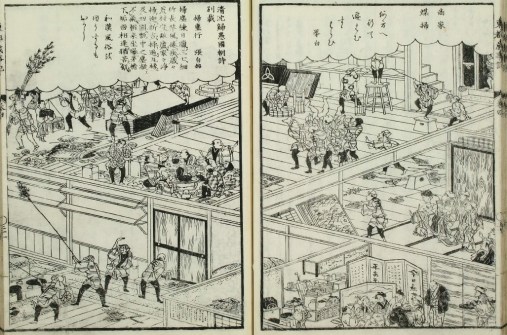
The older form of ōsōji is believed to be the practice of susuharai (煤払い), which stands for cleaning the soot that would have accumulated in one’s living space within the span of a year. This soot is from the smoke created from the burning of candles, stove while cooking and the like. It was a form of ritual that went further than merely cleaning the house, but in ridding & preventing akki (悪鬼, bad spirits). Through this, kami (神, divine spirits or gods) could enter into each household in the new year, which ensured fortune to be bestowed there.

2 pages depicting a large cleaning within the home of a merchant, called “Shōka Susuharai” (商家煤払). From the 5th volume of “Tōto Saijiki” (東都歳事記)

The roots of susuharai is traced to the Heian period (794 – 1185) as an ancient ritual in the Imperial palace. This is during the time when the Imperial family and noble families alike were learning a great deal from religious teachings that stemmed from China. Within an old rulebook called “Engishiki” (延喜式), is explained about how this ritual was conducted. Later, as the Heian period transitioned to the Ashikaga-ruled Kamakura period (1185 – 1333), 6th Ashikaga shogun by the name of Munetoshi Shinō (宗尊親王) wrote about the practice of susuharai within the old text called “Azuma Kagami” (吾妻鏡). It seems that from these ancient texts the word itself stood for more than keeping the Imperial palace and its grounds completely clean, but to ensure great fortune from the Toshigami (年神, deity that visits during the early new year), as the act of cleaning also included warding away evil spirits.

From the Muromachi period (1336 – 1573), susuharai became a large task performed within the shrines and temples respectively. Monks and priests worked together to ensure their halls were clean in accordance to appeasing the deity they worshiped. This ranged from wiping clean the numerous butsuzō (仏像, statues and figures depicting Buddhist gods) placed in a temple, to using a takesao (竹竿, long bamboo pole) that has a branch full of leaves or straw at one end in the form of a broom to sweep the ceiling of the hondō (本堂, main chamber). Centuries later, the practice of susuharai was passed down to civilians throughout Japan during the Edo period (1603 – 1868) . To ensure everyone had ample time for this, the 13th day of the 12th month was designated as the time to accomplish this.

MODERN DAY APPROACH TO ŌSŌJI

Today, ōsōji is designated for December 31st according to the modern calendar. This day is called Ōmisoka (大晦日), which means “last day (nightfall) of the year”. Along with cleaning, other traditional activities take place, including the eating of toshikoshi soba (年越し蕎麦, buckwheat noodles served at midnight of ending of the year) and visiting temples for Joya no Kane (除夜の鐘, listening to the temple bell ring for the sake of good fortune).

Sample of simple cleaning tools for your ōsōji needs! From AC-Illust.

While the 31st is an important day, it is also a very busy day if one intends to prepare and participate in the numerous events that take place. In regards to ōsōji, depending on the house size, or even one’s schedule, families may start earlier. For example, my wife often told me that while growing up in Tokyo, her mother, who had a busy work schedule including running her own shop, would clean a single room or an area in the house one day at a time as the 31st approached. She would finally finish on the 31st, if needed, with one room remaining.

What is needed to perform ōsōji nowadays? Your everyday cleaning implements, and water! While considered a tradition, the rules are not as strict as one would think. Generally, family members dust and clean every possible inch of their household, includes on top of cabinets, in corners, around windows, inside the sink and toilet, and so on. Water is also fine for wiping surfaces clean to ensure dirt is removed, as water is symbolic for purification in Japanese culture.

Traditionally, when ōsōji is completed, kadomatsu (門松, paired decoration of pine and large bamboo shoots) and shimenawa (注連縄, purified rope made out of rice paper or hemp) are placed around the entrance of the home, business establishment, and shrine & temple grounds. These are the final touches believed to be excellent invitations for the Toshigami to visit and bring everlasting fortune. This is still in practice today as well.

CLOSING

This covers the history of ōsōji, and how it is observed even today. My family and I also carry this tradition forward in our household. Ōsōji is something everyone around the world can practice, as there are so many benefits gained from this outside of the ritual implications. If anything, going into the new year in a clean house is great hygienically.

Shiwasu: How busy monks coincide with the last month of the year

Japanese can be a very colorful language, especially before standardization took place in recent times. Many words that have survived hundreds of years and is still part of modern speech due to their inclusion in the culture have some very interesting back stories. These can range from the name of towns, types of clothing, professions, or celebrations. One topic I’d like to bring up is the naming convention of the months within a yearly cycle, which was a project just recently finished. This can be found in the Translation section under “Topics Related to the Lunar Calendar”. Some points regarding the origins of how these months were named left a lasting impression on me, one particular I want to elaborate on just a little.

The characters for the 12th month name, Shiwasu. From Illust-AC.

According to the old Lunar calendar called “inreki” (陰暦)¹ once used in Japan’s past, each of the months have a “standard” name alongside which number month it is. They were also accompanied with many variants, which were devised with a relatable concept. These names are not as significant as they once used to be, but provide a cultural glimpse several hundreds of years ago of how people lived, how they viewed the seasons, or what activities were significant at specific times. Some are easy to understand and give you a clear visual once you hear the description. Others are not so clear, or have a description that may not really make sense at all. The biggest culprit of this is “Shiwasu”, which is designated as the 12th month of the year². The name Shiwasu has a unique meaning of “teacher (Buddhist priest or monk) rushing about”, which in turn indicates the ending of the year. How can such a description have any relations to indicating what month it is? And why a monk?  

Below are a few quoted sections from an article about Shiwasu, which comes from the website “Setagaya Byori”. It provides a few nice examples, and gives a slightly different take from my own write up in the project mentioned earlier. Below is the original Japanese text, followed by my English translation.


“「師走」はもともと旧暦の「12月」を指す言葉です。具体的には今の12月末から2月上旬ごろを指すのですが、今では陽暦の12月の異称としても親しまれています。”

“The word “Shiwasu” was the designated label to the “12th month” of the old (Lunar) calendar from the very start. To be entirely clear, it points to the later part of the 12th month all the way to the earlier part of the 2nd month. However, it is more familiar to us as an alternative name for the 12th month within the new calendar.”

“「師が走る」という字面から、まさに年末の慌ただしい気分までうまく表した言葉のように思えますが、この漢字は「当て字」ともいわれ、語源も諸説あってはっきりしないのです。”

“The term “shi ga haseru” (師が走る), which means “teacher is hurrying about”, gives us vivid thoughts of a very busy end of the year. However, the characters used in this name is said to be an ateji (当て字), or alternative label for naming purposes only, for the explanation behind it doesn’t match up properly with the actual roots for the name.”

“語源として有名なのは、師走の「師」は僧侶であるという説。かつては冬の季節、僧侶を招いて読経などの仏事を行う家が多かったため、お坊さんが東西に忙しく走り回ることとなり、「しがはせる」から「しはす」になったといいます。この説は、平安時代末期に成立した古辞書『色葉字類抄』に「しはす」の注として書かれているのですが、この説をもとに、のちに「師走」の字があてられたと考えられます。また、「師馳せ月」が誤って「師走」になった、という説もあります。”

“The explanation for “shi” of “shiwasu” is that it stands for Buddhist priest or monk, and is a famous one as being the roots of its origin, which goes something like the following. During the winter season, monks were busy running back & forth from east to west because there were many homes that required Buddhist services, which included calling for a monk to recite sutras. Due to this practice, the term “shi ga haseru” was shortened to just “shihasu” (しはす). This explanation is based on the writing of the word “shihasu” in the late Heian period ancient dictionary called “Iroha Jiruishō”. It is thought that the characters “師走” were being referenced in the word “shihasu”, thus the origin for this explanation.  Another explanation is that “Shiwasu” accidentally became a word from the phrase “Shihase Tsuki” (師馳せ月), which shares the same meaning.”


Just by reading this, one can get an idea where some issues would pop up. One of the biggest is the pronunciation. Why change to “shiwasu”? Ease of pronunciation? Apparently in the Iroha Jiruishō only the phonetic “しはす” (shihasu) is written, with no indication that the characters “師走” is being referenced. One linguistic point here could be that, as witnessed in some older documents, the character ha (は) represented the sound wa, which may be why it was assumed that the reading should be “shiwasu” instead³. Unfortunately, there is no real evidence in this case that leads to such a point.

A monk hurrying along during the last month of the year. Is this truly the origin behind the name Shiwasu?!? From Illust-AC.

One thing worth mentioning is that studying up on Japanese history will show that there was a strong presence of Buddhism during the late Heian period, especially in Kyoto, where the Imperial palace was present throughout the majority of Japanese history. Many nobles also lived there, and kept up with what was popular, which including growing interest in Buddhist practice. Due to this, it is most likely that monks were busy fulfilling requests of visiting homes and reciting sutras. However, was this truly the basis for the naming convention for the last month of the year? Most likely not, especially since many other activities were taking place at the same time that may have been more significant. There is a strong belief that this is a more recent creation that puts a bit of poetic spin on the name, which would then spread and become popular. Fortunately, there are more solid theories behind the root word “shihasu”, which are stronger and closer to the actual end-of-the-year description. This can be read in the last page of “Months” here.

Here’s yet another theory that is interesting, for it supports a different spin on the busy religious teacher theme, but from a Shinto angle.


“師が忙しく走り回る説にはバリエーションがあります。「師」は「御師」という神職のことで、この季節は神社の参詣者の案内をしたり、祈祷を行ったりするのに忙しくなるから、という説…”

“There is another variation to the explanation regarding a teacher busily running around. It states that the character “shi” (師) comes from the title “onshi” (御師), which is a rank in Shinto tradition meaning “low level Shinto priest”. The story here is that during the winter season, onshi were very busy with tasks such as guiding worshipers who come to visit the shrine, and conducting prayer services…”


This is just one of the many different theories placed on this unique name “Shiwasu”. Unlike the Buddhist priest theory, the Shinto priest theory is not a popular one. On top of this, it is most likely a recent theory.

Honestly, researching about “Shiwasu” while working on the months of the Lunar Calendar project was one of my highlights that left me scratching my head all too often, but not entirely due to frustration. Oddities like this give a glimpse of some of the creative liberties with the Japanese language in the past that individuals took that shine a light on cultural aspects and topics. If I were to point out every word like this that I’ve come across over the years, I could write about each one in an article everyday for about a year!


1) The Lunar calendar coincides with what was used in most of Asia in the past. Compared to the western Gregorian calendar, the Lunar calendar has a different starting point by almost a month. That means that new years took place at the start of today’s February! Also, the length of each month varied due to certain conditions.

2) According to the Lunar calendar, this was most of what we would designate as today’s January. Japan has long switched to the Gregorian calendar, so Shiwasu begins at the 1st of December and ends on the 31st. On a side note, this adjustment actually affects the meaning of certain names, as they were originally designed to match up with corresponding seasonal changes.

3) Here’s an example of Japanese grammar for those interested. On page 69 in the 3rd volume of the Takeyazō-sho version of Iroha Jiruishō is the word “貫河”. The phonetic for this is written as “ぬきかは” (since it is an official documentation, it actually is written in katakana as “ヌキカハ”).

At 1st glance one would think that this is read as “nukikaha”, but in reality it is “nukikawa”. The reason is the character “河” is pronounced “kawa” as a standard. In the past the character “は” doubled for the sound “ha” and “wa” visually. Basically, you would have had to have been educated to know this point so as to not read it incorrectly depending on which word it was being used in.