Bo Shuriken At a Glance

Within Bujinkan Budo Taijutsu, there are many different weapons and tools to study. One of them is the bo shuriken1. Part of the kakushi buki2 category, bo shuriken is often used as a secondary or supplementary weapon, when there is a chance to be deployed. While I’ve invested several years in this, recently I’ve been training more with this as to learn how to adapt this into my taijutsu better. In this post I will talk abit about what the shuriken3 is, what is unique about the bo shuriken, as well as some basic tips when learning how to throw this.

DEFINING THE SHURIKEN

Bo shuriken is a type of shuriken, small to average sized blade that can be deployed from close to medium range. These are especially renowned as a projectile weapon, although their usage is not limited to this. The shuriken is a Japanese weapon that, through the course of history, can be crafted in many different designs. Shuriken generally fall under 2 categories, one being “hiragata shuriken4“, and the other being “bo shuriken”. Looking first at hiragata shuriken, these are wide, flat, and have multiple points. These are iconic with being the prized tool of the ninja. There are many different types of this, of a multitude of unique designs. The hiragata shuriken tends to be the more popular out of the 2 categories, with such versions like the “shaken5” (otherwise known as “chinese stars” or “ninja stars” in pop culture”) usually come to most people’s mind when they hear the term shuriken.

A set of antique bo shuriken. The label on the upper right reads “根岸流” (Negishi ryu). From Wikipedia.

Next, the bo shuriken is a single or double pointed, relatively straight bar of metal. These are generally associated with bujutsu schools, and tend to have more formalized training methods. The bo shuriken is considered a much more difficult projectile to accurately throw due it’s design; whereas the hiragata shuriken has to be thrown with a spin and is almost guarantee to connect with at least one of its many points, the bo shuriken has to instead be thrown with as little rotation as possible and calculated from which distance its point will connect. This is especially critical when wielding one that only has one point.

It is not certain when the shuriken was first developed. However, there are documentations that mention it’s use around the Muromachi period (1336 – 1573) a time when warriors were active for combat due to warlords struggling for power. On a general basis, the image of the shuriken is associated with the ninja and ninjutsu. This is due to exaggeration through the various ninja boom that took place over the years, first in Japan from the Edo period (1603 – 1868) onward, then followed by many other countries in the late 20th century. The truth is, the shuriken was never solely a ninja weapon, but a tool as a means to hurl a projectile from a distance out of reach of an opponent by warriors and martial artists. While some types of shuriken may have been more frequently used by ninja, the skills to wield this was learned even by samurai.

ABOUT THE BO SHURIKEN

The bo shuriken can be designed in a multitude of ways, although its base still resembles that of a long, spiked bar. It’s body can be rounded, flat, or squared. Bo shuriken are often thin, easy to stack in a bunch, and portable. Throughout Japan’s history, a good number of martial schools and systems trained in the shuriken, especially from Edo period onward. Nowadays, there are a good number of traditional schools that retain their knowledge and history with this projectile weapon and provide training with them, such as Negishi ryu, Meifu Shinkage ryu, and Kukishin ryu. Depending on the ryuha6, or martial school of a specific style, there are special labels for the type of bo shuriken used. For example, in Kukishin ryu these are called uchibari7.

A set of homemade bo shuriken. On the left is live (sharpened) version, while on the right is safe training version.

In the system I study, the bo shuriken techniques are primarily associated with Togakure ryu8 and Kukishinden ryu9. Using it is based on taijutsu, with our kamae a starting point for learning when to throw. One of the basic kamae we learn to launch a bo shuriken from is called Doko no Kamae10, where we stand with our left foot forward and right hand up next to our right ear, holding the point upwards. When training with “live” shuriken (that is, sharpened metal ones), a large target, such as a wooden board or a tatami mat, is used, while safe, non-metallic versions can be used during drills & kata keiko with your training partners.

THE BASICS

When training with the bo shuriken, a key aspect to focus on is one’s form. This is considered basic, and is crucial for beginners to take to heart. Instead of trying to make the bo shuriken stick into the target when throwing it, one should instead focus on how to take proper posture (In this case we’ll use Doko no kamae) before, during, and after the throw. This process has to be repeated many times in this fashion, where your form dictates the bo shuriken striking the target correctly. The key point here is that the technique is within one’s form, and once a person ingrains this into their body, will it be possible to get consistent results.
Once your body has “learned” the form, can one then gradually focus on aiming for the target. One can attempt to control where you want the bo shuriken to strike, as well as progress to throwing multiply projectiles in relative quick successions. The throwing form is not abandoned, as you still need to be aware of how to prep yourself to launch the bo shuriken; instead you put faith in your body being trained enough where you don’t have to think about your throwing form from start to finish.

SITUATIONAL ADAPTATION

In the beginning, when learning the bo shuriken (or any projectile for that matter), we do it stationary. Usually this is from a frontal, standing position. As time progresses and our ability to consistently hit a target increases, we work on being able to throw under different conditions. Some of these conditions include facing different directions, crouching down, and having another weapon in hand. In one example, this can be integrated with kenjutsu as, while holding a katana in Seigan no kamae11, you take out a single bo shuriken with your right hand and skillfully hurl it at the target.

Throwing a bo shuriken can also be accomplished while moving, which includes walking, turning, and leaping. This is is especially difficult while performing Ukemigata Taihenjutsu12, for timing varies if thrown at the start of, during, or after tumbling to the ground. Conditions like these further challenge the practitioner to develop the ability to use the bo shuriken in any scenario.

CONCLUSION

Studying the bo shuriken is demanding, for developing a skill for precision is a must. In the end, it is very rewarding. That about wraps up this post. Hope this was informative, especially to those who have interest in shuriken training.


1) 棒手裏剣

2) 隠し武器. This means “concealed weapon”.

3) 手裏剣. While this is generally read as “a hidden blade in the hand”, I’ve learned that the actual meaning is “a blade held in the hand is thrown outward”. To better represent this meaning, shuriken can be written as 手離剣, with the second character meaning “to gain distance” or “move away from”.

4) 平型手裏剣

5) 車剣, which means a bladed projectile that is round like a wheel.

6) 流派

7) 打針

8) 戸隠流

9) 九鬼神伝流

10) 怒虎の構

11) 正眼の構. A posture in kenjutsu where the tip of the katana is held towards your opponent’s eyes.

12) 受身型体変術. This is an area of training that focuses on breakfalls, rolling, and moving through the air with agility.

Isshi Soden and a Page from the Koka Tradition

Today I will touch upon the topic regarding a traditional practice called Isshi Soden1. This is a common word generally associated with the world of Koryu Budo, or Classical Martial arts. For those new to this, Isshi Soden is a method or process that involves passing down of a specific martial tradition within a family or group to a younger individual. It is not limited to only the martial arts world; interestingly, other fields of artistic skills and services are found to incorporate this as well, such as chado (tea ceremony)2 and shodo (calligraphy)3. It was a process used considerably in Japan’s past, but has lost its popularity immensely in modern times. For now, let’s look into Isshi Soden and how it is utilized, primarily through an old documentation connected to the renowned Koka4 tradition.

A SCROLL FROM MOCHIZUKI FAMILY

There are written proof of families and groups that practiced the use of Isshi Soden. For example, there is antique scroll called “Ninjutsu Ougi Den5“, which comes from the Mochizuki family. Here’s an entry from the scroll, followed by an English interpretation done by myself.

A section from the scroll “Ninjutsu Ougi Den”.

“近世鉋火以工夫加勝利爲子孫其不有器性無用一子相伝外雖千金可秘甚奻不思議要法”

“To our descendants do we pass down the ancient craft of incendiaries. If there is no one to pass on to, this skill will turn useless. This process is called Isshi Soden (passing on knowledge to a successor). Outside of this process, it is arguable that the knowledge (of Koka ryu) can be bought.”

The contents of “Ninjutsu Ougi Den” relate to the spirit and dedication one must have as being of the Koka tradition, and what it takes to pass on the secret trade used by those specializing in Koka ryu. The line above is a representation of this belief. The scroll was written by Mochizuki Shigeie6, the grandson of Koka Saburo Kaneie7, who’s said to have started this Mochizuki family line in Shinano no Kuni (Shinano Province)8. The Mochizuki family were an influential warrior family amongst those of the Koka tradition, who were primarily active during medieval Japan.

ABOUT KOKA RYU

Koka ryu is a martial system that specializes in various methods of combat, especially in shinobi-no-jutsu9. Developed in the mountainous region of Koka in Omi no Kuni (Omi Province)10, Koka ryu was a system many families who lived in that region were versed in. Unlike conventional martial systems, Koka ryu focused more on unconventional,  guerrilla warfare-like tactics, including spying, sabotage, and arson. These skills were very critical during the medieval period in Japan for many daimyo, or warlords, who wished to keep track of and get the upperhand on the opposition.

Those reputed in specializing in shinobi-no-jutsu could gain employment for special tasks the average warrior couldn’t handle, even if for a short time. Due to the nature of the times and what the skills entailed, the knowledge of Koka ryu was well guarded and rarely shared to anyone outside the area of Koka.

THE ROLE OF ISSHI SODEN

Koka ryu encompassed many different families that banded together to ensure their survival, and formed organized groups such as “Kokagun Chuusou11“. The knowledge of Koka ryu was treated like a special trade, and taught amongst family members. This is where Isshi Soden comes in play, for it ensures that inheritance of each particular style of Koka ryu is passed down within the family or group. The new inheritor not only gains leading role, but everything key to maintain ownership and preserve of the system (including secrets and teachings in the form of poems and sutras not shared to anyone else) is transferred in its entirety.

Generally, Isshi Soden specifies a martial system being passed down to one child of the current headmaster (generally a boy), even if there are multiple children within the family. However, it is not limited to this, and can involve passing inheritance to one who is not blood-related. In fact, it has been recorded in documents from Japan where some headmasters would go as far as to adopting an individual as their own, and from there pass on their knowledge to that one person. Case in point, in Mamiya Hyoemon’s book “Budo Shiroishi no Eiyuu”, Takagi Oriemon inherited the kahoujutsu (skills utilizing artillery) of the Muraoka family from Hyobu Muraoka, in absence of Hyobu’s son whom he hadn’t seen in a few decades12.

Certain traits are a requirement for an individual to be chosen as an inheritor under Isshi Soden. Some of these have to be qualities that are naturally there, while others may have to be groomed. In regards to the Ninjutsu Ougi Den, it is advised that the next in line should fit a particular criteria. Here is the line from the scroll, followed by my interpretation in English:

“…人有一心矣念々句生疑永執保句捨委是人奇正爲…”

“…one must wholeheartedly have full devotion in their mind, possess no doubts, bear this responsibility for a very long time, and to never abandon faith. The (next) successor must be properly instructed (to handle the duties his role calls for)….”

From this, we can understand how important it was to properly choose the next successor. It was not a responsibility to take lightly.

UNFORTUNATE FATE

Martial systems that were dependent on Isshi Soden treated this as a means to survival. Since Japan was faced with much turmoil before peaceful times set in during the Tokugawa Shogunate from the early 1600s onward, many warrior families had a reason to be active, striving to keep their martial systems intact. Koka ryu is no different. However, once the need for specialists of shinobi-no-jutsu was no longer high in demand within the unified Japan, many families struggled to keep their trade alive. Employment as spies and the like was no longer feasible, so some had to settle for guard work, or positions similar to police work. One big effort was even made by Fujibayashi Samuji Yasutake, a descendant of the Fujibayashi family known for their role in shinobi activities. He compiled as much info he could collect on the secret techniques and methodology of the shinobi, and proposed it to the Shogunate in a large documentation called “Bansenshukai13” around 1676, hoping to rekindle interests in their worth. Unfortunately, this was to no avail.

A picture of Fujita Seiko, 14th headmaster of Koka ryu Ninjutsu Wada Ha. From Wikipedia.

Much of the knowledge and skills of Koka ryu have been discontinued and lost. Certain special terminologies found in the few documents remaining are difficult to interpret, due to their meanings being obscured and forgotten. Some of the reasons behind this include the last successors no longer seeing any purpose to pass on a system viewed unfit in a society that was rapidly changing, as well as not finding a suitable inheritor amongst their children. Another point, Koka ryu’s doors were not open for public admission like other martial systems that may specialize in conventional means for combat like kenjutsu or sojutsu, thus there was no chance for it to spread and evolve.

Interestingly, Fujita Seiko (1898 – 1966), who inherited his family’s ninjutsu system from his grandfather, did not completely feel the same way as other headmasters of Koka ryu.  He states in his book “Ninjutsu Hiroku14” how he believes ninjutsu still has purpose, despite the view of ninjutsu not having much use in modern times. Aspects such as the spirituality and applications of ninjutsu would prove useful, as well as be a good means of self defense for people and the country (Japan) against threats15. Despite his views,  Fujita Seiko did not pass down his style called Koka ryu Ninjutsu Wada Ha16, unfortunately. Presently, his system remains unknown to the public.

ENDING

This wraps up our discussion on Isshi Soden. As pointed out, practice of Isshi Soden can be beneficial, as long as it fits the purpose and the environment. It was seen as valuable, as described in the scroll belonging to the Koka tradition. Thanks for reading and stay tuned for more discussions.


1) 一子相伝. This methodology of passing down inheritance is similar to 父子相伝 Fushi Soden.

2) 茶道

3) 書道

4) 甲賀. “Koka” is considered the correct pronunciation in recent times. A more common and popular way to pronounce this is “Koga”.

5) 忍術應義傅.

6) 望月重家

7) 甲賀三郎兼家. Also known as Mochizuki Saburo Kaneie (望月三郎兼家).

8) 信濃国. Present day Nagano Prefecture.

9) 忍びの術, also can be written as 忍術. Older term for the now modernized term ninjutsu, which is written with the same characters.

10) 近江国. Present day Shiga Prefecture.

11) 甲賀郡中惣. The Kokagun Chuusou was created by a collection of several families from the Koka region that united together as a unit, with some sharing the same surname, . They banded together in preparation to defend themselves around the mid-late 1500s when Oda Nobunaga, an uprising powerful warlord, set out to invade and annihilate the areas of Koka and Iga (a neighboring area), which both operated along their own rules. 

12) A clearer recount of the tale goes as follows: Takagi Oriemon set out on a years-long musha shugyo (warrior’s journey to hone one’s skills) throughout Japan during the 1600s. Early in his trip he encounters 2 monks, and travels with them for awhile. One of them, who duels with a kusarigama, goes by the warrior name of Tetsudo. Oriemon develops good relations with the 2 monks, before finally all 3 set off on their separate ways. A few years later, as Oriemon was climbing up a Mountain called, Takayama, he encountered an old man named Muraoka Hyobu, who was a skilled marksman. Oriemon assisted in taking down a wild boar while Hyobu was hunting, and carried it for the old man back to his home. Staying for dinner, Oriemon conversed with Hyobu and his wife, where it came out that they were the parents of Tetsudo, whom they hadn’t seen for around 20 years. Moved that Oriemon could bring good news about his lost son, Hyobu decided to pass down complete knowledge of the kahoujutsu unique to the Muraoka family to him. He did so as Oriemon had a strong, yet likeable quality to him that made him trust worthy, as well as for Oriemon to someday initiate Tetsudo into the family tradition in place of Hyobu.

For those interested, you can read more about this and other tales regarding Takagi Oriemon in “Takagi Oriemon: Budo Hero of Shiroishi”, a translation project by those of the Jinenkan Honbu Dojo.

13) 万川集海. Also pronounced as “Mansenshuukai”.

14) 忍術秘録

15) Fujita Seiko makes this statement in “Ninjutsu Hiroku” on page 14, starting from line 8 of the original book. The statement (in Japanese) goes as follows:

“そんなら忍術は最早や此世に必要のないものかといふに、私の考では、即々然うではない。忍術の精神と、其の術の応用とは之を新時代に適合して、個人に護身法の必要あり、國家に防敵の必要ある限り”

16) 甲賀流忍術和田派

Volunteering on a Translation Project

Recently my time has been divided a little more than normal. For over a month, I’ve been volunteering my service at “The Hidensho Project”, and helping with a Classical Japanese translation project that’ll sure to please those who have interest in historical military subjects of Japan.

The site “The Hidensho Project”, which is run by Randy McCall, is host to some ancient Japanese scrolls and documents that have been acquired over the years, each dealing with various topics. These are made public in their original form, alongside with Japanese-to-English translations by many translators all with the purpose to share the contents of these documents. The works done and the viewing of these documents are for non-profit, so anyone can visit the site.

Snapshot of the front page of “The Hidensho Project”.

The project I’m currently working on is a section from the Heiho Yukan, a famous manual of strategy on different matters of warfare once used by the Tokugawa shogunate. It is challenging work, for it is handwritten in an old-fashioned Japanese, so not only is some research required to understand some terminologies not used today, but the handwritten isn’t the most neatest in certain areas, so some deciphering is required. It is an ongoing project I will continue to spend some time on even when it’s completed. I have a few more pages to work before it’s complete, although what’s presently done is already up for viewing.

Please show your support and head over to “The Hidensho Project” here:

http://hidensho.com/

To go directly to the section with Heiho Yukan (the one I am presently working on), you can access it here:

http://hidensho.com/1854-heiho-yukan-manuscript/1854-fortification-background/
I will get back to regularly updating my blog, the earliest by the start of this weekend.

Onna Bugeisha: Women and the Naginata

Women and their role as warriors in the history of Japan is an interesting topic I’d like to touch upon. There are many literature, plays, and artworks of onna bugeisha1, or female warriors in English, that portray their feats. Depending on the time period, onna bugeisha are said to have had their fair share of combat like their male counterparts, some in armor suited for the battlefield, and others in simple domestic wear. Women learn to use many types of weapons, according to their needs and the situation at hand. In an on-going series, I will discuss various topics related to onna bugeisha, from key figures to the martial systems they’ve specialized in. Today’s topic will start off with women and their ties with the weapon called the naginata2. This will briefly cover the historical periods where women became synonymous with the naginata, along with some truths and falsehoods that stemmed from this image.

An artwork called ” Ishi-jo, wife of Oboshi Yoshio, one of the “47 loyal ronin”” (誠忠義心傳:大星良雄内室石女). Ishi-jo is shown brandishing a naginata. Artist is Utagawa Kuniyoshi, and was made in 1848. From Wikipedia.

A GLANCE INTO HISTORY

Onna bugeisha and their ties with the naginata is most recognized around Edo period (1603-1868), a time when the newly-established Tokugawa shogunate ushered in a time of peace after long periods of war. To ensure that no opposing factions or groups ever rose up to challenge the rule of the Tokugawa clan, all battlefield weapons were restricted from public possession and use. At the time, the naginata was considered a large battlefield weapon, consisting of a blade similar in length to a katana, which was mounted on a long, sturdy pole. Due to this, the naginata was subjected to strict regulations, such as “Naginata Naoshi”3. While many were converted into shorter-bladed swords, the knowledge of utilizing the naginata would soon be given a new route to stay viable during the more peaceful era that settled into most areas.

Families that have a military background were known as buke4, or warrior family. Members of these household were often trained in various combat arts, so to be able to protect themselves from danger, as well as to maintain the family’s martial tradition. In one instance, to ensure that homes and mansions were protected from theft and invasions, military and martial specialists trained their wives, daughters, and young women in how to wield the naginata. The techniques learned were initially from those used on the battlefield, but modified so to be adaptable for use indoors against armorless opponents. This became the norm over the years as the naginata became a favorite among women as a means for self defense due to its reach advantage against the katana, and balance due to having a long shaft. This likeness prompted the label “Onna Naginata”5, or “Women’s Naginata”.

Some martial systems that have naginata techniques/curriculum modified them for use by women; whereas the original techniques required wide open space for larger swings, naginata used by women were more smaller and concise for use indoors. Through this developed entirely new systems for the naginata, complete with their own lineage. Some of these lineages are even headed by female headmasters, which is a rarity throughout Japan’s martial history. An example of this is Youshin ryu Naginatajutsu, which started around 1620s as a means of self defense for the female residents living in a castle in Yanagawa Domain6. Youshin ryu Naginatajutsu is currently headed by Koyama Takako, who continues to actively maintain this system and ensures that quality training is available to female practitioners.

As time went on, Onna Naginata went through some transformations. For starters, during the Meiji period, a competitive version of naginata was developed alongside gekiken (a sword system using a shinai and protective gear predating modern kendo), and displayed in many gekiken competitions around Japan. Women participated using wooden naginata, and would often pit their skills against men doing gekiken. An example is Chiba Sanako, the daughter of Chiba Sadakichi Taira no Masamichi, who ran the Chiba Dojo belonging to Hokushin Itto ryu Hyoho. Sanako was not only a licensed master of Hokushin Itto ryu Kodachijutsu, but was also very proficient with the naginata. It is said that she had defeated every challenger that stepped foot into the Chiba Dojo located in Fukagawa, Tokyo.

2017-04-20-14.22.51.jpg.jpg

A portrayal of Chiba Sanako with a wooden naginata dueling with a gekiken practitioner. From the 3-panel woodblock print called “Chiba Gekikenkai (千葉撃剣会) by Tsukioka Yoshitoshi in 1873(?). To see the entire print, please visit Hokushin Itto ryu Hyoho’s website here.

Next, women’s naginatajutsu further developed from Meiji period (1868-1912) onward as a kyougi budo7, or a sports-centric martial art. Under kyougi budo, there are many rules that dictate both movements and areas to strike. This type of naginatajutsu became the standard, and was introduced to certain schools as a physical education class for young women not only to train their bodies, but to learn discipline and refine their spirit. Sonobe Hideo (4/18/1870-9/29/1963), the 15th lineage holder of Jikishinkage ryu Naginatajutsu, contributed to this. She took the role as instructor and taught naginatajutsu at several schools and institutions around Japan from the late 1800s to early 1900s, including Himejishihan Daigaku (later changed to Hyougoshihan Daigaku), Osaka Kyoiku Daigaku (Osaka Kyoiku University), and Gakushuin Joshi Daigaku (Gakuin Women’s College).

Onna Naginata continued to develop with the times, even after Japan’s defeat during WWII and the practice of martial arts was banned for some time. Stripping away most of its combat elements, naginatajutsu was still made available to women with the intention to be more for sports and health purposes. In modern times, it further evolved to fit under the standards of Zen Nihon Naginata Renmei, the organization that oversees all participating systems of naginatajutsu for both competition and forms nationwide. Now called Atarashii Naginata8, it is offered in high schools to female students, giving them the chance to learn naginatajutsu in clubs, and participate in tournaments against other schools. Primarily a bamboo naginata is used alongside with protective gear (consisting of a face guard, chest guard, padded gloves, and shin guards) during competition, which is often naginata versus naginata, or, in recent times, naginata user versus a kendo practitioner. Note that while Atarashii Naginata is still associated with young women, it has also been made available for young men to learn and compete in.

DISCERNING TRUTHS AND FALSEHOODS

Now that the history onna bugeisha and their connection with the naginata has been briefly covered, let’s look at some points that will cover some of the truths and falsehoods that are associated with the image of women and the naginata.

yōshū_chikanobu_tomoe_gozen.jpg.jpg

A woodblock print of Tomoe Gozen (middle) battling Uchida Ieyoshi (left) during the Battle of Awazu in 1184. She is shown wielding a naginata while on horseback. Artist is Yoshuu Chikanobu, and was made in 1899. From Wikipedia.

1) Naginata is a women’s weapon
While there are evidence that leans towards this, primarily in the modern society of Japan today, it is not entirely true. In earlier times when wars were abundant and Japan wasn’t unified, male bushi, otherwise known as warriors, utilized the naginata a great deal. It was a heavy weapon that was effective against enemy troops and cavalry alike through its reach and large sweeping cuts. It wasn’t until Japan was ruled by the Tokugawa shogunate and big battles were almost non-existent where the role of the naginata switched from a battlefield weapon to a self defense weapon. During this time, the katana was the primary weapon that the samurai took pride in, thus many male warriors focused their attention to kenjutsu. Since women were not allowed to carry a katana, they focused their energy into being proficient with other weapons, one being the naginata.

2) Naginatajutsu is designed for women
Again, not entirely false, but not quite true either. Onna Naginata, as it is labeled was designed for women due to some important points. For starters, the naginata used by women was shorter and lighter than the version men used on the battlefield, allowing for faster cuts and ease in manipulation. This type of naginata is often called a konaginata9. Women at the time wore long kimono that restricted them from taking wider stances for big swings, so they needed to learn how to move with the naginata taking smaller steps, and using agility with quick body turns that matched their normal wear to move accordingly. Naginatajutsu for men, often labeled “Otoko Naginata10“, still exists, and often retains techniques used for the battlefield against armored opponents. However, Otoko Naginata is not as popular or publicly documented in Japan. This is generally found in some kobudo11, such as Katori Shinto ryu, Shidare Yanagi ryu, and Kukishinden ryu.

3) Onna Bugeisha that had to go to battle did so with the naginata
This not only refers to actual female warriors in the past, but the general viewpoint of them that is now visible in pop culture. Contents that have a historical setting before Edo period tend to show these female warriors going to battle with a naginata. This can be seen in books, comics, and games. A big contribution to this image is ukiyoe12, or woodblock prints, that were commonplace during the 1700s to 1800s. Many ukiyoeshi13, or woodblock artists, often took a theme from society or history, and would paint them with a more romanticized flavor in order to make the visuals more appealing. Ukiyoe, while visually stunning, tend not to be accurate. Case in point, a famous female warrior by the name of Tomoe Gozen is depicted in ukiyoe. Decked in armor, she is a prime representative of a Japanese woman not only taking part in battles, but having the prowess to best men in mortal combat. One misconception is found in the actual weapons used in battle by her. In historical accounts,  it is said that during one of her last battles Tomoe was using a sword to duel and beat her opponents. However, in a ukiyoe by Yoshuu Chikanobu (shown above), the same scene is vividly recreated, but with Tomoe using a naginata instead. The change to the naginata may have been due to the current trend of women training in naginatajutsu at the time.


FINAL WORDS

In closing, onna bugeisha made great strides in being a formidable force with the naginata. Women have demonstrated its effectiveness as a means of self defense, as well as utilized its superior reach in competitions. Even as Onna Naginata transformed from a combative art to a sports-centric system,  women continue to train in it with the same vigor as in the past. Hope you enjoyed today’s topic, and look forward to future posts on on female warriors!


1) 女武芸者

2) There are 2 ways of writing this in Japanese, which are 長刀 and 薙刀. The 1st one, an older version, stands for a ‘long, bladed weapon’. The 2nd one, more commonly used in recent times, stands for a ‘bladed weapon that mows down’. Both use the same pronunciation.

3) 薙刀直し. Naginata Naoshi was a movement where blades of many naginata were reforged and turned into shorter swords, usually in the style of a katana. Due to this, there are almost no naginata in existence dating back before the 1600s.

4) 武家

5) 女薙刀. Also called Josei Naginata (女性薙刀), which has the same meaning.

6) 柳河藩. Former domain during the Edo period in present Fukuoka Prefecture, Kyushu.

7) 競技武道

8) 新しい薙刀. This means “New Style of Naginata”.

9) 小薙刀

10) 男薙刀

11) 古武道

12) 浮世絵

13) 浮世絵師

Kata Geiko: Approaching Forms in Martial Arts

Within the traditional martial arts, particularly the ones found in Asia, a good deal of the lessons are taught through forms. The term forms mean sequences that include preset movements and techniques that end in a given outcome. This is true for the majority of martial art styles that have existed for many decades, such as in Chinese styles like Hung Ga and Xing Yi, the Korean style of Taekkyeon, and the Indian style of Kalaripayattu. Japanese traditional martial arts, often labeled as kobudo (古武道), are no different. One of the reasonings behind forms is that they help to ingrain the given style’s movements and techniques into the body. This is important, for it not only helps the student to learn the essence of the martial art being studied and preserve it for future generations, but it keeps training partners safe. It takes a good deal of time to see the fruits of one’s labor in training through this method, but in the end the results tend to be solid.

While a good number of traditional martial art styles have a considerably long history where they have had a chance see use in conflicts, their effectiveness are being questioned as the years go by and countries around the world are seeing more times of peace. This is heavily contributed by modern martial arts, as these have gotten more exposure and gaining popularity. This is true especially for those systems that are used competitively, such as Sanda, Brazilian Jiujitsu, and Mixed Martial Arts. Some of the strong points of these modern systems include the following: shorter time of intense training yielding effective results, relatively simpler training methods and techniques for quicker understanding, and an emphasis in a muscular physique. While their effectiveness for actual conflict will not be questioned, the point I want to focus on is how the form-driven traditional martial arts are approached to be effective. While I’ve had abit of exposure to a few Asian styles, I will speak based on my ongoing experience with Japanese martial arts.

Forms in Japanese martial arts are called kata (型 or 形), while the term commonly used when studying kata is kata geiko (形稽古). Kata can range from being short sequences of, at times, 5 movements, to long sequences of over 10 movements. Within these sequences are intricate movements, principles, and basics that are essential for developing one’s foundation. At first glance kata can seem simple, sometimes to the point where you accept what is presented at face value. However, this is not the case, for a kata hold many lessons that one can study from and formulate many applications over the course of time. A teacher who has studied their art correctly can lead students to understanding this point.

Here’s a few steps one takes when studying kata in a traditional Japanese martial art. To note, the following is based on my experience over the years under qualified teachers and the results that came with it. In no way am I claiming that these steps are the only means to training in kata, for each individual school and style may utilize other steps that can produce the same results.

1) REPETITION: When given a particular kata, you should go through the motions in the kata many times as shown. Doing it a few times isn’t enough; the kata should be repeated hundreds of times. This can be done with a partner (if it calls for it) as well as solo. Those engaging in kata should take their time as they go through the motions, even when working with a fellow partner. The reasoning behind this is not only do you want to ingrain the movements into your body, but as you repeat the movements in the kata, a certain understanding should start to develop.

Over time you should gain more insight and proficiency in little things such as control, timing in execution, the dynamics in the footwork, and so on. Repetition is more than just muscle memory for the sake of doing the kata, but learning to discover what the kata is trying to teach you to do.

2) BUNKAI: At some point during kata geiko, you will start to do bunkai of the kata you are learning. Bunkai (分解) means “analyzation” or “breaking down”. Through bunkai, you generally will be shown, in details, what’s going on in the kata. It is more than just a visual explanation, but on a much deeper scale in regards to your responses (i.e. the movements you are doing) against an opponent’s movements. Reasoning behind the movements and the techniques used will be explained, along with the type of energy and intention behind the movements you should possess, as well as different scenarios they may play out in.

Usually, principles and lessons key to the art will be revealed through bunkai. As a better understanding of the given kata is acquired, you should start increasing the amount of intent used (between 30%-50% depending on one’s skill level) when practicing with a partner, as well as working to develop a smoother, yet unrushed, flow.

3) VARIATIONS: Depending on the particular martial system and its lineage, you may be taught variations of a kata. Variations serve several purposes, with one being to approach the same concepts and principles of the kata in question in a different light. There are different labels for variations, such as henka (変化) and ura (裏). In any event, variations may be handle the same as the original kata, such as being required to drill them consistenly, or shown as a supplement to emphasis specific points. Some variations are near identical to the original, save for a few moves in its ending sequences. Others may diverge in terms of appearance very close to the beginning, but retain certain principles and movements from the original kata. Then there are those that do not resemble the original kata, for they may be designed to approach the same situation with a completely different solution.

As a whole, variations are necessary to learn more about the toolset and lessons received from the main kata, and how they can be applied further against new obstacles. These should be treated with the same importance as the original kata, and be used during one’s practice to push you to learn how to handle changes in an opponent’s attacks.

4) FREE PLAY: As the name applies, you approach your kata geiko with training methods that grant abit more freedom and a chance to test your abilities. Free play is a coin term for different training methods that allow you to interact with your skills against others in a challenging fashion. Keep in mind that there are still rules when approaching this, with the biggest one being that you must use the art you are training in. Methods that fall under free play may have different names and rules depending on the martial system. One of these methods I work with is called randori (乱捕). What takes place in randori is a semi-free exchange between one person taking the role as a defender, while the other person assumes the role of an attacker. As the attacker presses on with different attacks, the defender has to use the skills and principles learned from kata and apply particular techniques to outbest the attacker, as a way to understand how things would work under more realistic circumstances.

Randori can be structured to allow for more or less freedom in the techniques one can use, as well as have a different number of attackers. Generally, the intent level used in this can exceed over 50% of what you would normally use in training, but never reaching 100%; although both students should feel like they are in a struggle, randori is still done in a controlled manner to avoid injuries.


As one can see from above, there are steps to use kata as a means to learn a particular style properly, as well as understand how to deal with conflicts. It does require a lot of time, on the other hand, but with almost everything in life that requires proficiency this is normal. Studying martial arts require a lot of effort and commitment, for a person is working to develop proficiency on a physical, mental, and (depending on the style) spiritual level that takes years to achieve. Even then, one must continue to refine one’s skills and understanding, for our body and mental state changes as we get older. One of the strong points about kata is that they retain the lessons to be learned as they keep the same components, yet are ageless in how these lessons can be applied with each generation.

There is a sense of responsibility one should be prepared to bear when studying traditional martial arts. It is more than just fighting, but the upkeep of the martial style through perfecting our abilities through kata, for we in turn represent the effectiveness of the style we sign up to learn.

This is just my thoughts and advice concerning kata used in martial arts. Hope it helps to shed some light for those who may question the necessity and use of them, and why it is used mainly in traditional martial arts.

Mune or Mine, Which One Is Right?

How familiar are you with the anatomy of the katana? A popular single-edge sword, the katana is one type of the different bladed weapons used in Japan’s history, collectively known as nihonto1. Gracefully made, each part of a katana is essential and is required to be understood thoroughly if studying one of the traditional kenjutsu and iaido schools from Japan. While the naming convention for each part tends to be universal, at times certain schools will use a different name. One part in particular caught my attention recently, which is the back of the blade. Growing up, I learnt this as “mune2“. However, I’ve come accross different sources, primarily in Japanese, that call this “mine3” instead. What is the difference between the two terms, and what are their origin?

A pic of a katana and its parts illustrated. Mune is circled. From the book “The Art of Japanese Swordsmanship: Manual of Eishin-ryu Iaido” by Nicklaus Suino.

MUNE
The word mune is used to describe the ridge on the roof of a building. Usually roofs on more older buildings such as shrines and long wooden homes have this. They stretch across the top of these roofs, acting like a joint for the sloping parts that make up the roof. The thickness and defined shape of the back of a nihonto was probably likened to this.

A picture of a roof of Hiroshima Castle. The mune is the highest part of the roof, featuring a fish sculpture. From Wikipedia.

MINE
The use of the word mine is generally associated with an object reaching to a great height. Usually referencing tall mountains, it also has been used when referring to eboshi4 (traditional headwear). For nihonto of relatively long length, when held upright, is similar in comparison to a mountain.

High points on tall mountains, such as Mt. Fuji, are often described with the word mine. Picture from Wikipedia.

WHO USES WHICH

Referencing different traditional kenjutsu/iaido schools, it’s interesting to see which ones use one or the other. Here’s a few names of the schools that use the term mune:

  • Eishin ryu (includes Mugai Jikiden Eishin ryu, Musou Jikiden Eishin ryu, etc.)
  • Musoshinden ryu
  • Yagyu Shinkage ryu

Now, a few names of schools that use the term mine:

  • Jigen ryu
  • Shinto Munen ryu
  • Niten Ichi ryu

CONCLUSION

In ending, both mune and mine are interchangable when referring to the back of a single-edge nihonto, albeit style-specific in some cases. Just remember that either one is ok to use.


1) 日本刀. The term is actually for bladed weapons with a handle, and not soley reserved to actual swords, such as the katana. Here’s a few of the various weapons that fall under this category:

  • Tsurugi (剣)
  • Chokuto (直刀)
  • Tachi (太刀)
  • Wakizashi (脇差)
  • Nagamaki (長巻)
  • Yoroidooshi (鎧通し)
  • Uchigatana (打刀)

2) 棟

3) 峰

4) A light, black headwear made out of good quality washi (Japanese-originated paper). It’s use began during the Heian period (late 700’s to late 1100’s) up until the Middle Ages, around Sengoku period (1500’s to early 1600’s).

Kuki Archives: Deciphering the Name ~ Part 2 ~

We continue with the discussion on the Kuki family’s name and how it came to be. In part 1 of this discussion, the original name “Kukami” is introduced, followed by an explanation about the “kami” kanji in this name. This post will continue this by touching on the sources behind the Kukami/Kuki name, which includes the beginnings of the Kuki family’s history1, their position as a wealthy & powerful family during Edo period, and how the standardization of the Japanese language affects their name. Before that, however, let’s take a few steps back and examine the kami kanji abit further, which should give better clarity in the relationship the Kuki clan has with it.

A pic of the sign board on Kishi Mojin Do, a Buddhist temple in Toshima District, Tokyo. It reads from right to left “Kishi Mojin”, with the kami (tsuno ga nai oni) kanji in use.

DEFINING THE ONIGAMI

The kami kanji, a derivative2 of the oni kanji (demon character), is commonly referred to as “tsuno ga nai oni” kanji (the hornless demon). This kanji is said to represent the “onigami”, which can be described as “a figure reaching a divine status despite being of demonic origin”. To better explain this, let’s look at an insert from a website called “Shinshizo Meguri”3, which includes discussions about the kami kanji in relations to specific temples and shrines, along with some lore, found in Japan. The insert states the following:

“仏に帰依して善神になった鬼や、人助けをしてくれた鬼を表現しているものとされます。”

My translation of the text below:

“This kanji expresses meanings such as a demon becoming a deity of good through the conversion of Buddhism, as well as a demon that helps people.”

This insert offers 2 definitions to the kami kanji, with the 1st covered in part 1 through the tale “Kishi Mojin”. Note that in this case, a demon turning good is not naturally willed, but a controlled phenomenon; Buddhism is used as a means to convince a demon of rather sinister nature to turn over a new leaf and do good for the sake of mankind. The means for making the conversion happen varies. For example, in an extreme case, the trickster monkey spirit Sun Wukong’s assistance in aiding a holy priest on a pilgrimage to retrieve Buddhist sutras is ensured through a powerful headband made by the Great Buddha in the Chinese literature “Journey to the West”4.

BELIEF OF GOOD DEMONS

For the 2nd definition, a demon doing good by helping people is an ancient interpretation imbedded in parts of Japan’s history and culture. The idea of an onigami doesn’t only exist in Buddhism, but is incorporated into Shinto, Doukyo, Shugendo, and the like. The roots for religious and esoteric groups to view certain demons akin to deities lie in the development of Japan itself, cultural beliefs, and certain isolated events5. Some are based on mythical figures from the Kojiki6. Others on stories to inspire the best qualities in people by relating it to the fierce powers demons possess7.

Let’s take a look at Aomori Prefecture in Japan, which is home to several temples and shrines that worship these good demons. This has helped to develop a culture in this area where townsfolk pray to these demons for protection and good fortune. Taking Oni Jinja (also pronounced Ki Jinja)8 as an example, this shrine tells a particular lore of how a demon is praised as a god. From the website “Shinshi no Yakata”9, a short summary of that lore goes as follows:

“昔、村の人々が干ばつで作物が出来ず苦しんでいると、鬼が山(岩木山)から下りてきて用水路を作って助けてくれた。それに感謝して村人が、農耕の神として、鬼を祀ったのがこの「鬼神社」だという。”

Following this text is my translation below:

“In the past, when the villagers faced hardship and couldn’t harvest crops due to a long drought, they were saved by a demon who climbed down from a mountain (Mt. Iwaki), and made an irrigation channel that delivered much needed water to them. To express their thanks, the villagers chose this demon as a god of agriculture and established the shrine “Oni Jinja” in order to give worship.”10

This demon is addressed as “Onigami-sama”11, which gives an indication that the villagers view it as a good and divine being, as well as a source of successful agriculture. On the torii (grand gate) of this shrine is a sign that reads “Oni Jinja”, but the kami (tsuno ga nai oni) kanji is used in place of the oni kanji. This is to express the belief that the demon of worship is in fact not a horrifying creature, but a deity that brings good fortune.

A page from the book “Shinden Bujutsu” written by Takatsuka Eichoku.

YAKUSHIMARU’S VISION

Now that certain key points regarding the kami kanji and its ties to religious cultural aspects have been covered, we can now turn our focus to how the Kukami/Kuki name came to be. The Kuki family are associated with Shinto practice and duties at the Kumano Hongu Taisha. However many learn about them through one of many budo schools that teach a version of the martial system originally devised by ancestors of the Kuki line. The history of this martial system, along with the family line, is said to begin with the originator named Kuki Yakushimaru Ryuushin12.

Yakushimaru’s story is said to be found in a record called “Kongou Hihouhen”13, which is part of the many documentations within the Kuki family’s collection. Below is a short summary of Yakushimaru’s story taken from the book “Shinden Bujutsu”, primarily with key points important to how both the “Kukami” and Kuki” names came to be. Snippets from this book will be used to support certain points, each followed by my own translations.

Yakushimaru was born in the year 1318. His family, of a prestige status due to being descendants of the Fujiwara clan, were well to do and provided him the essentials. This included being educated through literature, and trained in martial arts. Along with this, he received Shugendo training (mountain asceticism) through his father Douyuu, as well as studied Shingon Mikkyo (esoteric Buddhism of the Shingon sect) from the monk Joukai while staying at the Sanmakuin (Buddhist temple) in Kyoto. Yakushimaru was also versed in Kuji no Ho, and Ongyou no Jutsu. These esoteric practices involve praying to, and invoking power from, different types of deities and spirits.

At around age 18, Yakushimaru participated in assisting the Ashikaga army of the Northern Court defeat the Imperial forces of the Southern Court13. Emperor Godaigo, of the Southern Court, was captured and held in captivity under harsh conditions, while the 3 Sacred Treasures14 were taken as spoils of war. Learning of this, Yakushimaru made an unexpected move and went to rescue the fallen Emperor Godaigo, as well as retrieve these 3 treasures. With the assistance of close trustworthy warriors, Yakushimaru was successful in freeing the Emperor from the enemies’ clutches, and fighting off pursuers with a broken nagamaki15. He delivered the Emperor to safety in Yoshino, the area where the Imperial line of the Southern Court resides. Later, he managed to retrieve and return the 3 Sacred Treasures back to the Emperor.

After witnessing his prowess, Emperor Godaigo inquired Yakushimaru about his secret techniques. Upon hearing that it was through the use of Kuji no Ho, Emperor Godaigo responded with the following text, as written in “Shinden Bujutsu”16:

“汝の忠心、神の知ろしめすところなり。汝、今日より藤原 改め九鬼と改む可し”

Translation, “The gods know well your display of loyalty. From this day forward, your family name ‘Fujiwara’ can be changed to ‘Kukami’.”

The choice of kanji for the family name is not random; there are significant meanings in the name that indicate how he should be recognized. Starting with the ‘ku’ part of the name, this is the number ‘9’ in Japanese. Ku is significant to Kuji no Ho. This is integral to his family line, as it was considered a secret methodology. Not only was it used to invoke protection, Yakushimaru applied kuji with the shaft of his broken nagamaki during battle as stated in “Shinden Bujutsu”17:

“…そこで隆真は手に残った柄をもちいて戦い、近くの敵は打ち倒し遠巻く軍勢に対しては柄の先端で虚空に九字を斬って制した。”

Translation, “…Ryuushin fought wielding the remaining shaft (of his nagamaki), felling the opponent closest to him with a strike. In opposition to the swarming troops, he slashed Kuji in the air with the front end of his shaft.”

The “kami” part of the name means “onigami” (demon god). Some references state that this was chosen because it relates to how fiercely Yakushimaru fought for the sake of Emperor Godaigo, like a benevolent demon god18. It is also believed to be in reference to actual demon gods guiding Yakushimaru to take on this endeavor. In the “Ryuko no Maki”, it is said that Yakushimaru saw Bishamonten19 in his dream. It’s written as so in “Shinden Bujutsu”20:

“ある夜、隆真の夢に毘沙門天が現われて「汝、早く後醍醐天皇の難事を救ふ可し」と言ってので、喜んだ隆真は九拝してこれを受け、決起したという。”

Translation, “One night, Bishamonten appeared in Ryuushin’s dream and said, “You there, hurry and rescue Emperor Godaigo from his ordeal!”. Excited, Ryuushin bowed his head many times and rose to his feet, accepting the task at hand.”

A pic of my training naginata. This is an example of the polearm believed to have been used by Yakushimaru.

The name Kukami holds the tale of how Yakushimaru gained recognition through his vision of onigami and the power he attained through Kuji no Ho in order to save Godaigo. It is also the defining ideology behind him creating Kukishin ryu, which is deeply rooted in esoteric influences from Mikkyo Hihou in the techniques.

DUALITY OF KUKI AND KUKAMI

Today, the main Kuki line retains their martial tradition, without physically being involved, through “Kukishinden Tenshin Hyoho”. A system that utilizes the shihanke21 model, the current teacher overseeing the training both within Japan and overseas is Takatsuka Eichoku. However, over the years there is a growing push to acknowledge their original roots, and are using their original name more frequently. For example, their style of bujutsu is now identified as “Kukamishin ryu”.

Why not change their last name back? Why the change in the first place? There are 2 reasons for this, which are the registration as a daimyo under the shogunate, and the standardization of the Japanese language.

STATUS VS ROOTS

During the Edo period, this Kuki line in discussion was prestigious. Not only did they have strong ties with the Kumano Hongu Taisha, they also owned the Ayabe Domain in Tanba Province (present day Ayabe City in Kyoto Prefecture) and served in battle under the guise of the Kuki Suigun22, receiving merits for their efforts & contributions. In order to be recognized as a daimyo23 under the newly established Tokugawa shogunate, certain documentations had to be presented.

An important factor on how the Kuki approached this is based on particular historical data. For starters, the Tokugawa shogunate was established by Tokugawa Ieyasu, who managed to seize control of Japan after several battles with opposing forces. Claiming as a descendant of the Minamoto clan, Ieyasu and the Tokugawa shogunate were naturally affiliated with the Imperial line of the Northern Court. The Kuki line’s roots, on the other hand, is on the side of the opposing Southern Court, under the name ‘Kukami’. This can be found in older documentation within the Kuki household.

Not wanting to risk losing their status by having this info revealed, they changed their name to ‘Kuki’ (includes replacing the kami kanji with the oni kanji), and omitted much of their history in their presented documentations during registration. It was a necessary move to retain the lands, wealth, and status the Kuki family amassed. They still kept their family documentations, fortunately, so their roots weren’t forgotten.

LANGUAGE STANDARDIZATION

During the Meiji (1868-1912) and Taisho (1912-1926) periods, efforts were made to standardize the Japanese language in order to promote unification throughout Japan. This standardized form of Japanese, called Kokugo24, shaped a speaking, written, and reading form of the language the majority of the nation learns. In the case of kanji, there was a considerable reduction of derivatives each kanji possess, as well as reduction of kanji that had the same meaning as others but with slight difference in nuances. Kanji that are obscured, not adapted into the Japanese culture, or forgotten meaning were also excluded from standardized use.

This standardization became even more apparent as society moved towards the digital and electronic medium. In order for the Japanese language (includes kana and kanji) to display on interfaces such as computers, special coding types were developed, one being called JIS coding25. Just about all standardized kanji have been adapted into JIS coding, making them readily usable. Some older and out-of-use kanji also have been converted into JIS coding, and can be downloaded as packets from certain online kanji resource sites. While it is possible to find many kanji that are no longer in use on the same sites, they are only in picture form just for references, however.

The kami (tsuno ga nai oni) kanji is, unfortunately, one of those out-of-use kanji that are considered dated and out of use. There are no available JIS coding packets for it, thus it cannot be typed. The oni kanji has to be used in its place, with a note identifying it is actually the kami kanji in use. While not considered part of standard Japanese, this does not stop its use entirely; temples and shrines that have a history with the kami kanji still use it when applicable, whether by writing it or having it etched in metallic or wooden signs. Interestingly, the Kuki family use the kami kanji also in printed books. How they’ve managed to acquire the means to do this is unknown. This could be one of those rare cases where it was designed specifically for use by them.

2017-02-16-10.11.15.png.png

A screen capture of the different variants (異体字, itaiji) of the oni kanji. The kami kanji is circled in red. From the website “字形検索”, an educational resource and database on kanji (Chinese). It can be accessed here.

This concludes our discussion regarding the Kuki family’s name. I hope much has been put to light regarding the acquisition of the Kukami and Kuki names, along with the cultural overview of the kami kanji. A special “THANK YOU!” to those who helped guide me to useful resources and offered detailed explanations regarding the kami kanji. Thank you for reading this, and look forward to more posts concerning the Kuki family and their history.


1) The main line with direct connection to Kumano Hongu Taisha, one of the three grand shrines labeled “Kumano Sanzan”. For more information, visit an older post of mine here.

2) 異体字, pronounced ‘itaiji’ in Japanese.

3) Website can be accessed here.

4) “Journey to the West” is a famous fiction novel in China written in the 16th century. It is loosely based on the non-fictional journey by Chinese Buddhist monk named Xuanzang who, from mainland China through the Western regions of Central Asia, traveled to India to retrieve Buddhist sutras. In this novel, the Buddhist priest Tang Sanzang (same as Xuanzang) is accompanied by 4 demons (or demon spirits depending on how you interpret them) to retrieve the Buddhist sutras, each serving as his protector through reformation as Buddhist monks themselves: Sun Wukong (monkey spirit), Zu Bajie (pig spirit), Sha Wujing (sand creature spirit), and Yulong (dragon spirit in the guise of a horse).

Here’s a broader explanation how Buddhism subdued a potentially great but dangerous demon. Sun Wukong, originally imprisoned under a mountain by the Great Buddha, agreed to help the Buddhist priest Sanzang in his journey to India in exchange for freedom. However, understanding that Wukong, through his past crimes, is uncontrollable and unpredictable, a Bodhisattva named Guanyin gave Sanzang a gift in the form of a golden headband made by the Great Buddha, which would help keep Wukong in check. Tricked into wearing it, Wukong put it on his head, but couldn’t take it off. On top of this, Sanzang had only to chant a secret set of words and the band would tighten on Wukong’s head, causing great pain and immobilizing him. Through this, Sun Wukong was made, more or less, obedient to assist in the journey.

5) Japan’s history regarding openness to the idea of good/bad demons is very old in conception. This is apparent if you look into the different religions & esoteric practices, rituals, lore, literature, and artworks. One prevailing point concerning onigami that needs to be understood is they are viewed as not truly evil. This is because onigami are believed to serve specific purposes, sometimes beneficial to humans, and other times, not.

6)The book Kojiki, generally translated as “Records of Ancient Matters”, is a collection of recorded events in ancient Japan by Ou no Yasumaro in the 8th century. The Kojiki depicts the start of humanity, as well as early civilization in Japan. In its earlier chapters are many descriptions of god-like figures, demons, and spirit-like creatures, each interacting with people in Japan one way or another.

For example, Koutai Jinja (皇大神社) , which is located in Kyoto (western part of Japan), gives worship to Amaterasu Oomikami, who is the Sun Goddess as told in the Kojiki. This deity is very important in Shinto religion.

7) As an example, a temple called Kijin Jinja (鬼鎮神社) in Saitama Prefecture (eastern part of Japan) pays homage to red and blue skinned demons that wield kinbou (metal clubs). These kinbou represent absolute victory. So not only do townsfolk work hard in passing examination tests, sporting events, and the like with the vigor of an ‘oni’, but also visit Kijin Jinja to pray for added luck in succeeding in these tasks.

8) 鬼神社. Generally written with the kami (tsuno ga nai oni) kanji

9) Link is here.

10) This tale appears to have been devised to give some mystical flavor to what may have truly happened. Within the Oni Jinja there are many steel farming tools (such as sickles, spades, and hoes) that were given as a form of offerings. Some of these tools are said to be as old as 1000 years. It is believed that this is an indication that the knowledge to take care of their land was actually taught to them by foreigners possibly visiting Japan.

11) The word “sama” is an honorific label. Thus, much respect is given to this onigami.

12) 九鬼薬師丸隆真

13) 金剛秘宝遍

14) In the Nanboku era during the 13th century, the power to rule Japan was left in the hands of the 2 sons of the dying Emperor Gosaga. Both in disagreement in how and when each would hold the power to rule, soon a division spurred, which created 2 factions. One faction, called the Northern Court, resided in Kyoto (northern part of Japan geographically). The other faction, called the Southern Court, stayed in Yoshino (southern part of Japan geographically). Both sides struggled for power during the 14th century, with 6 Emperors from the Northern Court seizing power at one point, while 5 Emperors from the Southern Court claimed power at another point.

14) The 3 Sacred Treasures, also known as the Imperial Regalia of Japan, believed to be handed down by the gods. These treasures are the following: Kusanagi no Tsurugi (草薙劍, The Grass-Cutting Sword), Yata no Kagami (八咫鏡,the 8-Span Mirror), and Yasakani no Magatama (八尺瓊勾玉, Long [approx. 8 ft] string of Curved Jewels).

15) There are conflicting views when describing the weapon Yakushimaru wielded. In “Shinden Bujutsu”, it is mentioned to be a nagamaki. However, in the once available website “Kuki-Shinden”, (a site to help promote the Kuki family’s Kukishinden Tenshin Hyoho martial system, having both an English and Japanese section) in the English section where they described the same story of Yakushimaru, the info about the polearm differs slightly. For starters, it is mentioned that the weapon was a naginata. Secondly, in note 4 for the story, it is mentioned that, in the Kongou Hihouhen and Ryuko no Maki documents, the weapon was a yari (spear). The polearm being a naginata is mentioned in a document called “Kuki Bojutsu Hihouhen no Maki,” which comes from the Chosui line. Furthermore, in the book “Shinden Bujutsu”, it is written that based on the time period when Yakushimaru was alive, it would’ve been “correct” for it to have been a nagamaki.

The naginata-nagamaki reference appears to be interchangeable, for certain details may warrant either weapon to be called one or another. This is dependent on such details like the style of the blade, size of shaft, fittings, and the like. Since there are numerous documents within the Kuki family’s collections that say one way or another, there is no way to get a definitive confirmation.

Whichever weapon it was, what can be agreed on is that Yakushimaru’s weapon was indeed a polearm with a blade at the end.

16) Page 25, line 5-6

17) Page 23, line 10-12

18) It is said to be mentioned in “Kuki Bojutsu Hihouhen no Maki”, for example. This document is part of the Chosui line of Kukishin ryu. It is also mentioned here that the “ku” of Kukami is in reference to how Yakushimaru utilized his broken weapon with ever-changing responses against the opposing forces. This ability is described using the number 9 in Japanese.

19) Vaisravana in Sanskrit. He is one of the Heavenly Four Kings in Buddhism, as well as a guardian deity of Buddhism in Japan. Also one of the Seven Lucky Gods in Japanese folklore.

20) Page 24, note #2

21) A system where a teacher reaching a master level of proficiency heads the training of a martial arts school, or branches out to start a new line. This does not mean, however, inheritance of the entire system is granted to those who reach this level.

22) 九鬼水軍, Kuki Naval Force

23)大名, recognized lord who could privately own their land. Rulers of their territories, they only answer to the shogun.

24) 国語, national-standard language

25) There are other coding types, such as Shift-JIS, EUC, and Unicode.
Kuki Archives: Deciphering the Name ~Part 1~

In today’s post, we set our focus on the Kuki family’s name and it’s background story. The kanji (Chinese written characters) in their name is “九鬼”, which few locations in Japan and different branches of martial systems with certain relations also share in their titles1. Primarily read as “kuki”, the general translation of this is “9 Demons”. However, statements from the Kuki family, who are the main stem for the aforementioned name, claim that the original pronunciation of this was not only “kukami”, but that the 2nd kanji in the name was actually a slightly altered version with a different meaning. A topic I’ve been invested in for some time, I will share some of my findings in relations to this from 2 viewpoints. This post will cover the 1st viewpoint, which looks at that one kanji in question, covering abit of its history and ties to religious matters.

Japanese character oni
A hand painting of the oni (demon) kanji. Notice the small line on top of this kanji. This line is often viewed as the “horn” (tsuno in Japanese). By Yoko A.

LOOKING AT THE ONI KANJI

In the Chinese and Japanese language, there were periods where a specific kanji had a few different ways to be written depending on usage, which in those cases gave it an altered meaning. The kanji “鬼“ is no different. Normally pronounced as “oni” or “ki”2 in Japanese, it generally possesses the following meanings: demon, (evil) spirit, ghost, fierce, violent, dead body, and death. As expected, this has a negative, demonic connotation. Normally, images associated with the oni kanji in ancient times (whether on its own or in conjunction with other kanji) is ominous, frightful, and/or dreadful. Especially in ancient times of Japan, where superstitions and stories of demons had a big impact on the culture. The general image of an oni in Japan is a being with a large frame, skin that is dark red or dark blue toned, unkempt hair, wearing tiger skin loincloth, talons for fingernails, a large mouth with 2 fangs protruding out, and 1~2 horns on the head. While in popular children’s tales of old, such as “Momotaro”, the depiction of the oni may appear whimsical, the features remain the same, and the overall negative undertone of the oni persists. With such an ominous makeup, would the Kuki family, devoted followers of the religion Nakatomi Shinto, want their name associated with a word that would demonify them?

Two pictures featuring oni characters. Click on each one for more info.

THE HORNLESS DEMON

In various publications and mediums, the Kuki family and associates of them have expressed many times that the Kuki name was not originally read as it is commonly so now. From their public website “Kuki-shinden” (which is no longer available), to the most recent published book under their authorization called “Shinden Bujutsu” (written by Takatsuka Eichoku), it has been explained that the correct pronunciation is “Kukami”, which actually means “9 Gods”. This is due in part that the oni kanji wasn’t used in their name in conception, but instead another version of this kanji. This kanji is often dubbed “tsuno ga nai oni”3, or the hornless demon.

The “tsuno ga nai oni ” kanji has its history begin first in China, with use primarily by religious sects and groups. With usage mainly in religious practices, it is rarely seen in standard writings or general use, thus quite uncommon even in the general public. The same with Japan as this kanji made its way to this island country possibly through the spread of Buddhism. In Japanese, this kanji has a few pronunciations4 which includes “ki” and “kami”. The meaning of this kanji is stated4 as “onigami”, which is a combination of oni (demon) and kami (god)5. Take note of this meaning, for it is a special terminology that has a deep and unique implication of its usage, which some light will be shed on through the following story below.

Japanese characters oni and kami
A hand painting of both the oni kanji (left), and “kami” kanji (right). By Yoko A.

KISHI MOJIN & CORRECTIVE WRITING

As mentioned above, the oni kanji has a small line on top that is viewed as a horn. Well, with that small line removed, this oni is now “dehorned”, and the threat is gone. What we now have is a divine being on the side of good despite retaining its demonic looks.  This seems to be what the term “onigami” entails. There is an interesting tale that further supports this notion, as the “tsuno ga nai oni” kanji often compared to an old story called Kishi Mojin6.

Kishi Mojin
An artwork of Kishi Mojin. From Sacchin san’s website on Buddhist figures and stories here .

Within Buddhist lore7 in Japan, Kishi Mojin is a tale about a raksasi (a female mythological demon) who goes by the name of Kariteimo8 (Hariti Ma in Sanskrit). Kariteimo resided in Rajgir9, at the same time when the Guatama Buddha known as Shakyamuni was living there. Being the wife of Pancika10, they beared hundreds of children together. To feed her children, Kariteimo would capture humans (primarily human children)  and feed to her children their flesh. Many parents, particularly mothers, lamented to Buddha to save them from this ordeal.

Heeding their pleas, Shakyamuni made a plan to not only to bring salvation to the human race, but to also save Kariteimo in the process. For this, Shakyamuni hid Ainuru, her youngest and most dearest of her children. When she discovered her child was missing, the wife searched around the world for many days half-crazed. With no luck tracking her child, she sought help and guidance from Shakyamuni. When approached by this matter, Shakyamuni asked her if she could compare the lost of one of her hundreds of kids to the hundreds of mothers who lost all their kids due to her savage habits. In response, Kariteimo agreed that their loss is much greater than hers.

Now that she understood the pains of others due experiencing the pain of losing her own child, Kariteimo devoted herself to the ways of Buddhism, through the direction of Shakyamuni, and vowed to protect children. She became enlightened11, and, as a guardian deity of Buddhism, is a patron that represents ease of child birth, safety of children, and mercy & happiness.

Hand paint of name Kishi Mojin
A hand painting of Kishi Mojin. This is the correct way it is written, but cannot be done so in computers and other electronic devices. By Yoko A.

There are various shrines and temples in Japan that honor Kariteimo and the story of Kishi Mojin. There, you will usually see artworks and statues of Kariteimo that depict her as having a womanly appearance dressed in fine robes and holding a child. Despite being a raksasi, sometimes she is depicted as not having horns12. What is also important to note is that in signs and writings of the word Kishi Mojin outside of typed text uses the “tsuno ga nai oni” kanji. This is important to remember, and directly relates to the Kuki family’s claims regarding the correct writing of their name.

This concludes the 1st part on the Kuki family’s name. Stay tuned for the 2nd part, which will focus on the Kuki clan’s definition of their name along with the unintentional change to as we know it now. Also, the reasoning behind the use of “tsuno ga nai oni” kanji outside of electronic devices will be covered as well.


1) Some martial arts systems having a form of relation to the Kuki family bearing the “Kuki” name are the following:

  • Kukishinden Tenshin Hyoho (Takatsuka Eichoku)
  • Kukishin ryu Bojutsu (Tanaka Fumon)
  • Kukishinden Happou Bikenjutsu (Masaaki Hatsumi)
  • Tenshin Hyoho Kukishin ryu (Tanemura Shoto)

2) One of the main reasons for a kanji to have numerous pronunciations in Japan is based on if it is used based on Onyomi (音読み, China-originated reading) or Kunyomi (訓読み, Japanese reading). For examples, words that are directly borrowed from, or influenced by the manner of literacy of China, are pronounce with a Chinese-influenced phonetic (Onyomi), whereas others that are developed and used in accordance to Japanese standards are pronounced under Japanese phonetics (Kunyomi). Depending on    if the Onyomi or Kunyomi of a kanji is used can change the meaning of a word.

In the case of the demon character, “ki” is onyomi, and “oni” is kunyomi.

3) 角が無い鬼. Also called “tsuno no nai oni” (角の無い鬼), with pretty much the same meaning.

4) Based on proclamation by religious groups in Japan, including the Kuki family.

5) The term onigami is written as 鬼神, with “kami” (神, gami in its conjugated form) meaning (but not limited to) the following: god, deity, divine, spirit, and amazing.

6) 鬼子母神. Also pronounced as the following: Kishi Boushin, Kishi Boujin.

7)  There are, like many stories of old, different versions of the Kishi Mojin story. The roots of this tale is Hindu, and was later adapted by other countries and religions, with changes made to fit with the culture of those countries. Even in Japan there are several varying points concerning this story depending on if told from the viewpoint of Nichiren Buddhism or Shingon Buddhism. For example, in a particular version Kariteimo is not married to Pancika, while in another she is assisted by Ten Raksasi Women (Ju Rasetsunyo十羅刹女 in  Japanese) in capturing human children.

9) A city in Nalanda district of Bihar, in the eastern part of India.

8) Also referred to as Karitei (Hariti in Sanskrit) depending on the Buddhist sect.

10) Pancika is a rakshasa (male mythological demon) who was one of the 8 commanders in the yaksha army of the deity Vaisravana (Bishamonten in Japanese).

11) This process of enlightenment is called “Bohdi”.

12) Raksasi that have humanly appearances are called “Manushya-Raksasi”.

2017, Zodiac Calendars, and Roosters

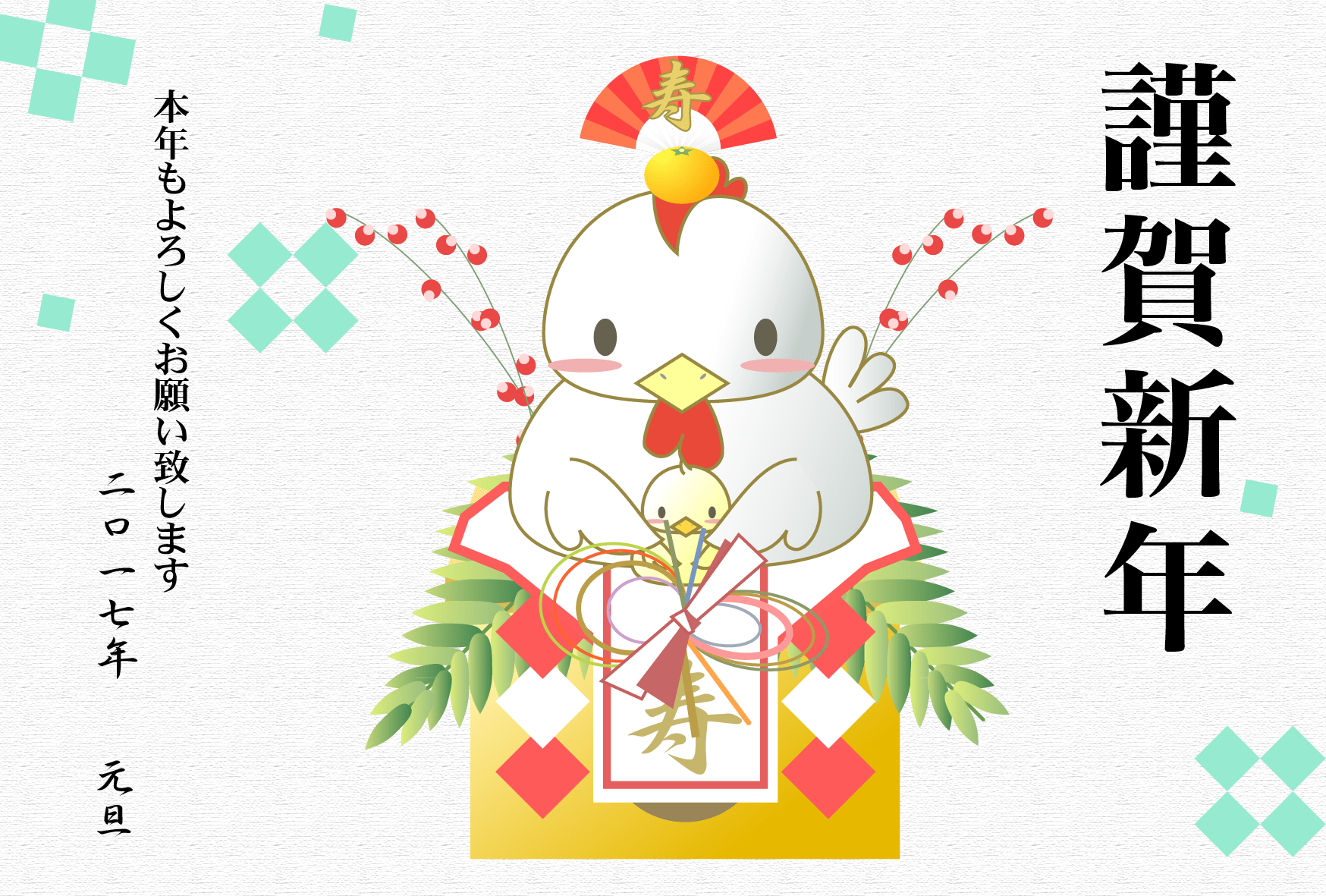
Illustration for 2017 being the “Year of the Rooster”.

We are here in the New Year and it’s time for a fresh start.  For those who follow the Chinese Zodiac calendar are aware that 2017 is the “Year of the Rooster”. The Chinese Zodiac calendar is part of a pretty ancient astrological system, where its role in this case is keeping track of the years and predicting how each would unfold. Japan and other Asian countries adopted this system hundreds of years ago, while other countries in the West have familiarized with it as well. What does this mean for this year, and why is it significant? Let’s take a look at some points regarding this Chinese Zodiac Calendar, the rooster, and the projection for 2017.

CHINESE ZODIAC CALENDAR FUN FACTS

A stone carving of the 12 Animals used in the Chinese Zodiac calendar. Photo taken by Felix Andrews. From Wikipedia.
  • Dates back to the Shang (Yin) Dynasty¹ in ancient China around 1700 b.c., based on written records from that time.
  • The Chinese Zodiac Calendar incorporates a 12-year cycle, which then resets after the cycle finishes in accordance to the complete solar orbit of Jupiter.
  •  Each year in this 12-year cycle is made up of 1 of 12 Zodiac signs, written as “十二支” in Chinese (pronounced “Juunishi” in Japanese). These 12 signs are labeled as “Earthly Branches”, due to their connection to human traits.
  • These 12 Zodiac signs are each represented by an animal. Collectively, these 12 Animals are written as “十二生肖” in Chinese (pronounced “Juuniseisho” in Japanese). These 12 Animals are the following in order according to the zodiac calendar used in China²: rat, ox, rabbit, tiger, dragon, snake, horse, goat, monkey, rooster, dog, pig.
  •  Each of these animals bear their own personalities, traits, and qualities, which not only identify people who are born in one of these animal years, but determine fortune and daily perspectives people should follow.
  • Along with the 12 Animals, there are 5 Elements used in this calendar. Written as “五行” (pronounced “Gogyo” in Japanese), these 5 elements are the following: fire, water, wood, metal, and earth.
  • Each of the 12 Animals are naturally associated with one of these 5 elements, which further affect each animal’s given traits.
  • Each single 12-year cycle also has the 5 Elements tied to each animal year in a particular pattern, creating a single elemental type of each animal. What this means is that there are 5 elemental types of each animal sign.
  • All 5 Elements will play out completely when each animal sign has had all 5 elemental types appear in 5 12-year cycles. The elements + animals combined makes the Chinese Zodiac calendar a full 60-years cycle before it resets completely, just to repeat the cycle again.
  • The Chinese Zodiac system, including the use of the calendar, made its way to Japan and believed to have been in use as early as Yayoi period³ (300 bce – 300 ce).
  • In Japan the term for observing each year is called “Eto” (干支), which is a combination of the 12 Earthly Branches (十二支), the 5 Elements (五行), and 10 Calendar Signs also referred to as “10 Heavenly Stems” (十干, which is pronounced “Jikkan”).
  • The use of the Chinese Zodiac calendar in Japan is very old and intricate as its use in China, for it is also used to tell the time of the day (時刻 jikoku), the Lunar month (陰暦 inreki), direction (方角 houkaku), and season (季節 kisetsu)⁴.

ROOSTER ANIMAL SIGN FUN FACTS

Artistic work featuring a rooster and a hen. Art piece is entitled “紫陽花双鶏図 (Rooster and Hen with Hydrangeas)”. Produced by Ito Jakuchu in the 18th century. From Wikipedia.
  • In accordance to the Lunar New Year (based on the rotation of the Moon), the rooster year begins from January 28 of 2017 and ends in February 15th of 2018.
  • The rooster is the 10th sign in the Chinese Zodiac calendar. In according to this sign (as how the calendar is used in Japan) are the following: The Lunar month is August, time of day is between 5 pm to 7 pm, direction is West, and season is Fall.
  • This year in Japanese is read as “Hinoto Tori” (丁酉), for both the rooster sign (酉) and the “Fire” element (丁) are next in the zodiac calendar. Together they indicate that 2017 is the “Fire Rooster” year, as well as being the 34th year in the 60-year cycle of the Chinese Zodiac calendar before it starts over completely.
  • The animal zodiac sign for the rooster is written as “酉” in Chinese. This same written style is used in Japan.
  • This zodiac character “酉” in Japanese is pronounced “tori”, which is the same phonetic sound for another Chinese character that stands for bird (鳥). While it does refer to birds, this zodiac character for the calendar actually represents the rooster (鶏), which is pronounced “niwatori”.
  • Originally the zodiac character “酉” didn’t stand for rooster. In fact, the 12 zodiac signs never had any relations to animals in its conception!
  • The zodiac signs were originally standard labels representing people’s predetermined personalities and traits. For example, “酉” is the radical used with the water (水) radical to make up the word for alcohol (酒).
  • The inclusion of 12 animals representing a zodiac sign came much later in China’s history, as a means to help people remember the signs much easier5. To determine which sign got which animal was based on the pronunciation of the sign and which animal was closest to the sound.
  • The rooster is a symbol for hard work, trustworthy, and dedication, due to the rooster’s nature of waking early and crowing at day’s break almost everyday. Also, the pronunciation of rooster (鶏) in standard Chinese6 is the same as fortune (吉), which is “ji”, making it a favorable sign to the masses.

Now, for some projections made for 2017:

  • The rooster represents hardwork, honesty, and doing one’s best. So, we should incorporate these traits along with the traits of our own personal animal sign.
  •  It is advised that we put our best foot forward and focus on our dreams and goals with no hesitation. It is important to seize the opportunity to “take” good fortune and success7.
  • 1st impression matters in having a successful year, so give it your 100%
  • This year is especially profitable for business owners of all kind. How one markets and advertises their products and services can win over customers very easily.
  • People under the rooster sign beware! Things will not look good for you if you don’t tread carefully!8
Another illustration for 2017.

Here’s looking forward to a prosperous 2017 for all!


1) 殷代

2) Depending on the habitat, culture, and story used, the animals vary in different cultures. For example, in Japan the pig is replaced by a boar, while in Vietnam the cat replaces the rabbit.

3) 弥生時代

4) The Chinese Zodiac is a very intricate, and rather complex system that, in ancient times, played a huge role in determining one’s day, activities, luck, and so on. Based on astrological factors and imagery, it has a multitude of uses. Along with the 12 Animals (Earthly Branches), 5 Elements, and 10 Calendar Signs (Heavenly Stems), the Chinese Zodiac is also made up of, or works in conjunction with, many more subsystems that can be daunting. All in all, it has a pretty straight forward pattern in whatever field of interest is used, it just takes some familiarity and practice.

For this post, its use in a calendar system (along with small hints in its usage regarding time, direction, etc.) is presented. To cover the other uses along with the other subsystems would have to be done in a separate post.

5) One of popular folktales state that the Jade Emperor (ruler of heaven in Chinese lore) wished to appoint 12 animals to one of the 12 zodiac signs. He set up a foot race between all(?) of the earthly animals, stating that the 1st 12 will be chosen, and appointed according to which place they came in. The race had different outcomes for each of the animals, where it either brought out their best qualities (i.e. the ox waking very early in attempt to beat the faster animals and come in first, which sorta worked…), defined their personality in accordance to the sign it represents (i.e. the rat being cunning & resourceful by hanging onto the ox’s horn during the race to *officially* be 1st), to defining animals’ relationship with one another (i.e. cats hating rats due to the rat breaking a promise prior to the race, dogs hating roosters due to the rooster cheating by flying at the last moment to beat the dog).

Note that this is not *the* official version of the story. Actually, there may be no official version due to how old it was when incorporated into the Chinese Zodiac and how certain details may have been changed due to the times. There are other versions of the tale that paints the story with variations in regards to how the animals were chosen, from where the race involved crossing a stream, being a swimming race, a selection of animals to be guardians of heaven, down to a festival where only 12 animals were invited.

6) Pinyin

7)  In Japanese the pronunciation of the zodiac sign “酉” also has the same sound as the word “take” (取り). As a play on words, it is advised to “take in” (取り込み) as much good you can out of the year.

8) Actually, this is said for every zodiac sign, when one’s animal sign matches the the animal for the New Year. On a fantastical level, it is the way for the Jade Emperor to punish each animal when their year comes up due to doing such a poor job. On a more theoretical level, it is sometimes explained that the year that matches one’s animal sign brings out the best in us, which in turn can backfire tremendously. Thus it is advised that we be careful when our animal year comes around, and take certain steps to avoid misfortune, such as avoiding certain colors.

Yoi Otoshi Wo: Ringing In The New Year

As 2016 comes to a close, I will end the year with this final post, saying thanks to all who have shown support for my blog and to those who find it interesting or useful. Looking forward to 2017, where I will continue to share articles and translations on topics related to Japan and martial arts.

Wishing everyone a safe New Year’s Eve however you choose to spend it. Have a  Happy New Year! (“Yoi Otoshi Wo” in Japanese)